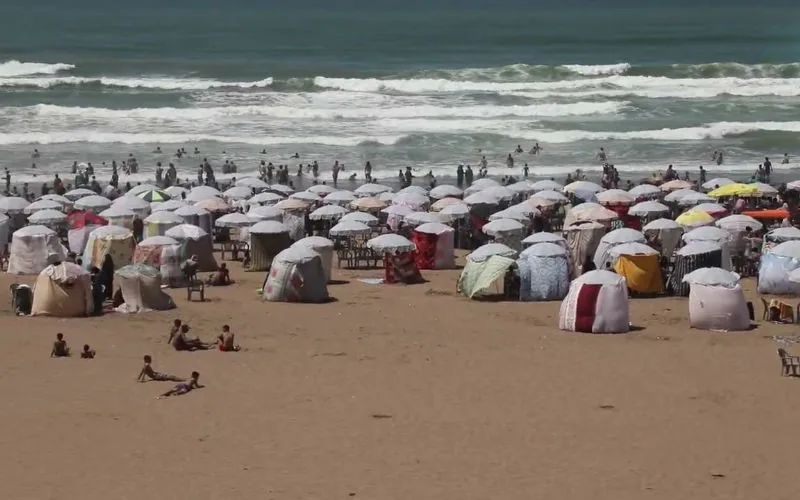
Waste on beaches: Morocco does five times better than Tunisia and eight times better than Egypt
Moroccan beaches have the lowest level of waste among the three countries studied. This result could be explained in particular by the Clean Beaches and Blue Flag programs, but the researchers refuse to establish a definitive link because the data remain uneven.
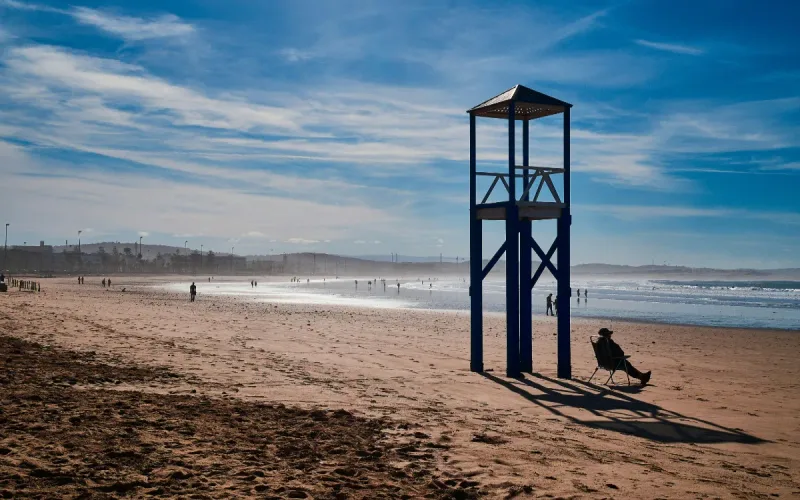
Morocco outperforms Tunisia and Egypt in a study devoted to visible waste on Mediterranean beaches. The researchers counted objects larger than 25 millimeters: cigarette butts, packaging, bottles and other solid waste abandoned or washed ashore by the sea.
Their work, published on 10 August 2026 in the journal Discover Sustainability, combines campaigns conducted between 2021 and 2023 with scientific data collected from 2015 to 2023.
Across this dataset, Moroccan beaches recorded an average of 0.33 pieces of waste per square meter. The level reached 1.75 in Tunisia and 2.77 in Egypt. The median, which limits the effect of extreme values, stood at 0.10, 0.96 and 2.44 items per square meter, respectively.
Morocco generally ranked first during both the high and low seasons. However, the researchers observed an increase in the median quantity of waste on Moroccan beaches from 2018 onward.
On Bladi.net : Morocco’s Cleanest Beaches 2026 - Blue Flag Rankings
The comparison must also be interpreted with caution. It is based on 111 Moroccan samples, compared with 58 Tunisian samples and only seven Egyptian ones. For Egypt, the available surveys covered only spring 2022.
Furthermore, no data were found for Moroccan tourist beaches in summer, precisely when their visitor numbers are highest. The study therefore does not constitute an exhaustive ranking of all the beaches in the three countries.
The favorable result for Morocco could nevertheless be linked to efforts undertaken along the coastline. The Clean Beaches program was launched in 1999, and the first Moroccan beaches received the Blue Flag in 2002.
In 2026, 33 Moroccan beaches received the Blue Flag. The label notably requires regular cleanups, awareness campaigns, and sanitation and safety facilities.
The hidden limitations behind the labels
The situation is different in the two neighboring countries studied. Tunisia has had no Blue Flag beach since the program was discontinued in 2016. On Egypt’s Mediterranean coast, the researchers identified no beach holding an ecological label.
However, they cannot claim that the Blue Flag alone explains Morocco’s better performance. A smaller population along the Kingdom’s Mediterranean coast could also make pollution easier to control.
The study even highlights the weaknesses of environmental certifications. Of the 142 beach and tourism labels identified worldwide, only 24 included measures directly targeting coastal waste.
These labels covered between 7 and 53% of the 43 measures considered useful by the researchers. Only the Blue Flag and EarthCheck Destination exceeded half. Simple actions, such as distributing pocket ashtrays, eliminating single-use plastics or developing reusable containers, are often still absent from the criteria.
On Bladi.net : Moroccan Beach Cleanup Crews Battle Summer Tourist Waste in Casablanca
Cigarette butts and disposable plastics are nevertheless among the waste most frequently found along North African shores. In Morocco, the accumulation of rubbish left by beachgoers notably complicates the cleaning of heavily visited beaches.
The labels have another weakness: they mainly apply to urban and tourist beaches during the high season. Semi-rural, remote or unlabelled coasts remain largely outside these schemes.
Cleanup operations also decrease in winter. Moroccan surveys precisely show greater pollution during this period on certain urban and tourist beaches. Conversely, waste increases in summer on urban beaches, probably as a result of visitor numbers and inadequate management.
Morocco’s good result therefore does not mean that all the Kingdom’s beaches are clean. Some remain unsuitable for swimming because of sanitation or water-quality problems, while incivility continues to degrade several tourist sites.
Morocco performs better than Tunisia and Egypt in the available surveys, but this advantage remains fragile. For the researchers, labels will now have to measure concrete results throughout the year, rather than simply verify compliance with criteria during the tourist season.