Morocco defeats Spain without firing a single shot, according to a Spanish lieutenant colonel
Morocco is gradually advancing its interests vis-à-vis Spain by combining immigration, the economy, energy and territorial claims, without crossing the threshold of open conflict. This is the analysis of Samuel Morales, a Spanish lieutenant colonel specializing in so-called “grey zone” strategies.
Samuel Morales, an active-duty Marine Infantry officer, has held operational and staff positions. He has also served as an adviser to the Spanish Army’s Operations Command and the Moncloa’s Department of National Security.
In an interview with La Razón, he criticizes Spain for analyzing Morocco’s various initiatives separately. In his view, the economic pressure on Ceuta and Melilla, migratory movements, the delimitation of territorial waters, Mount Tropic and gas projects would all form part of the same strategy.
This approach would correspond to the “grey zone”: gradually achieving political or territorial objectives through actions that remain below the threshold of war. Morales compares it to the “salami” technique, which consists of moving forward slice by slice, with each move appearing too limited to justify a major confrontation.
He cites the hypothetical example of a platform installed in disputed waters. Spain would not start a war to move it, but Morocco would already have created a new situation on the ground and strengthened its position for future negotiations.
On Bladi.net : Ceuta: Spain prepares its scenarios in the face of a possible “migration weapon”
The lieutenant colonel also applies this interpretation to the migratory crisis in Ceuta. He considers it not very credible that tens of thousands of people decided simultaneously to cross the border, and that a large proportion of them then left again within just 48 hours.
Morales states that he observed that around 85% of the migratory incidents he studied had been preceded, within the previous two months, by a crisis between Rabat and Madrid.
Ceuta, Melilla and the Canary Islands hypothesis
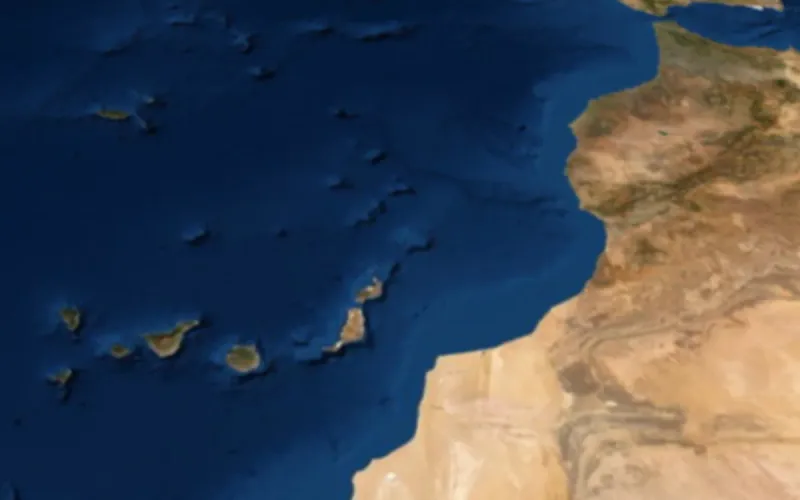
According to the officer, the objective currently accessible to Morocco would first concern Ceuta and Melilla. He then raises the possibility of future pressure on the Canary Islands, while acknowledging that a direct territorial confrontation would today be “suicidal” for Rabat.
Mount Tropic occupies a central place in his reasoning. This underwater mountain, located southwest of the Canary Islands, is rich in tellurium and rare earths useful to the photovoltaic industry. Morocco and Spain defend competing interpretations of the extension of their continental shelves. For Morales, Rabat is thus seeking to secure an advantageous position now in the future European energy strategy.
He also puts forward a hypothesis related to the 2030 World Cup. Morocco is investing heavily in its infrastructure and wants to host the final in Casablanca. According to him, Pedro Sánchez’s declaration in favor of Madrid could have triggered a new friction with Rabat. The lieutenant colonel nevertheless acknowledges that he has no certainty linking this episode to the Ceuta crisis.
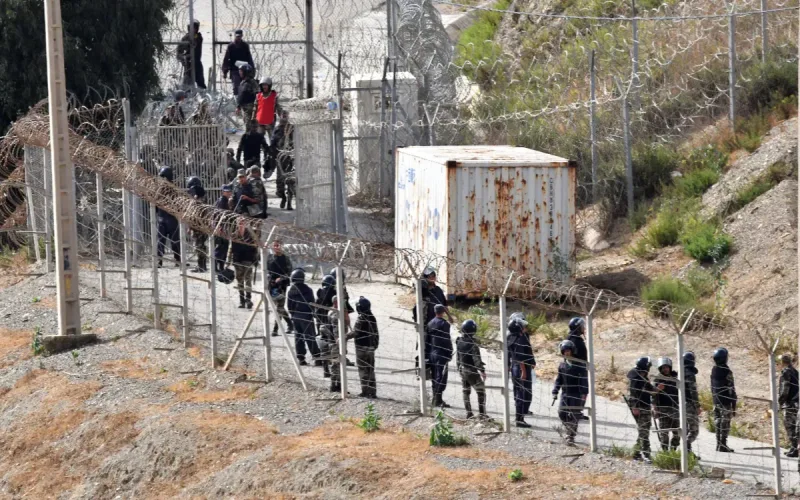
This analysis comes as the question of the “occupied cities” has returned to the debate between Morocco and Spain. Morales nevertheless believes that Madrid would be making a mistake by militarizing its response, because images of soldiers deployed at the border could be turned against Spain in the communications battle.
On Bladi.net : Ceuta: after the crisis with Morocco, Sánchez calls in the army, intelligence services and his ministers
He instead recommends Europeanizing the Ceuta and Melilla issue and discreetly using the available economic pressure tools. Energy is one of them, while Madrid is already examining the energy levers that can be activated against Morocco. Such a strategy would nevertheless remain delicate given the 23 billion euros in trade linking the two countries.