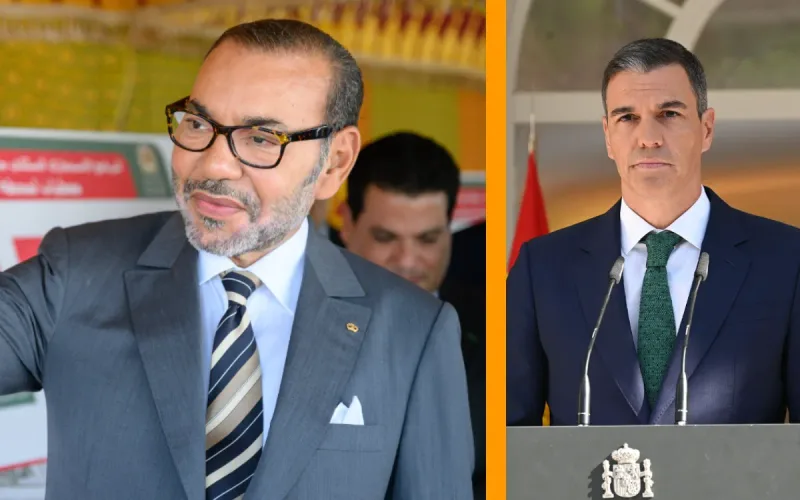
Ceuta then the “occupied cities”: Ahmed Toufiq’s remarks before Mohammed VI
Ahmed Toufiq mentioned Ceuta before Mohammed VI before recalling the use of a Sufi work in the mobilization of Moroccans to “liberate the occupied territories.” Amid heightened tensions with Spain, this sequence has drawn attention, without constituting an official claim.
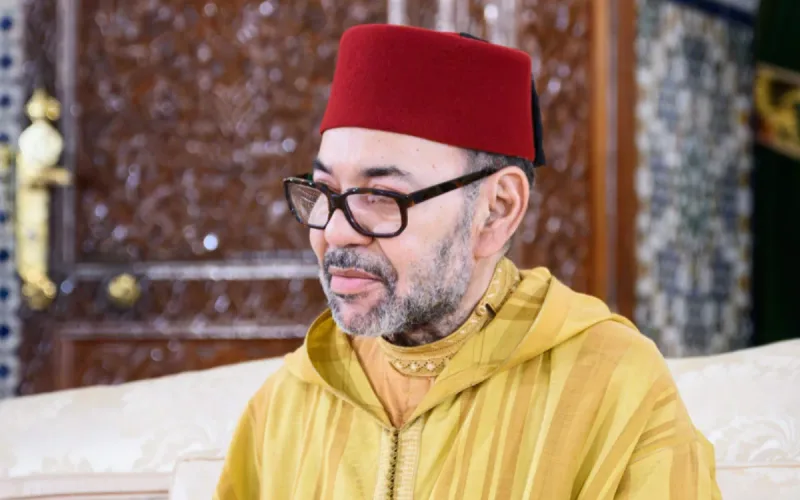
The Minister of Habous and Islamic Affairs was speaking on Monday, August 24, during the religious vigil presided over by Mohammed VI at the Royal Palace in Rabat for Eid Al-Mawlid. He was presenting the sovereign with the annual report of the Higher Council of Ulema and local scientific councils.
Ahmed Toufiq first recalled that Ceuta had given Morocco two major religious figures: the qadi Ayyad, author of “Al-Chifa,” and Abou Al-Abbas Al-Azafi, author of “Al-Durr Al-Munazzam.”
The minister then mentioned “Dalā’il al-Khayrāt,” the famous collection of prayers for the Prophet composed by Imam Al-Jazouli. This work, he stated, was the “symbol of Moroccans in their mobilization to liberate the cities occupied on the Atlantic Ocean at the beginning of the modern era.”
On Bladi.net : Ceuta and Melilla: Morocco and Spain Tell Different Stories
The sequence nevertheless takes on a particular dimension following the migration crisis of July 30 and 31 in Ceuta. It placed the status of the two cities back at the heart of the political debate between Rabat and Madrid. Abdellatif Ouahbi subsequently stated that Morocco held historical and geographical rights over Ceuta and Melilla, while Spain responded that its sovereignty was not negotiable.
A wording already used in 2025
The reference to the “occupied territories” was not, however, devised after the Ceuta crisis. It had already appeared in a letter addressed by Mohammed VI to the Higher Council of Ulema on September 15, 2025.
In it, the sovereign asked for “Dalā’il al-Khayrāt” to be highlighted, recalling that these prayers had been brandished by Moroccans in the 15th century “in their sacred struggle to liberate the occupied territories.” The publication presented on Monday by Ahmed Toufiq is therefore part of a religious program launched nearly a year earlier to commemorate the fifteen centuries since the birth of the Prophet.
This precedent weakens the hypothesis that the wording was specifically chosen to send a warning to Madrid. But the fact that Ceuta, followed by this historical mobilization, was mentioned before the king and just weeks after a major crisis leaves the sequence open to political interpretations.
On Bladi.net : Ceuta: after the crisis with Morocco, Sánchez calls in the army, intelligence services and his ministers
The Spanish context reinforces this reading. Madrid sent more than 150 additional troops to Ceuta, and Pedro Sánchez convened a National Security Council bringing together, among others, the Defense, Interior and Foreign Affairs ministries and the intelligence services.