
Moroccan Passport Ranking 2026: Limited Global Mobility
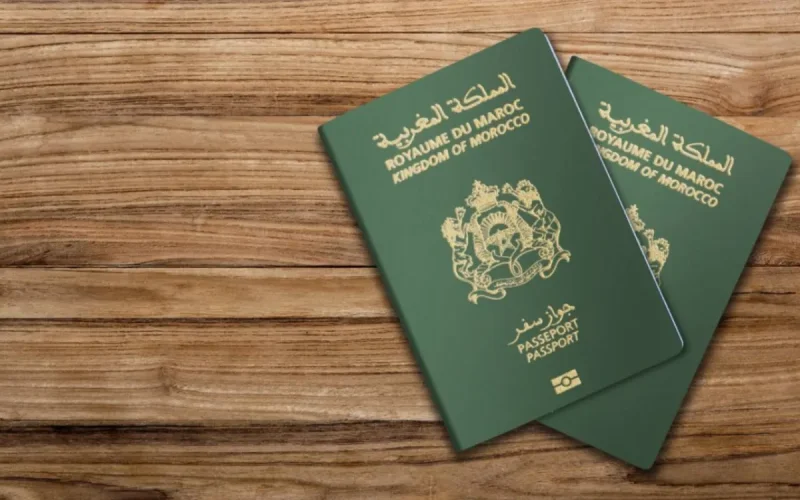
The Moroccan passport allows travel without a visa to several countries, but it falls far short of offering true freedom of movement internationally. A global ranking reminds us that Moroccans still need a visa for many major destinations, particularly in Europe, North America, and Asia.
The Moroccan passport ranks 122nd globally in the Global Passport Index 2026 by Global Citizen Solutions. According to this source, it provides visa-free access to 43 countries. But behind this figure lies another reality: holders of a Moroccan passport must still apply for a visa for approximately 82 destinations.
On Bladi.net : Moroccan Passport Climbs Global Ranking, Grants Visa-Free Access to 77 Countries
Among the countries in question are important destinations for studies, work, business, or family visits, such as the United States, Germany, France, China, Japan, Argentina, and Austria. For many Moroccans, traveling remains a heavy administrative process, with files to prepare, financial documents, consular appointments, and sometimes lengthy delays.
This ranking also highlights the gap between Moroccans who only hold a Moroccan passport and those who possess a second nationality. For part of the MRE, particularly in Europe, the passport of the country of residence concretely changes life: it facilitates travel, reduces procedures, and opens more opportunities for studies, work, or investment.
The report measures more than just freedom to travel. Global Citizen Solutions also evaluates investment potential and quality of life linked to each nationality. The passport thus becomes a broader indicator: it shows the extent to which a nationality allows one to move, settle, invest, or build a project abroad.
On Bladi.net : Moroccan Passport Ranks 73rd Globally, Grants Visa-Free Access to 67 Countries
For Morocco, the assessment is therefore mixed. The Moroccan passport ranks better than those of several countries in the region, but it continues to severely limit the international mobility of its holders. In a world where travel has become essential for families, students, entrepreneurs, and MRE, these restrictions still weigh heavily.
Related Articles
-

220 dirhams on construction sites, up to 400 in the fields: Morocco lacks workers
25 August 2026
-

This Israeli company equips defense giants and also has clients in Morocco
24 August 2026
-

After three days in Algeria, a sanctioned Russian ship passes near Morocco
24 August 2026
-

In Brussels, a Moroccan name and being over 50: the profile most disadvantaged in hiring
24 August 2026
-

Morocco Has a New Billionaire Forbes Has Yet to Spot
24 August 2026