Morocco Set to Raise Minimum Wage by 5% in September, Fulfilling Labor Agreement
Social dialogue between the government, employers and trade unions will be held in September. Will the guaranteed minimum interprofessional wage (SMIG) increase by 5% as of September 1, in accordance with the agreement signed on April 30, 2022?
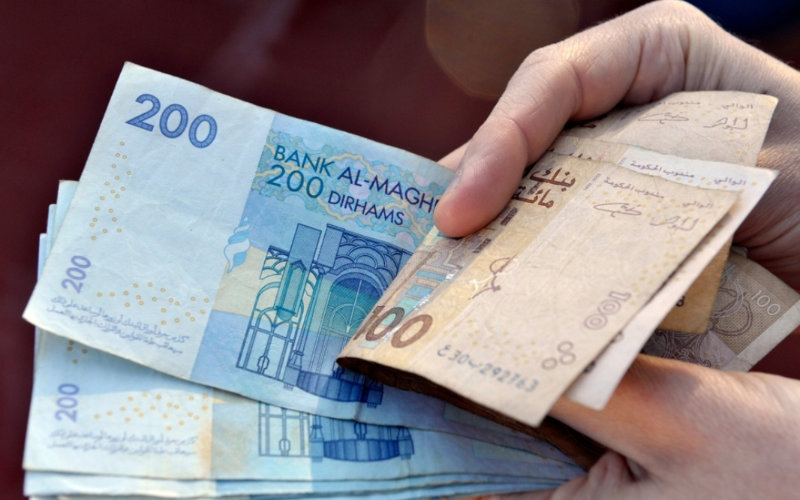
In application of the agreement signed on April 30, 2022 between the government and the trade unions, the guaranteed minimum interprofessional wage (SMIG) should increase by 5% as of September 1. The increase in the SMIG had been decided in September 2022 during a meeting between the government, the trade unions and the General Confederation of Moroccan Enterprises (CGEM). The social agreement provides for a general increase of 10% of the SMIG for one hour of work for the liberal professions and the industry and commerce sectors over two years. A 5% increase was thus scheduled for September 2022 and the wage went from 14.81 dirhams per hour to 15.55 dirhams, i.e. a monthly salary of 2,970 dirhams. A new 5% increase should be applied as of September 2023, and the hourly wage should rise to 16.29 dirhams per hour, i.e. 3,111 dirhams per month.
For now, one question is on everyone’s mind: will this increase be applied? According to the Moroccan Union of Labor (UMT), Miloudi Moukharik, the SMIG should be raised to 5,000 dirhams and this demand will be presented to the government during the month of September next, in order to cope with the increase in the cost of living, reports the daily Les Inspirations Éco. "When wages remain very low compared to the increase in prices, it is mainly the workers paid at the SMIG who suffer," notes economist Omar Kettani. He advocates for the indexation of wages to the inflation rate. Badr Lachgar, economist and financial analyst, believes that the SMIG at 5,000 dirhams will allow the population to regain the purchasing power lost due to the galloping inflation recorded in recent years.
However, this increase in the SMIG will not be without consequences for companies and price levels. "Such an increase will inevitably push them to raise their selling prices to offset the increase in their wage bill. Similarly, companies operating in exports will also have difficulty preserving their cost competitiveness, as the cost price of their production would increase," he explained. This increase can also result in an increase in the money supply in circulation, and consequently a strong inflation.