Fearing what could happen to Ceuta, they would rather lose 30,000 euros
One month after the mass crossings from Morocco, Ceuta’s property market is still holding up. But some sales have been suspended, and buyers are considering forfeiting up to 30,000 euros already paid rather than signing the final agreement.
Housing prices have not fallen, but uncertainty is beginning to weigh on buyers’ decisions.
Several real estate agencies in Ceuta report sales transactions that have been stalled since the July 30 crisis. Some buyers are even considering giving up the deposits paid when signing the preliminary agreement, which can amount to 20,000 or 30,000 euros.
An agent from Mar Real Estate told Idealista that one client confided in her, fifteen days after the crisis began, that she was afraid to proceed with her purchase.
Another explained that she would rather lose the deposit already paid than finalize the transaction.
For the professionals interviewed, however, this is neither a market collapse nor a generalized departure of residents. They speak instead of caution and decisions being postponed while awaiting stabilization.
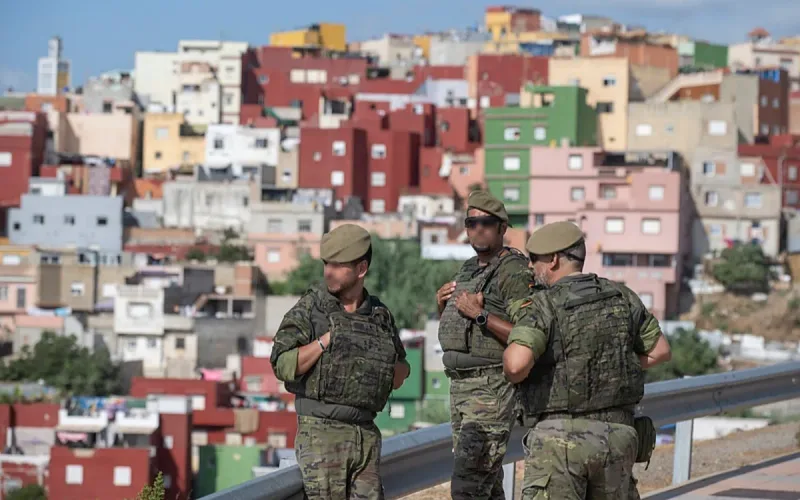
This concern emerged after the mass crossings recorded in Ceuta from Morocco on July 30.
On Bladi.net : The CNI had identified 2,000 people near Ceuta; 72,000 ultimately crossed the border
Prices for older homes offered for sale, for their part, remain close to their historic highs. In August, they reached an average of 2,753.86 euros per square meter, according to Idealista data.
That represents a year-on-year increase of 16.6%, compared with 15% in July. Agencies therefore have not, for the time being, observed owners willing to sell their homes at a bargain price in order to leave Ceuta.
The situation contrasts with that observed after the May 2021 migration crisis. Around 8,000 people had crossed the border in two days, and the average housing price had fallen by 3.21% in one month, from 1,991 to 1,927 euros per square meter.
This time, the shortage of housing and the still-high level of demand continue to support the market.
Homes sought “for what could happen”
On the other side of the Strait, professionals are nevertheless observing a change in the motivations of some buyers from Ceuta.
An agency in Campo de Gibraltar has noted an increase in requests for homes located in La Línea de la Concepción, Algésiras or San Roque.
Buying a second home in this region is common among residents of Ceuta. But some clients now explain that they want to have a home that is immediately habitable “for what could happen” or so they can cross the Strait overnight.
In Ceuta, the crisis has also triggered a surge in rental inquiries. People who entered from Morocco are looking for apartments, as well as commercial premises or garages.
Agencies say they are receiving calls from France, Germany and Belgium from relatives wishing to find housing for family members present in Ceuta. La Perla Real Estate and Euroestrecho say they refuse these requests when those concerned do not yet have regular administrative status.
This new demand is added to the usual demand at this time of year from teachers and civil servants returning to the city for the start of the school year.
The shortage of available housing is driving rents up. According to Mar Real Estate, an apartment in the center that was previously rented for between 700 and 800 euros per month is now being offered for around 1,000 euros. For a three-bedroom home, prices have risen from approximately 1,000 or 1,200 euros to 1,500 euros.
This profitability is prompting some owners who had been considering selling to rent out their property temporarily while waiting for the market to stabilize.
On Bladi.net : 72,000 crossings into Sebta: Spanish police accuse Morocco of organizing everything
For now, Ceuta’s property market is therefore holding steady, with neither falling prices nor a rise in rushed sales. Professionals nevertheless fear that a lasting crisis could further block transactions, delay new construction and slow investment.