72,000 crossings into Sebta: Spanish police accuse Morocco of organizing everything
Plainclothes men allegedly directed Moroccan police officers on the ground during the 72,000 crossings into Sebta at the end of July. This is one of the most explosive conclusions of a report by the Spanish National Police now submitted to the courts.
The document comes from the National Centre for Immigration and Borders (CENIF), the intelligence unit of the Comisaría General de Extranjería y Fronteras. It was handed to National Court judge María Tardón, who is seeking to determine whether the events of 30 and 31 July could constitute an attack on the independence of the Spanish state.
According to information revealed by El Español, the report does not regard the 72,000 crossings recorded into Sebta as merely the result of a spontaneous movement amplified by social media. Spanish investigators now support the hypothesis of a planned operation intended to overwhelm the border system.
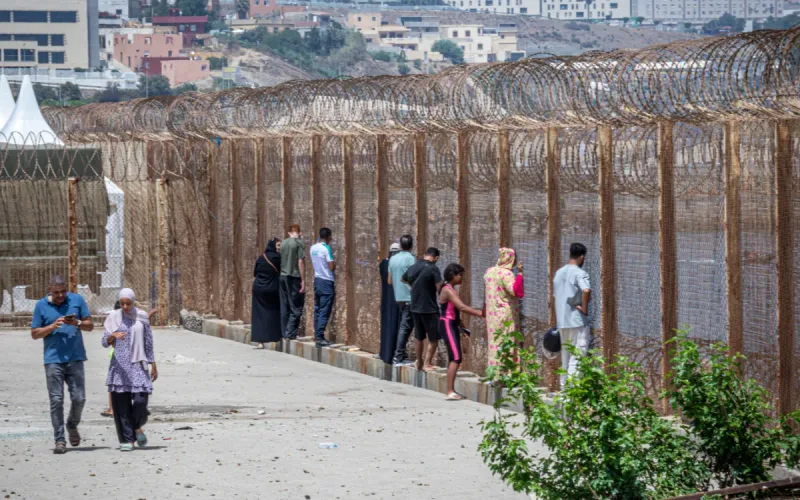
The most sensitive passage concerns what allegedly took place on the Moroccan side. Gendarmes are said to have given instructions to those seeking to cross and organized the flows of thousands of people who arrived in Fnideq in order to direct them towards specific areas enabling them to reach Sebta.
But these Moroccan police officers were allegedly not alone in directing the movements. According to the CENIF, civilians were also monitoring the operation and directing people towards the Tarajal breakwater. More importantly, these men allegedly gave instructions to the Moroccan police officers themselves.
On Bladi.net : Six warnings before the chaos in Sebta : Madrid had been warned
The report states that this organization appears in several images collected by investigators. RTVE even refers to “alleged Moroccan intelligence agents,” but their identity and exact role have not been publicly established.
Waves allegedly organized to overwhelm the border
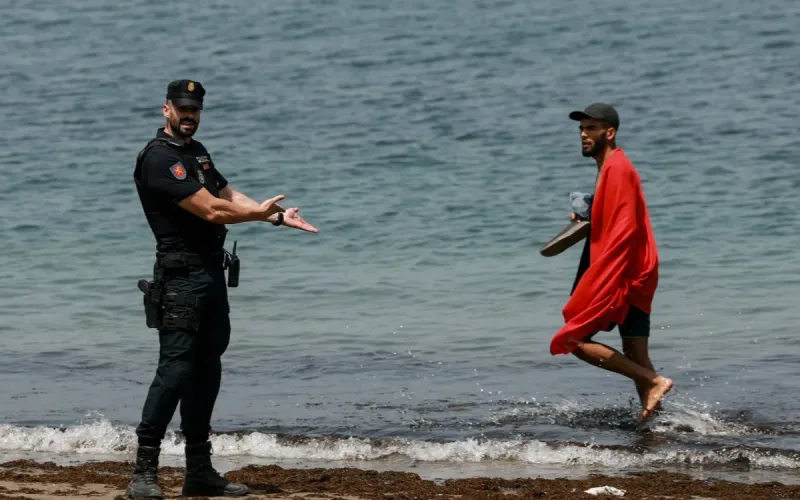
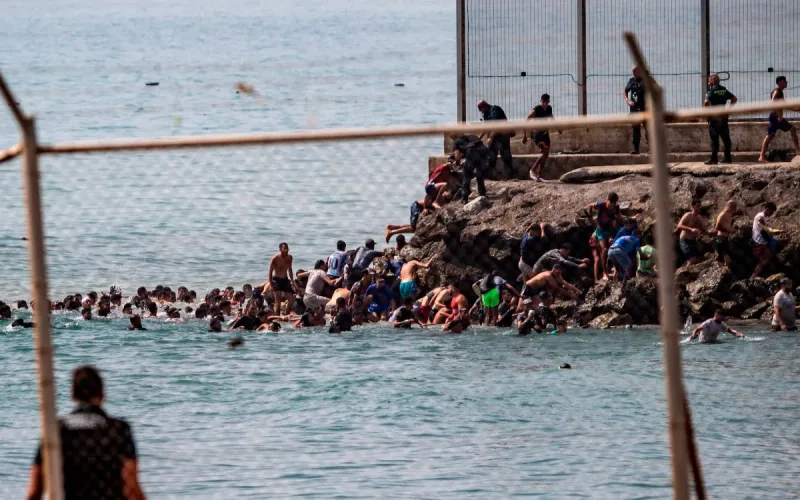
The CENIF also relies on the very different profiles of the people who entered Sebta over the course of 30 July. Before 11 a.m., the first wave consisted mainly of young Moroccan men aged 15 to 25, equipped with wetsuits, flippers and floats.
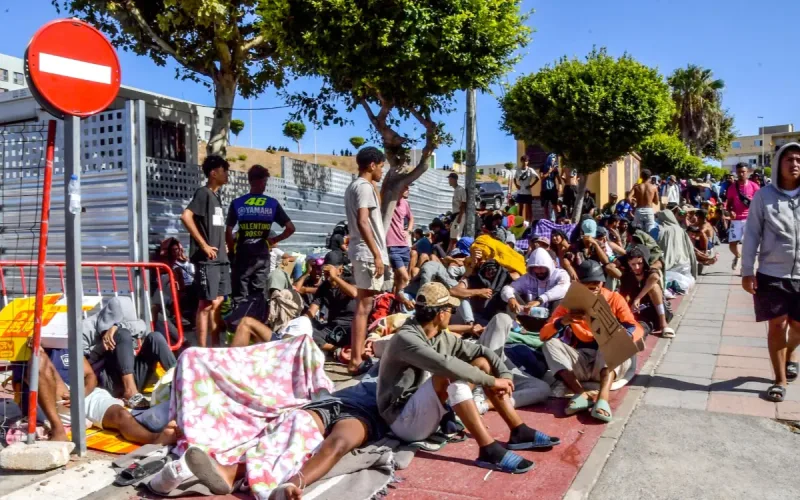
From 11 a.m. until the evening, the profile changed abruptly. Entire families, women and children began to arrive, often wearing sports clothing and sandals, without any particular equipment for making the crossing by swimming. During the night, and then the following day, the profile allegedly returned to something close to that of the first wave.
For the report’s authors, this succession allegedly made it possible first to overwhelm Spanish control capacities with the people best prepared, before the arrival of much more vulnerable profiles, at a time when the Tarajal system was already overwhelmed.
This interpretation goes considerably further than the previous Spanish investigations into the warnings issued before the Sebta crisis. The CNI had in particular detected a mobilization of 1,000 to 2,000 people and calls circulated on Facebook and WhatsApp, without establishing at that stage that a foreign public authority was directing the movement.
The new CENIF report argues, on the contrary, that the migration objective may have been merely a cover. It notably advances the argument that nearly 90% of the people who entered Sebta returned to Morocco only a few hours after crossing. More than 70,000 people had in fact quickly left the enclave after this exceptional arrival.
On Bladi.net : The CNI had identified 2,000 people near Ceuta; 72,000 ultimately crossed the border
These conclusions are now causing turmoil in Madrid. Spain’s Interior Minister, Fernando Grande-Marlaska, asked the Director General of Police, Francisco Pardo, on Wednesday to clarify since when his services had possessed this information and to send him the case materials.
The Spanish government has not yet endorsed the accusations contained in the report, however. La Moncloa is calling for “maximum caution” and emphasizes that, until now, the executive had said it had no evidence of Moroccan involvement in the exceptional crisis that disrupted Sebta’s migration statistics.
The judicial investigation must now determine the evidentiary value of the information collected by the CENIF. But for the first time since the July events, a Spanish National Police service is no longer merely referring to a border overwhelmed by the scale of the crossings: it describes an organization on the ground and directly attributes a role to members of the Moroccan security forces.