The CNI had identified 2,000 people near Ceuta; 72,000 ultimately crossed the border
Spanish services had detected up to 2,000 people planning to cross and mobilization on social media. Yet 72,000 people ultimately reached Ceuta, driven by viral videos showing a border that had become almost impossible to control.
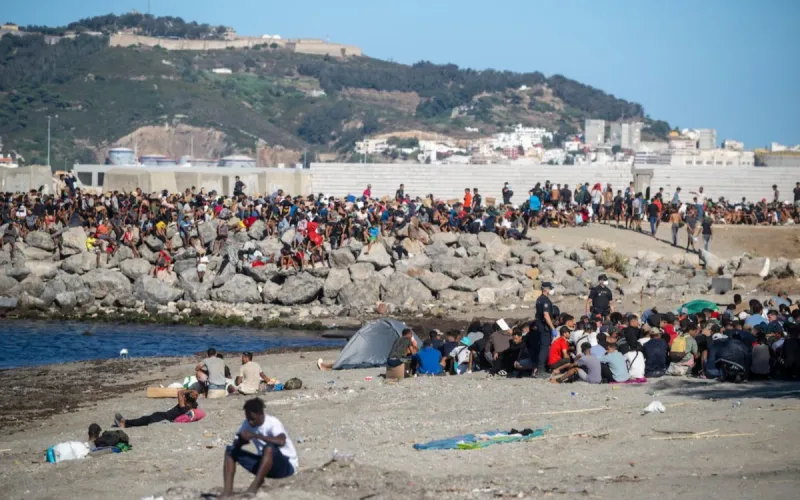
At the end of July, Spanish services had spotted a gathering of between 1,000 and 2,000 people on the Moroccan side of the border. This group was expected to attempt to enter Ceuta by swimming, but there was still no indication that several tens of thousands of people would arrive.
The Spanish National Intelligence Centre, the CNI, had also issued an alert on July 29. It had informed the government delegation in Ceuta that a call to cross the border was circulating on social media for the following day. Some of the groups mobilized had up to 180,000 followers on Facebook.
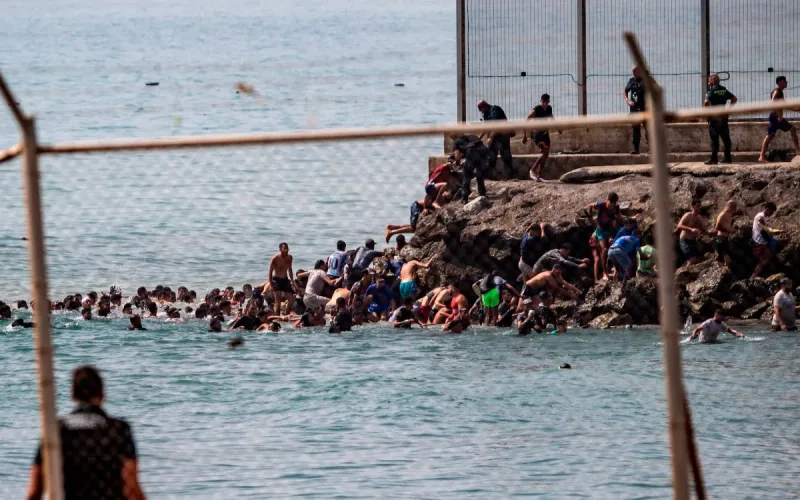
Despite these warnings, the Spanish authorities had not anticipated the scale of the movement. According to figures from the Spanish Interior Ministry reported by El País, around 72,000 people ultimately crossed the border on July 30 and 31.
On Bladi.net : Six warnings before the chaos in Sebta : Madrid had been warned
The first people planning to cross had been drawn in by a false interpretation of a ruling issued by the Spanish Supreme Court on July 8. Posts claimed that the border was now open and that people reaching Ceuta by sea could no longer be immediately returned to Morocco.
Spanish services identified some administrators of Facebook and WhatsApp groups that had relayed the message. These spaces also shared routes, schedules and information about where to find equipment for swimming across.
Investigators nevertheless failed to demonstrate that a foreign intelligence service or a public authority was directing these groups. The initial operation therefore appears to have been organized, but to mobilize a few thousand people, not the 72,000 ultimately counted as having arrived.
An escalation triggered by TikTok videos
The situation changed when the first crossings succeeded. Videos posted mainly on TikTok showed Moroccans celebrating their arrival in Ceuta after crossing the border without encountering any obstacles.
These images quickly went viral. Several tens of thousands of people are believed to have then decided to join the movement without having prepared their departure. The initial mobilization turned into a gigantic chain reaction that could not be contained.
WhatsApp had provided the schedules, Facebook had circulated the maps and TikTok had triggered the departures. Seeing a few hundred people crossing on screen convinced a much larger crowd that the border was open.
The decline in Moroccan surveillance may also have played a role. Some of the security forces were mobilized for the Throne Day celebrations and by the presence of Mohammed VI in Tétouan. According to Spanish reports, Moroccan gendarmes were almost absent from the border for more than 24 hours, at the most critical moment.
Spanish services nevertheless dismiss the possibility of an assault entirely prepared by the Moroccan authorities. They do believe, however, that the passivity observed and certain images of gendarmes allowing vehicles to pass could indicate the intervention of “higher authorities” during part of the crisis.
On Bladi.net : They managed to enter Ceuta, but now need up to 9000 euros to reach Spain
Morocco’s attitude then changed radically. The security forces cooperated in the migrants’ return — up to 90% of the people who entered are believed to have voluntarily left Ceuta — and then prevented a new mass attempt announced for August 15.
Around 5,000 people were still in the enclave at the time of the Spanish assessment. Some are now seeking to reach the mainland and must pay up to 9,000 euros to people smugglers.
Spanish intelligence now estimates the probability of a Moroccan military action against Ceuta or Melilla at less than 10%. It puts the risk of new pressure in the “gray zone” at 60%: migrant mobilizations, cyberattacks, disinformation or difficult-to-attribute acts of sabotage.
The events of July 30 and 31 above all demonstrate the power of the digital chain reaction. An initial mobilization of 2,000 people, identified in advance by the CNI, was enough to create viral images that ultimately drove 72,000 people toward Ceuta.