When Morocco succeeds, part of the Spanish press looks for what Spain will lose
Ports, tourism, automobiles, agriculture: when a Moroccan sector advances, part of the Spanish press does not merely report that success. It immediately explains what it could cost Spain. Several recent headlines show a recurring pattern.

In January 2026, Morocco had just recorded another spectacular increase in tourism and was targeting 26 million visitors by 2030. El Economista chose this headline: “Morocco’s ability to triple its tourism in just twenty years threatens Spain’s.” Morocco’s performance is clearly acknowledged, but is immediately translated into a risk for its Spanish neighbor.
On Bladi.net : Tanger Med, Spain’s Obsession
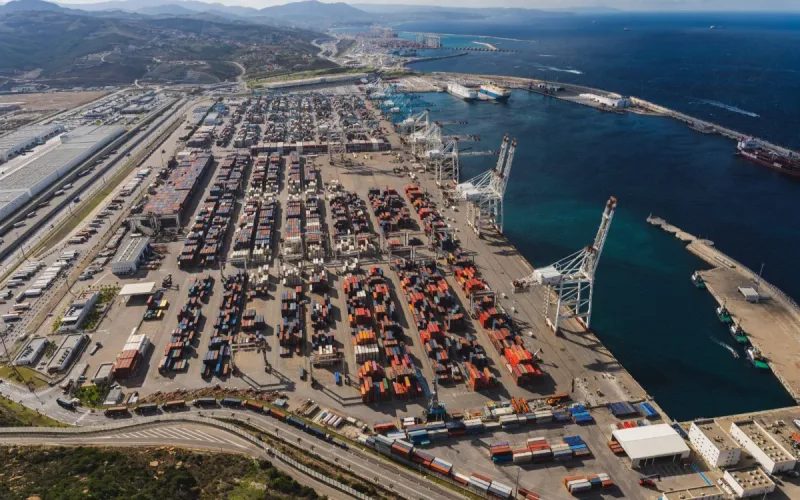
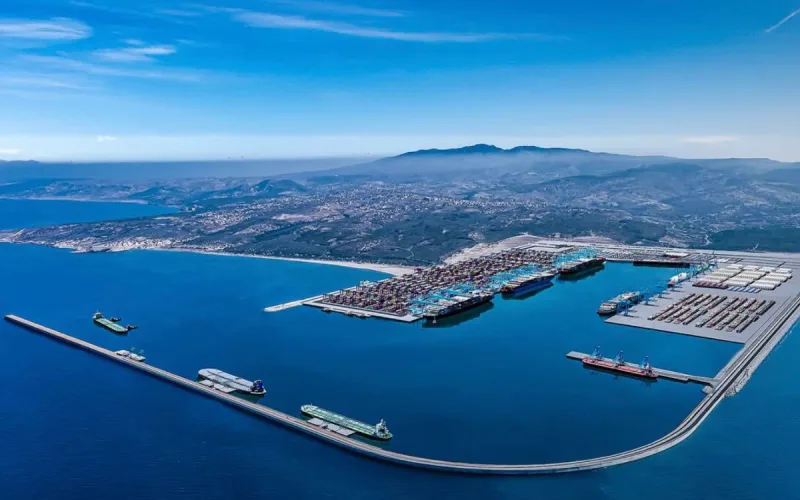
The same approach appeared a few months later with Nador West Med. On May 25, 2026, Vozpópuli presented the new Moroccan port as infrastructure built to “directly compete with Algeciras and Valencia.” In the body of the article, the tone rose further: Nador West Med was said to aim “to wrest control of global maritime trade from Spain” and could “choke” the two major Spanish ports.
The Moroccan project is, however, first and foremost an industrial operation: 5.4 kilometers of breakwaters and quays, several billion euros in investment, and an announced initial capacity of 5 million containers. But the chosen narrative is that of a duel in which Morocco’s progress necessarily implies Spain’s decline.
When success becomes a threat
Agriculture provides another particularly clear example. In November 2025, Morocco was preparing massive investments in dams and desalination plants to secure its water supply after several years of drought. El Economista described it as a “threat to Spanish agriculture,” with a Moroccan program valued at 36 billion euros.
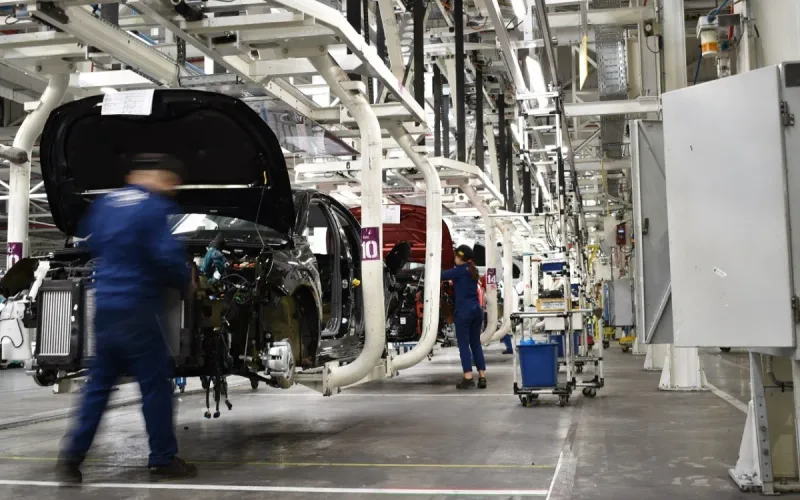
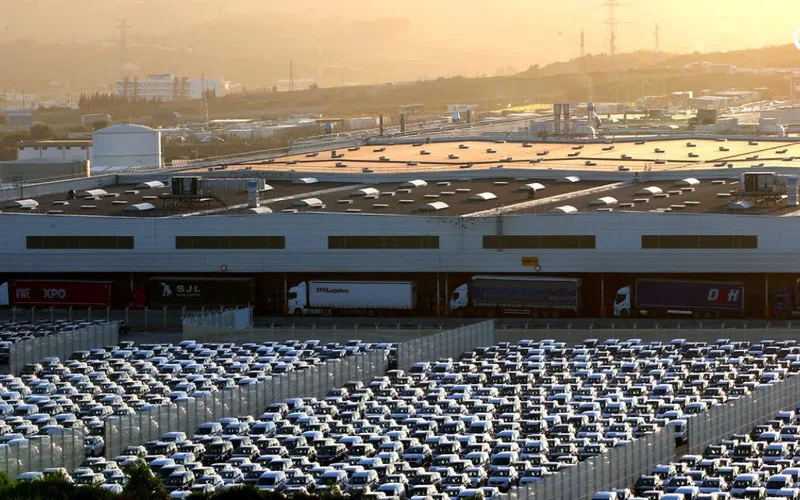
In the automobile industry, the vocabulary is even more direct. On April 2, 2025, HuffPost España ran the headline: “Morocco openly acknowledges its threat to Spain with its automotive plan.” Yet the facts presented in the article mainly described the creation of a Moroccan industrial ecosystem, production of more than half a million vehicles, and the attraction of new investments.
A few days later, the same language appeared in the shipbuilding industry. El Economista presented the construction of Africa’s largest shipyard under this headline: “Morocco challenges Spain.” Once again, a new Moroccan industrial capacity was described through Spain’s position.
The phenomenon is not new. As early as 2021, El País ran the headline that Tanger Med was “neck and neck with Algeciras.” The article acknowledged the Moroccan port’s “dizzying” growth and its overtaking of Spanish ports in container traffic, while also devoting considerable attention to the loss of ground by Spain. It was nevertheless much more nuanced than other examples: port officials and experts also pointed out that Tanger Med and Algeciras compete in some types of traffic but complement each other in others.
This way of looking at Morocco had already been studied. Research by the Three Cultures Foundation, focusing in particular on El País, El Mundo, La Vanguardia, El Periódico, ABC and La Razón, concluded that the space given to Morocco in the Spanish press did not correspond to the intensity of the economic, political and social relations between the two countries. At the time, the topics selected were mainly related to Ceuta and Melilla, the Sahara, civil liberties, immigration, drug trafficking and terrorism. The authors believed that “conflict and controversy” dominated and summarized the coverage with two notions: “lack of knowledge and mistrust.” However, the study concerns 2008 and, on its own, does not make it possible to assess the Spanish press today.
It would also be false to conclude that every Moroccan success is systematically presented as a threat. In April 2025, during the major power outage in the Iberian Peninsula, Cinco Días devoted its headline to Morocco’s efforts to help Spain, stressing that Rabat had mobilized up to 38% of its available production capacity.
The examples examined therefore do not allow us to say that the Spanish press “hides” Moroccan successes. They reveal a more precise phenomenon: when these successes directly affect a Spanish sector—ports, tourism, automobiles or agriculture—they are frequently reported through their possible consequences for Spain.
On Bladi.net : Spain Morocco Automotive Competition Strategy Industrial Partnership
Morocco is advancing; the Spanish headline then asks who in Spain risks losing out…