Spain Morocco Automotive Competition Strategy Industrial Partnership
Morocco’s automotive industry is gaining momentum, but Madrid refuses to treat it as a direct threat. In a response to Parliament, the Spanish government outlines a more subtle approach: cooperate with Morocco while protecting its factories, jobs, and industrial sovereignty.
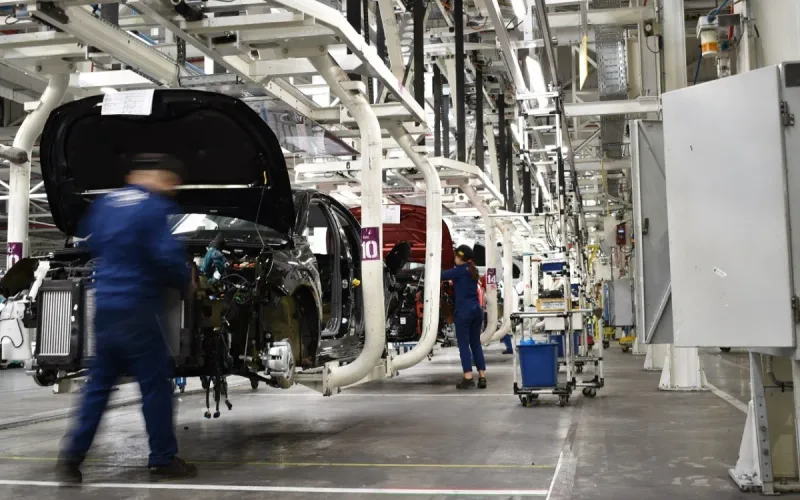
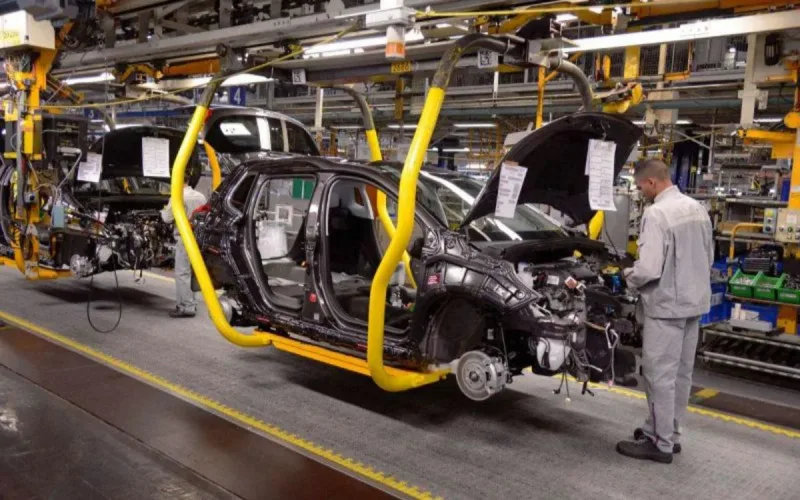
The question came from Vox, a far-right political party. Several deputies from the Spanish party challenged the government on the growing competitiveness of Morocco’s automotive industry. Behind this request lies an obvious concern: Morocco is producing more and more vehicles, attracting manufacturers, exporting to Europe, and establishing itself as an industrial platform just kilometers from Spain.
On Bladi.net : article 122239
But Madrid’s response does not follow a scenario of direct confrontation. The Spanish government refuses to present Morocco as an industrial adversary of Europe. It argues instead that the rise of Moroccan automotive can be an opportunity to strengthen economic and institutional relations between the two countries.
The wording is important: for Spain, Morocco is not a "systemic rival" of the European Union, unlike powers such as the United States or China. It is described as a strategic partner on which Spanish and European companies can rely for their expansion projects.
But this openness comes with conditions. Madrid insists on the need to protect employment, strengthen the local industrial ecosystem, and guarantee balanced competition rules. In other words, Spain wants to work with Morocco, but not at the cost of weakening its own factories.
A Useful Partner, But Monitored
The Spanish response thus reveals a doctrine more nuanced than simple fear of Moroccan competition. Madrid does not want to close the door to Morocco. It wants to prevent the automotive transition, particularly electric, from displacing too much industrial value outside Spain.
It is in this context that the government highlights European and national tools designed to protect the sector. It notably cites the future Industrial Accelerator Act, which introduces the principle of "Made in Europe" to access certain public support, as well as the Plan España Auto 2030, presented as the central axis of Spanish automotive reindustrialization.
The objective is clear: attract more production of batteries, components, and electric vehicles to Spain to compensate for job losses linked to the decline of traditional engines. Madrid wants to accelerate investments, train workers, and install new production lines in the country.
The Spanish government also says it maintains "active vigilance" over the automotive components sector. It wants to monitor the evolution of the industrial ecosystem, detect trend changes, and identify threats as well as opportunities.
This is where Morocco occupies a particular place. Spain welcomes Moroccan investment and recognizes the interest of strengthened partnership, but it also acknowledges risks linked to asymmetries, dependencies, and industrial competition.
The relationship is thus presented as a balance to be built. Madrid speaks of reciprocity, realism, and the search for greater autonomy. In short, Spain wants to benefit from Moroccan momentum without letting this momentum turn against its own industrial apparatus.
On Bladi.net : Automobile: Morocco, the new industrial El Dorado that is shaking Spain
For Morocco, this official response confirms an important evolution: its automotive industry is no longer viewed as a simple low-cost production relay. It is now strong enough to factor into Madrid’s and Brussels’ strategic calculations.