How a Skateboard Fall and a Hassan II Announcement Led to a High Atlas Hotel
In 1989, a British man injured himself skateboarding with his son. Immobilized in hospital, he came across an announcement by King Hassan II encouraging investment in Morocco. A few years later, an abandoned kasbah in the High Atlas became a renowned hotel, now celebrated by the Financial Times.
It all began with a bad skateboard fall in London. In 1989, Chris McHugo tried to keep up with his son Matthew on a skateboard. The attempt ended at Dulwich Hospital, with his leg immobilized. To while away the time, the Briton leafed through the Financial Times and came across an announcement by King Hassan II. The Moroccan monarch promised to remove the administrative obstacles holding back foreign investment in the kingdom. Chris immediately saw an opportunity.
On Bladi.net : Far from the chaos of Marrakech: the village that invented the tourism of the future
A few months later, recovered from his injury, he accompanied his brother Mike and their mother to Morocco. Their destination was Imlil, a village in the High Atlas where Mike had been organizing hikes for years. There, they met Omar Aït Barmed, a mountain guide nicknamed Hajj Maurice, who had become a close friend of the family.
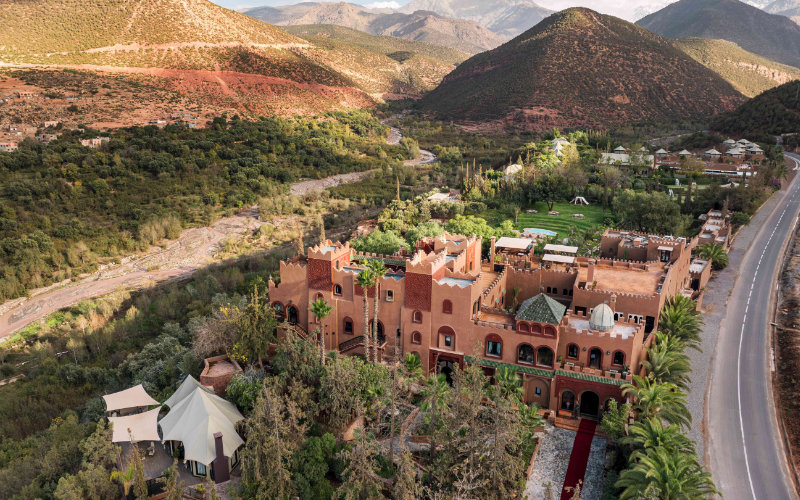
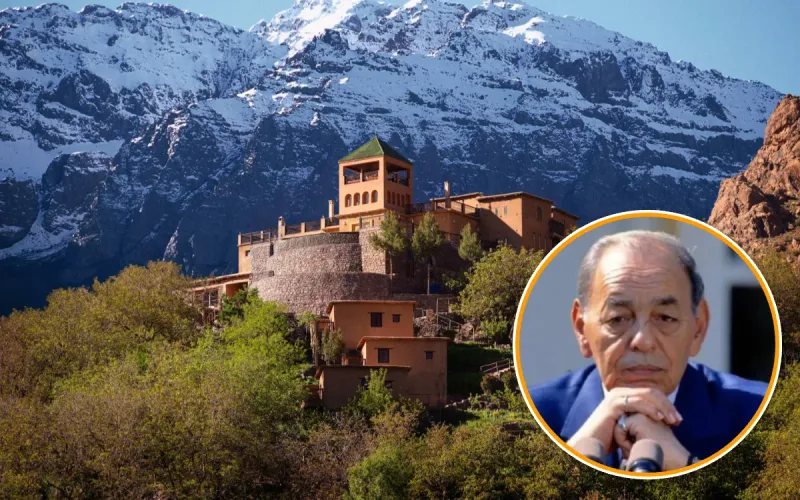
From the guide’s house, the two brothers looked out at the ruins of an old caid’s residence perched above the valley. Mike had known the building for a long time but had never seriously considered buying it. Almost nothing remained: a collapsed roof and a few sections of wall. Chris, however, remembered the royal announcement he had seen in hospital. “Why not find out who owns the land and try to buy it?” he suggested.
The idea seemed simple. Making it happen would take nearly five years. They had to track down the many owners of the land, negotiate its purchase and overcome administrative formalities. The McHugo brothers received crucial help from Omar Aït Barmed, who took part in the negotiations and would become their partner. The story, recounted in a 2015 publication by Kasbah du Toubkal, shows that the process took much longer than expected despite new measures intended to make investment easier.
From abandoned ruin to renowned hotel
Work finally began in 1995. Workers from Imlil rebuilt the old residence using local materials and traditional techniques. Everything had to be carried by hand or on muleback. Electricity did not reach the region until 1997. British architect John Bothamley oversaw the project, ensuring the kasbah retained its appearance.
The hotel opened in October 1995, initially as a center for school groups. Comfortable rooms and high-end services were added gradually. The following year, filmmaker Martin Scorsese chose the site for his film “Kundun,” about the Dalai Lama. For the shoot, the kasbah was temporarily transformed into a Tibetan monastery.
Thirty-one years after it opened, the Financial Times is publishing a new report on Saturday, October 17, about the hotel perched above Imlil. The British journalist recounts arriving after a walk through walnut groves, terraces overlooking the valley and excursions to neighboring villages. The kasbah has become a sought-after stop for travelers wishing to discover the Toubkal mountains and Amazigh villages.
The hotel’s story has also been shaped by the September 2023 earthquake. Mike McHugo was there with his brother when the first tremors struck. The historic part of the building suffered significant damage, but the newer rooms fared better. No guests or staff members were injured, the Briton said at the time.
The kasbah also continues its work with people in the valley. A contribution collected from guests supports local projects, including waste management, emergency services and education. The Financial Times report particularly highlights the boarding schools that allow girls from remote villages to continue their education, far from the tourist trails of the High Atlas.