Ramadan in Morocco: How 800 Observers Spot the Moon Without AI
While some countries, such as the United Arab Emirates, deploy drones and AI to observe the moon, the Kingdom remains the guardian of a centuries-old tradition. In Morocco, the beginning of the holy month of Ramadan relies on a network of 800 observers spread across 83 centers, certifying the appearance of the crescent without any reliance on technology.
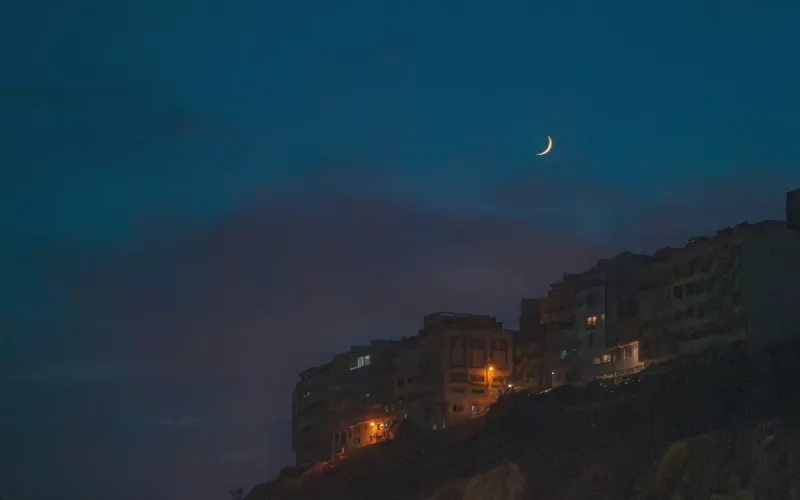
This rigor, unique in the Muslim world, scrupulously follows the Prophet’s recommendation: “Fast when you see the moon and break your fast when you see it.” Driss el Raoui, head of the observation service at the Ministry of Islamic Affairs, states it with conviction: “Morocco follows Islamic tradition. That is how it has been and that is how it will continue to be.” This process, remarkably precise despite its manual nature, mobilizes religious officials and military personnel, all trained in astronomy and endowed with visual acuity certified by notaries, EFE explains.
Oujda’s Eye and the Seven Cannon Shots: Behind the Scenes of the Night of Doubt
The system, managed from the Royal Palace in Rabat, is a genuine administrative clockwork mechanism. On Wednesday evening, the first decisive confirmation came from Oujda, the country’s easternmost point. Despite dense clouds along the Atlantic coast, which prevented observers in Salé from viewing the hilal, the overall validation made it possible to activate the state apparatus. “Note that they also viewed the hilal in Bouarfa,” Driss el Raoui told his teams, moments before Minister Ahmed Taoufiq informed King Mohammed VI.
On Bladi.net : Ramadan 2026 in Morocco: Official Start Date and First Fasting Day
Once the news was validated by the Commander of the Faithful, the ritual gave way to art and solemnity:
• Handcrafted calligraphy: Hand-drawn manuscripts are prepared for the monarch and the princes.
• The cannon of faith: Seven cannon shots rang out to inform the population that the first day of fasting was set for Thursday, February 19 2026.
• Scientific rigor: Observers must be positioned at altitude, far from any light pollution, to ensure there is no error.