The Morocco-Spain tunnel "technically viable": will Europe and Africa soon be connected?
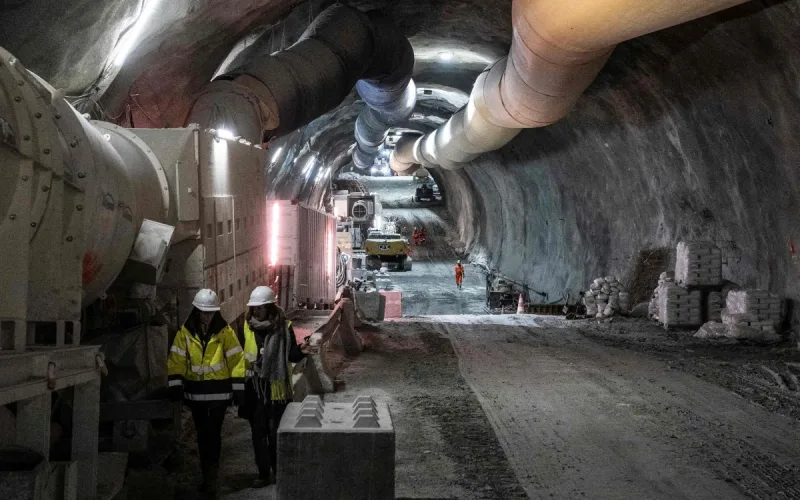
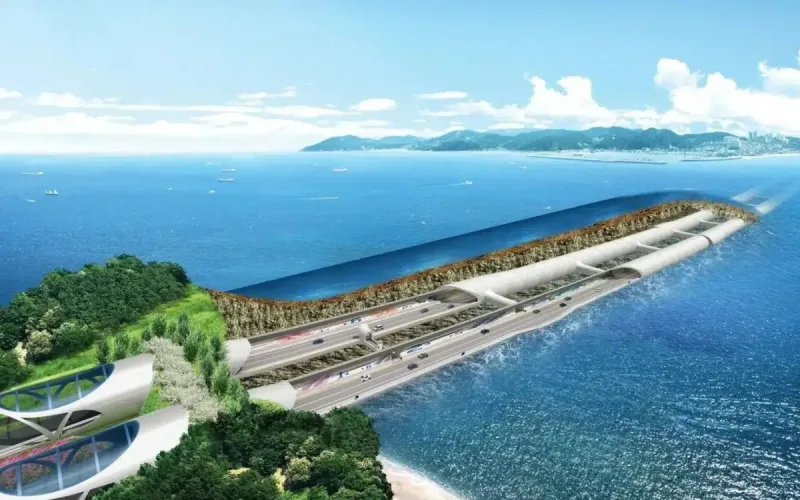
The project of a tunnel between Spain and Morocco, and by extension between Europe and Africa, could become a reality. The feasibility study commissioned by the Spanish Society for Studies on Fixed Communication through the Strait of Gibraltar (SECEGSA) to the German company Herrenknecht, world leader in the field of tunnel boring machines, has confirmed that the infrastructure, although extremely complex, is technically viable.

In its report, Herrenknecht has assessed the feasibility of the railway tunnel under the Camarinal sill, an area with extremely difficult geological conditions. According to Vozpópuli, the company has submitted its report to the government since last June and the latter would be preparing to launch a call for tenders by June 2026, the deadline set for the update of the 2007 preliminary project. Morocco and Spain would have committed to making a final decision on this project in 2027.
The studies carried out by the German company Herrenknecht confirm that the project of a tunnel under the Strait can be developed within the current technical and engineering limits, but they underline its complexity and the enormous logistical and economic challenges that its implementation will involve. Recently, a delegation from SECEGSA and its Moroccan counterpart, the National Society for Strait Studies (SNED), were in Norway to learn about a similar-scale project, the Rogfast, the world’s longest and deepest tunnel, currently under construction.
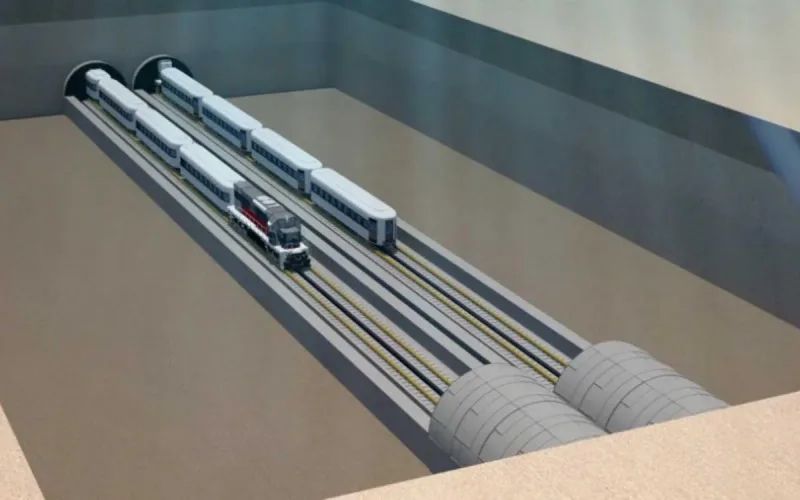
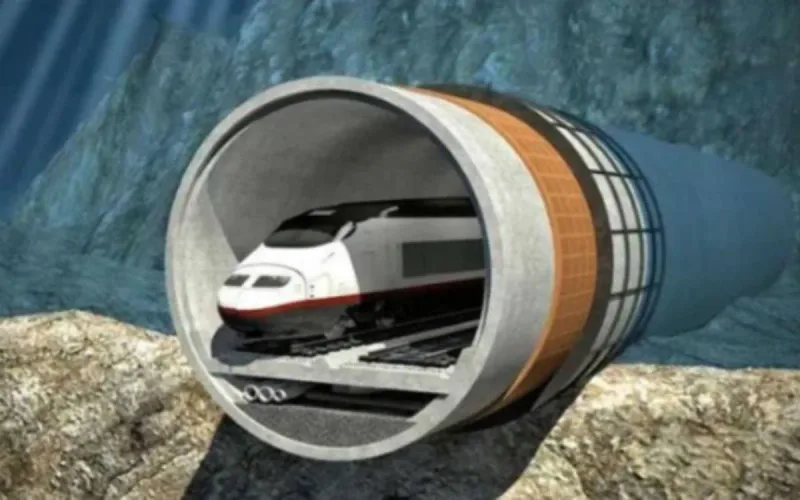
The project plans the construction of a tunnel of about 65 kilometers in length, which would follow a two-tube route, according to the details recently provided by SECEGSA to the College of Civil Engineers of Madrid. Its realization should take between six and nine years and cost more than 8.5 billion euros (including the reconnaissance gallery, the final railway tunnels, the terminal, the facilities and contingencies), according to the estimates.
The forecasts place the first concrete progress around 2030, coinciding with the Football World Cup that will be jointly organized by Morocco, Spain and Portugal. In any case, sources close to the project indicate that the tunnel would be completed between 2035-2040, given the technical and investment difficulties. Herrenknecht’s confirmation of the technical feasibility of the tunnel marks a decisive step forward after decades of studies.