Morocco says it has reduced cadmium in its fertilizers, while Brussels acknowledges it cannot verify this
OCP says it ships fertilizers to the European Union containing less than 20 mg of cadmium per kilogram, compared with a European limit of 60 mg. However, a European official acknowledges that no systematic monitoring of imports makes it possible to verify this content.
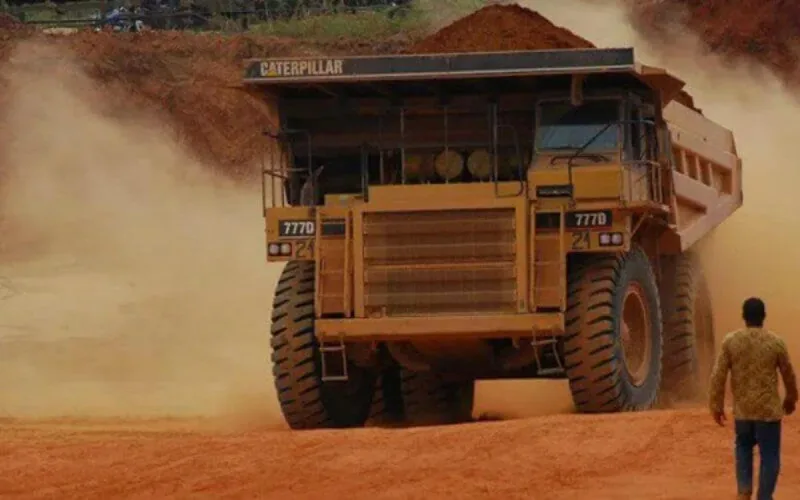
The issue has returned to the forefront with an investigation published this Saturday by Boursorama, conducted notably at the Sidi Chennane mine, near Khouribga. Cadmium occurs naturally in certain phosphate deposits and can, through fertilizers, accumulate in soil and then in food.
In France, the debate has intensified in recent months after fertilizers from Morocco were singled out as contributing to the population’s overexposure to this toxic heavy metal. In June, French lawmakers adopted a bill aimed at reducing this exposure.
On Bladi.net : Morocco Cadmium Fertilizers Adaptation France Health
Morocco is directly at the heart of the issue: it holds around 70% of the world’s known phosphate reserves, with approximately 50 billion tonnes. OCP says it has developed a process using additives during phosphoric acid treatment to capture cadmium before the fertilizers are manufactured.
Brussels does not systematically monitor
The state-owned group thus says that since 2025 it has been offering its European customers fertilizers containing less than 20 mg of cadmium per kilogram. This is three times lower than the 60 mg/kg limit applied by the European Union to phosphate fertilizers. Europe accounts for 17% of OCP’s foreign sales, behind Asia (41%) and the Americas (31%).
But a European official interviewed by AFP introduced an important qualification: in the absence of «systematic monitoring» of cadmium in imported fertilizers, Brussels is unable to verify the levels announced by producers itself. He nevertheless confirmed that a major Moroccan producer had informed the European Union of its investments to guarantee fertilizers below the 20 mg/kg threshold.
OCP does not disclose the amounts devoted to this adaptation. Faris Derrij, CEO of OCP Nutricrops, explains that the group has made significant investments to adapt its production to regulations that differ depending on the market. This development is part of the broader move upmarket of fertilizers produced in Morocco.
The issue is not limited to cadmium. OCP also plans, for 2027, a land-based storage facility intended to reduce discharges of phosphogypsum into the sea, a residue from fertilizer production that contains, among other things, heavy metals and acidic substances.
On Bladi.net : Pancreatic cancer: a doctor blames the cadmium present in certain Moroccan fertilizers
The matter also arises in a context of high tensions in the global fertilizer market. Disruptions in the Middle East have made the supply of sulfur and ammonia more expensive and complicated. OCP acknowledges effects on costs and delivery times, but says it has maintained production thanks to its stocks and Morocco’s geographical position.