From Rock to Gray Gold: OCP's Plan to Transform 75% of Global Reserves into Premium Fertilizer
Holding the majority of global phosphate reserves, Morocco is executing a strategic shift. The objective is to move away from simple mineral exports to locally produce high-technology compound fertilizers, deemed significantly more effective.
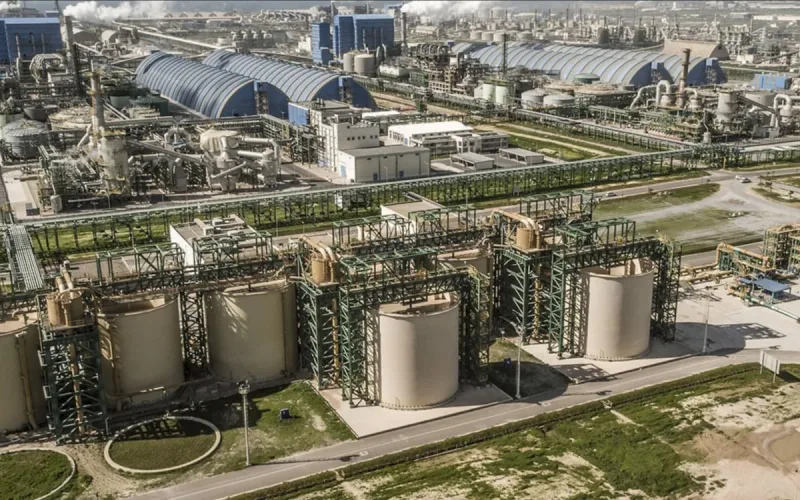
Near the village of Mzinda, located 240 kilometers southwest of Casablanca, a vast 460-hectare construction site is emerging from the middle of a rocky desert. These future chemical processing facilities are part of a production corridor stretching to the Atlantic port of Safi. The state-owned group Office chérifien des phosphates (OCP) plans to manufacture 4.5 million tons of concentrated phosphate fertilizer annually by the end of 2026. This capacity is then expected to double to reach 9 million tons by 2028.
On Bladi.net : Morocco Dominates Global Phosphate Reserves, Holding 70% of World’s Supply
These volumes will serve as raw material for more sophisticated products. Transported to other infrastructure of the semi-public company, such as the immense Jorf Lasfar industrial complex, these concentrates will enable the design of cutting-edge compound fertilizers. According to information from the daily newspaper L’Opinion, this new strategy contrasts with previous decades during which the kingdom primarily sold basic solutions, particularly suited to the ancient soils of the African continent that desperately lack them.
On Bladi.net : Strait of Ormuz: The blockade that threatens to paralyze Moroccan phosphates
This industrial transition relies on an abundant natural resource, with Moroccan subsoil hosting nearly three-quarters of global phosphate reserves. This mineral constitutes, along with potash and nitrogen, one of the three nutrients essential for plant growth. By betting on this local transformation, the country aims to establish itself as one of the world’s leaders in premium fertilizers, more expensive products but offering better yields, used for several decades by Western farmers.