Morocco has almost quadrupled the reduction in new HIV infections
A major study estimates that new HIV infections in Morocco fell from 3,163 in 2013 to 874 in 2025. However, this 72% decline masks a strong concentration of the epidemic in certain populations and significant differences between regions.
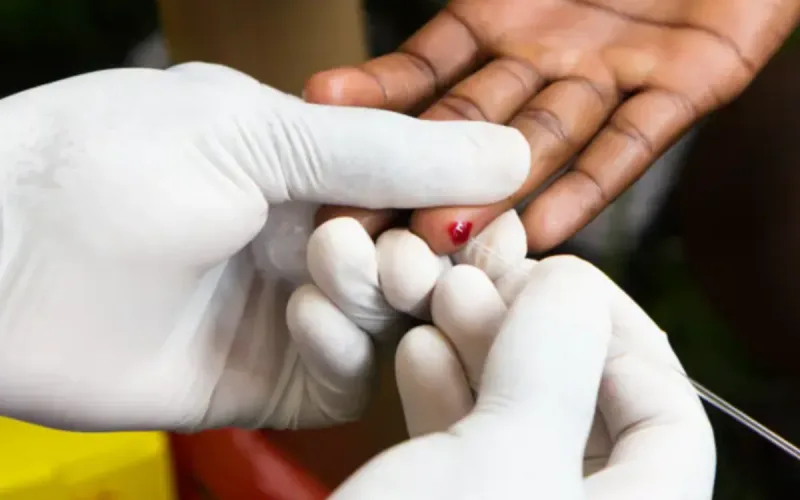
The HIV epidemic has contracted sharply in Morocco in just over a decade. The annual number of new infections is estimated to have fallen from 3,163 in 2013 to 874 in 2025, a decrease of approximately 72%.
These findings come from a study published in The Lancet HIV, conducted notably with officials from Morocco’s Ministry of Health and Social Protection. The researchers analyzed data from 58 bio-behavioral surveys, as well as several national databases covering the period from 2010 to 2023.
The 874 infections projected for 2025 therefore do not correspond to the exact number of diagnoses recorded that year. They are an estimate produced by a mathematical model, with a margin of uncertainty ranging from 715 to 1,136 new infections.
On Bladi.net : Morocco Aims to Eradicate AIDS by 2030, Health Minister Reports 15,000 Current Cases
Even under the high estimate, the decline remains considerable compared with 2013, for which the model estimates between 2,404 and 4,110 infections. The authors conclude that Morocco’s epidemic has “contracted significantly.”
This development extends the progress already observed in previous years. Morocco had notably expanded testing, broadened access to antiretroviral treatment and strengthened prevention efforts among people at greatest risk.
The overall decline does not, however, mean that HIV is now circulating uniformly or only marginally within the population. On the contrary, the study highlights a growing concentration of new infections within certain networks.
More than 80% of infections concentrated in certain populations
In 2025, populations considered to be at greatest risk are estimated to account for 80.2% of new infections. Networks of men who have sex with men would account for 42.3% of the total, compared with 37% for networks linked to heterosexual sex work and 0.9% for people who inject drugs.
Men who have sex with men also have the highest estimated incidence, with 0.80 new infections per 100 people followed for one year. This concentration confirms a vulnerability already reported in Morocco in previous surveys.
The situation varies considerably between regions. The share of new infections associated with these male networks is estimated at 30.1% in Marrakech-Safi, but reaches 80.8% in Fès-Meknès. Casablanca-Settat, Rabat-Salé-Kénitra, Souss-Massa and Tanger-Tétouan-Al Hoceïma also display distinct dynamics.
Women would account for 37.4% of the new infections recorded by the model in 2025. Among them, three out of four are estimated to have been infected by a partner carrying transmissible HIV. This finding shows that exposure is not limited to people directly identified as belonging to the most vulnerable populations.
On Bladi.net : HIV Rates in Morocco: Young Adults and At-Risk Groups Most Affected, Study Finds
The researchers also simulated the impact of several prevention strategies. Reaching the international “95-95-95” targets — 95% of infected people knowing their status, 95% of diagnosed people receiving treatment and 95% of treated people having a suppressed viral load — could reduce new infections by an additional 52.8%.
A 50% increase in condom use could prevent nearly 39.8% of infections. Expanding pre-exposure prophylaxis, or PrEP, in oral or injectable form could further reinforce this decline, provided that sufficient coverage and good adherence are achieved.
Data from nine major care centers are rather encouraging regarding treatment. On average, 91% of patients were still being followed after two years, around 84% after three years and 83% after four years. Among people whose viral load had been monitored, the suppression rate reached at least 94.9% in several cohorts.
Morocco has therefore almost quadrupled the reduction in new HIV infections in twelve years. For the authors, preserving this result will now require much more targeted actions, adapted to the realities of each region and capable of reaching people who remain distant from testing, treatment and prevention resources.