
A Moroccan passport is not always enough to play for the Atlas Lions
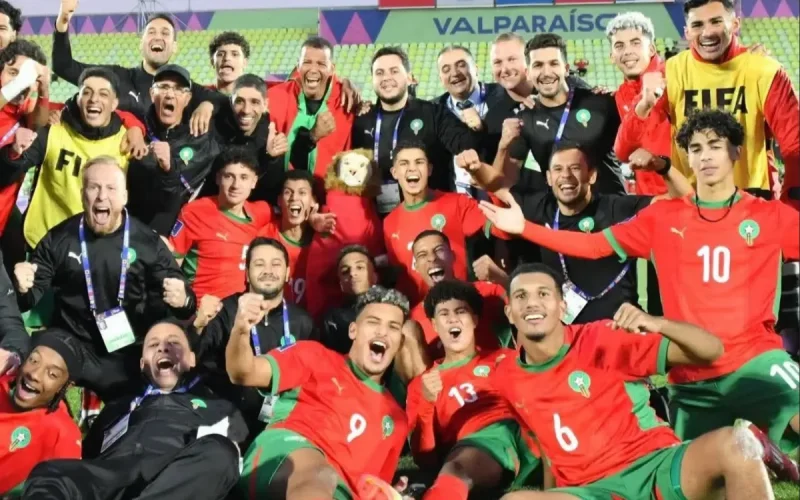
Holding Moroccan nationality does not always guarantee the right to play for the Atlas Lions. FIFA has just clarified the criteria applied to dual nationals and players wishing to change national teams, an important issue for the many talents followed by Morocco.
FIFA published a new edition of its commentary on the eligibility conditions for national teams on Thursday, 10 September 2026, accompanied by an updated guide on eligibility and association change requests.
These documents detail how FIFA and its Football Tribunal interpret the rules. They notably take into account decisions issued by FIFA bodies and the Court of Arbitration for Sport up to 30 June 2026.
The governing body clearly distinguishes legal nationality from sporting nationality. In situations where an “effective link” is required, a passport is not enough: the player must also establish an objectively verifiable connection with the territory of the federation he wishes to represent, specifies the FIFA.
This link may be based on his place of birth, that of at least one of his biological parents or grandparents, or on a period of residence complying with FIFA rules. Personal, cultural or emotional attachment to a country does not, by itself, constitute an eligibility criterion.
On Bladi.net : Football: FIFA officially validates Rayane Bounida’s choice for Morocco
This clarification directly concerns Morocco, which regularly monitors players trained in France, Belgium, the Netherlands or Spain. FIFA notably approved Rayane Bounida’s change of association in favor of Morocco, following his appearances for Belgium’s youth teams.
Legal nationality and sporting nationality
The principle of the “effective link” is not new. FIFA specifies that the regulatory framework has remained broadly unchanged since the reform adopted in September 2020. The new element lies in the explanations based on recent case law.
The commentary notably addresses the conditions under which a nationality is considered acquired, periods of residence and their possible interruptions, territorial criteria, as well as the definition of an “A” international match.
This latter notion is essential in determining whether a player who has already represented a country can still change national teams. FIFA considers that a player has played in a match as soon as he has actually entered the field, even for a very short time. A mere call-up or presence on the bench is not enough.
Participation with a youth national team does not automatically prevent any change. The situation depends in particular on the official nature of the matches played, the player’s age, the level at which he competed and the nationality he held during his first international appearances.
Not all cases therefore follow the same procedure. Some players must request a change of association, while others need a decision on their eligibility or a simple confirmation. Morocco has recently initiated this type of procedure for several young players playing in the Netherlands, including Oualid Agougil, authorized to join Morocco’s national teams.
On Bladi.net : FIFA validates the arrival of a gem in the Moroccan team
FIFA also imposes a specific deadline on federations. Any request requiring a decision from the Players’ Status Chamber must be submitted through its legal portal no later than fifteen days before the start of the relevant international window.
For the Royal Moroccan Football Federation, this timetable is decisive: a case submitted too late risks not being processed in time to allow the player to respond to a call-up.
The documents published on 10 September therefore do not change the conditions for joining a new national team. They explain more precisely how the existing rules are applied. Each case remains examined individually and, when the regulations require an effective link, holding a Moroccan passport is not sufficient on its own.
Related Articles
-

Spain wants to avoid another Lamine Yamal case with this Moroccan Barça gem
17 September 2026
-

Sofyan Amrabat refuses to play for Morocco, Ouahbi responds: “The past grants no privileges”
17 September 2026
-

Dutch football mourns Ahmed Ammi, born in Morocco and dead at 45
16 September 2026
-

Hakim Ziyech wants to return to Morocco: “I don’t want to demand a place, I want to earn it”
15 September 2026
-

2030 Final: Spain Responds to Lekjaa, “It Will Be in Spain”
11 September 2026