
After investing €1 billion, French companies want their share of Morocco’s next boom
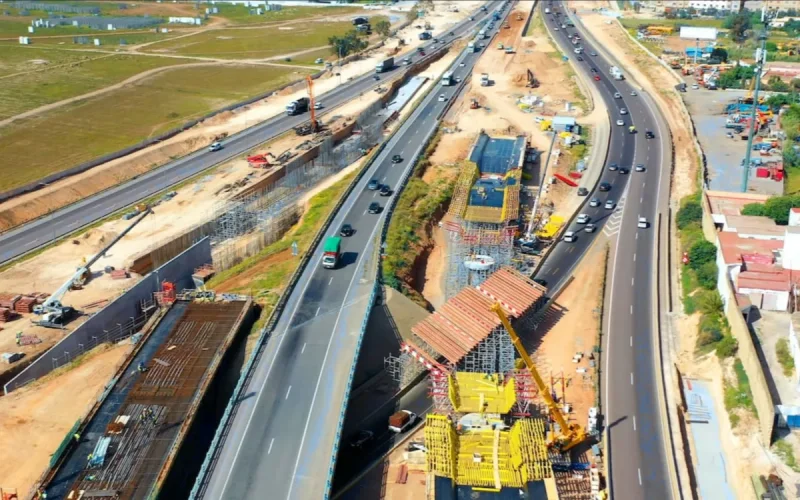
Automotive, renewable energy and agri-food: French companies are now seeking to position themselves for the next wave of Moroccan projects. After the return of investment, the battle is shifting toward the markets opened up by the kingdom’s industrialization and new infrastructure.
Morocco has become an “open-air construction site” for French companies, according to La Tribune. In an analysis published on Friday, September 18, the daily identifies automotive, renewable energy and agri-food among the sectors offering new opportunities to establish operations.
This offensive comes after a sharp rebound in French capital. In 2025, investment from France reached one billion euros, its highest level in ten years. It accounted for one-third of the net foreign direct investment received by Morocco and nearly 90% of its annual increase, as our article on the strong return of French investors had shown.
On Bladi.net : Morocco attracts one billion euros in French investment, an unprecedented level in ten years
The political reconciliation between Rabat and Paris accelerated this movement. Emmanuel Macron’s state visit in October 2024 resulted, according to figures cited by La Tribune, in 33 contracts and investment projects representing €10.7 billion.
For French companies, however, the issue is no longer simply selling products in Morocco. The kingdom already has major industrial chains in the automotive and aerospace sectors and is now seeking to attract production, processing and export activities.
Renewable energy offers another area for development, with needs related to decarbonizing industry, electricity generation, storage and future green fuels. In agri-food, the prospects concern both local processing and equipment, irrigation and access to African markets.
French companies seek their place
The future Dakhla Atlantique port, whose completion is expected by the end of 2028, illustrates this new economic geography. The infrastructure is intended to support trade with West Africa and create new needs in logistics, industry and services.
Companies from Occitanie want to benefit from this momentum. The second edition of the “Cap sur le Maroc” forum, organized in early September in Montpellier, brought together economic stakeholders interested in the opportunities offered by the kingdom. The region and the Montpellier metropolitan area are relying in particular on their historic ties with Morocco and on the twinning between Montpellier and Fès.
But French companies are arriving on ground that is now highly contested. Morocco is rapidly diversifying its partners and attracting Chinese, American, Spanish and British capital, as well as capital from Gulf countries. In the automotive sector, China is already financing part of Morocco’s industrial boom without distancing Rabat from the United States.
On Bladi.net : Morocco Has China Finance Its Industrial Boom Without Letting Go of the United States
The projects announced do not systematically materialize on the scale initially envisaged either. The partnership between OCP and Engie, which was expected to mobilize up to €18 billion, was thus substantially scaled back despite the project to create a joint company being maintained.
France nevertheless retains a presence that is difficult to match: nearly 1,160 French subsidiaries employ around 152,000 people in Morocco. This presence gives it a head start, but no longer automatically guarantees it future contracts.
The next economic battle will therefore focus less on intentions than on French groups’ ability to invest locally, forge Moroccan partnerships and integrate into the new value chains. After regaining their place among the kingdom’s leading investors, they must now defend it against much more aggressive international competition.
Related Articles
-
French companies seek to turn Morocco’s mountains into year-round tourist destinations
19 September 2026
-

Rabat sends its teams to Korea to prepare for the arrival of its electric buses
18 September 2026
-
The Morocco–Spain tunnel faces rock testing: fresh funding to prepare for drilling
18 September 2026
-

Michelin distinguishes 31 hotels in Morocco, just one behind the African leader
18 September 2026
-

Tomatoes and mandarins drive Moroccan agricultural exports to 2.38 million tonnes
18 September 2026