
The Morocco–Spain tunnel faces rock testing: fresh funding to prepare for drilling
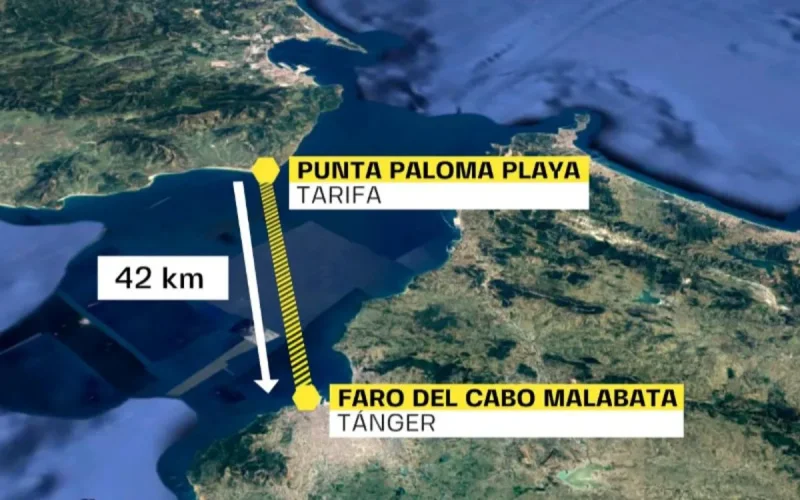
Spain is preparing a new study to analyze 125 rock samples taken beneath the Strait of Gibraltar. The results will have to identify the obstacles that a future drilling machine would encounter between the two countries.
The Spanish Society for Studies on Fixed Communication across the Strait of Gibraltar (SECEGSA) approved on September 3 the technical and administrative documents for a new contract devoted to the railway tunnel project between Morocco and Spain.
The contract is valued at 132,200 euros excluding taxes, precisely 159,962 euros including taxes. It is intended to enable a six-month study of rocks extracted during previous marine surveys, reports Vozpópuli.
The Spanish public company plans to use a negotiated procedure without publication. The University of Salamanca is expected to obtain the contract, as it already has the necessary database and methodology. However, the final award has not yet been announced.
On Bladi.net : Morocco-Spain Tunnel Reaches Decisive Milestone, But Not for 2030
In total, approximately 125 samples from campaigns carried out by SECEGSA and its Moroccan counterpart, the National Society for Studies of the Strait of Gibraltar, will be examined. Their mineralogical and geochemical composition will have to be determined, along with their strength, deformability and abrasiveness.
Experts will specifically search for faults, fractures, alterations and expansive clay minerals. These characteristics could complicate the work of a tunnel-boring machine, accelerate wear on its equipment or make certain sections of the route more difficult to stabilize. Bladi had already detailed the geological “nightmare” facing the project.
A study to anticipate difficulties for the tunnel-boring machine
The new study therefore does not concern the tunnel’s overall feasibility, which has already been examined by the German manufacturer Herrenknecht, but rather the specific risks the terrain would present during excavation.
The schedule provides for six months of analysis, followed by an additional two months to verify and correct the results. The conclusions must be directly usable in preparing the future exploratory gallery, an initial exploratory tunnel intended to improve knowledge of the subsoil before the possible construction of the two definitive railway tubes.
This new expenditure brings to more than 9.6 million euros the sums transferred by the Spanish Ministry of Transport to SECEGSA since 2022. For 2026 alone, the public company received 1.73 million euros to finance its operations and preparatory work.
On Bladi.net : Morocco Spain Underwater Tunnel 2030 World Cup Infrastructure
Madrid is thus continuing the project despite the crisis triggered this summer in Ceuta. Political tensions with Rabat have not interrupted technical cooperation between the two companies responsible for studying the fixed link beneath the strait.
The proposed project would extend for approximately 65 kilometers, nearly 40 kilometers of which would be in Spanish territory. Its cost would exceed 8.5 billion euros for the portion financed by Spain alone. It could not enter service before 2035 to 2040.
Morocco and Spain are expected to decide in 2027 whether to launch an initial exploratory tunnel. Before that choice is made, the 125 samples will have to reveal whether the rocks beneath the strait can truly support one of the most complex railway construction projects in the world.
Related Articles
-

Michelin distinguishes 31 hotels in Morocco, just one behind the African leader
18 September 2026
-

Tomatoes and mandarins drive Moroccan agricultural exports to 2.38 million tonnes
18 September 2026
-

A Fez riad earns a Michelin Key and joins the world’s best hotels
18 September 2026
-

MRE: this mistake when buying in Morocco can block the repatriation of your money
18 September 2026
-
One ship every five minutes between Morocco and Spain: Rabat seeks new rules for straits
18 September 2026