Study finds concerning chromium levels in octopus caught off Morocco’s Safi coast
An international study of octopus caught off Safi has found concerning concentrations of chromium in two areas of Morocco’s coastline. Researchers warn of potential health risks from eating the octopus, particularly for children.
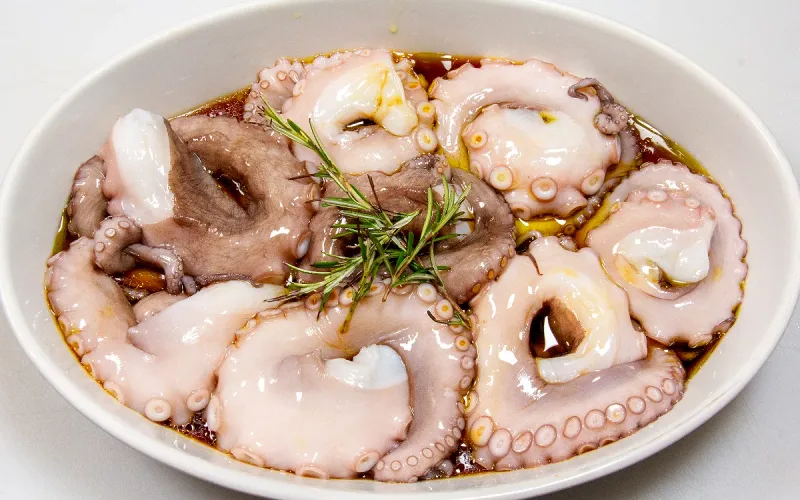
Sixty common octopuses were collected at Cap Beddouza, Jorf Lihoudi and Souiria Kdima, on Morocco’s Atlantic coast. The researchers tested their tissues for four metals: cadmium, chromium, copper and zinc. According to the results presented on November 17 by the University of La Laguna, in the Canary Islands, chromium is the main cause for concern.
On Bladi.net : Arsenic Detected a Second Time in Moroccan Sole: Russia Closes Its Doors to the Exporter
In two of the three areas studied, Cap Beddouza and Jorf Lihoudi, chromium concentrations measured in octopus flesh exceeded the most restrictive benchmark set by the Food and Agriculture Organization of the United Nations (FAO). The analyses also show that metals accumulate more in the digestive gland than in the muscles intended for consumption.
Results varied by catch location. Octopus from Jorf Lihoudi had the highest overall metal burden in their digestive glands. At Cap Beddouza, the flesh showed the greatest relative impact according to the bioaccumulation indicator used by the scientists.
Cadmium concentrations in the flesh remained below the European limit. All the metals analyzed also met the benchmark values cited in the study from the World Health Organization and the US Food and Drug Administration (FDA).
Higher health risk for children
The research team, comprising researchers from Morocco’s Cadi Ayyad and Chouaib Doukkali universities and the University of La Laguna, also assessed the possible effects of regularly eating the octopus.
Using consumption habits in the Safi region, the non-cancer risk index exceeded the benchmark only for children in Cap Beddouza. Under a higher-consumption scenario based on FAO data, the index also exceeded the benchmark for adults in that locality and for children in all three areas studied.
Calculations for cancer risk also exceeded some benchmark levels. The scientists note a significant uncertainty: their analyses measured total chromium without distinguishing between trivalent chromium, which is much less toxic, and hexavalent chromium, which is associated with cancer-causing effects. The risks are therefore estimated using exposure models.
On Bladi.net : Spain Flags Histamine Risk in Moroccan Frozen Mackerel
The Safi region is home to several industrial activities, including phosphate processing, electricity production and port facilities. The researchers recommend closer monitoring of industrial discharges and seafood products, as well as further analyses to identify the different forms of chromium present in the tissues.
They also recommend dietary guidance tailored to local consumption habits. Their study, published in the scientific journal Food Control, calls for further research into the accumulation of metals in octopus and other fisheries resources along Morocco’s coast.