Spain Burka Debate: Hanan Serroukh Warns of Extremism and Inequality
Writer and expert Hanan Serroukh strongly denounced on Tuesday the wearing of the burka and niqab in Spain, describing these garments as tools of slavery and extremist ideology, while condemning political leaders’ inaction in the face of radical Islamism.
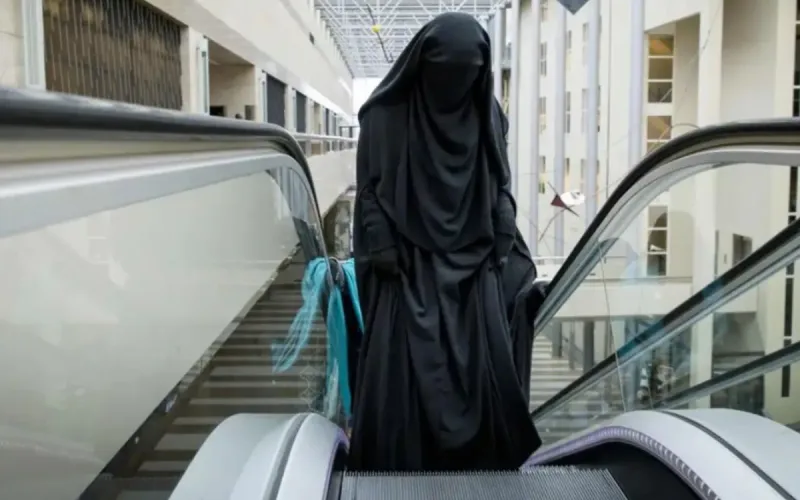
Hanan Serroukh, a former Muslim woman who fled a forced marriage during adolescence, now leads an intellectual and security-focused campaign against Islamism. For this Moroccan-born specialist, the current debate over the legality of the full-face veil in 2026 represents a major setback for democratic values and the principle of gender equality.
On Bladi.net : Spain Halal Menus: Vox Targets Schools and Hospitals
“There will always be women who want to wear them, because they are involved in Islamism, which is like being involved in Nazism,” she told El Mundo. She rejects the idea that the burka is simply a religious garment, describing it as an “instrument of submission” intended to erase women’s presence from public spaces in favor of strict communal norms.
The expert points to the irresponsibility of certain political leaders who, in her view, allow Salafist precepts to infiltrate democratic institutions. She warns that this complacency in the name of multiculturalism leaves women and young girls seeking to free themselves from these coercive impositions without protection.
Human rights and the fight against radicalism in Spain
Ms. Serroukh recalls that countries such as Morocco have already banned the manufacture and sale of full-face veils to preserve national stability in the face of expansionist ideas. She laments that certain Spanish regions are becoming areas where Islamic law is attempting to impose itself outside the framework of state laws.
Although the Spanish justice system has previously limited blanket bans, Hanan Serroukh believes that the system must absolutely guarantee access to a free life for all female citizens. She considers that acceptance of these garments “conceals” a reality of social confinement and symbolic violence incompatible with fundamental rights.
On Bladi.net : In Spain, there are fears of a new "Green March" on the Canary Islands
Finally, the writer is skeptical of recent legislative initiatives by various political parties, which she considers at times opportunistic or incomplete. She urges the government to look “beyond the fabric” and tackle the risk of social fragmentation generated by radical movements that use democratic freedoms in order to weaken them.