
Sebta and Melilla: Pedro Sánchez to complain to the UN
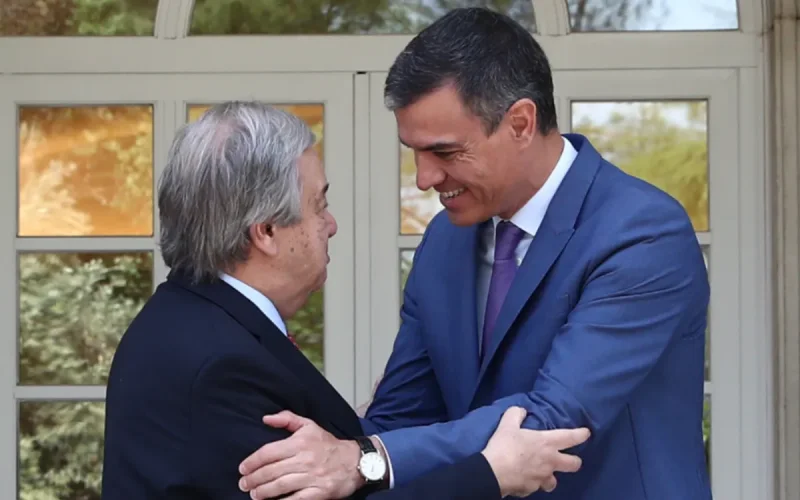
Pedro Sánchez will defend his handling of the Sebta crisis in New York and his refusal to accuse Morocco. Heavily criticized in Spain, the head of government hopes to find greater understanding among international leaders.
Pedro Sánchez is travelling to New York this Monday, September 21, to take part in the high-level week of the United Nations General Assembly. The Sebta crisis will be among the main issues he addresses during his trip.
The Spanish prime minister will seek neither a resolution nor official UN support. He is nevertheless expected to defend his version of events during public appearances, informal meetings with other leaders and interviews with American media.
According to sources at Moncloa cited by Europa Press, Sánchez hopes to obtain “greater understanding” abroad than in Spain, where his handling of the situation has been criticized by almost the entire opposition and several parliamentary allies.
On Bladi.net : The day before 72,000 crossings from Morocco, the CNI had issued a warning: the judge wants to know who knew what
The head of government is expected to maintain the line followed since the beginning of the crisis: there is no evidence allowing Rabat to be accused of organizing the mass crossings, and the Spanish authorities could not have anticipated their scale.
Sánchez maintains that such an arrival was unforeseeable
Declassified documents nevertheless established that Spain’s National Intelligence Centre had reported as early as July 29 a call circulated on social media to cross the border “by the fence and by sea.”
The CNI nevertheless specified that the available intelligence did not make it possible to anticipate “the nature and scale” of the following day’s events. A judge is now seeking to determine who had received this alert and what action had been taken in response.
In New York, Sánchez is therefore expected to defend a precise distinction: the services had information about a possible movement at the border, but, according to him, no alert made it possible to anticipate the arrival of more than 72,000 people on July 30 and 31.
He will also recall that Spain quickly cooperated with Morocco to return some of the people who entered during the first few hours. Despite suspicions expressed in certain police reports, Madrid maintains that no evidence demonstrates an operation organized by Rabat.
On Bladi.net : Ceuta Crisis: After Suspicions Against Morocco, Spanish Report Finds No Evidence
The trip should also allow Sánchez to defend his broader migration policy. The socialist leader presents regular immigration as essential to Spain’s economic growth and stands by the regularization process enabling many foreigners to obtain work permits.
This position has become much more difficult to defend since the Sebta crisis. Around 10,000 migrants are still believed to be in the city, including nearly 3,000 without accommodation, according to figures provided to Europa Press by the executive.
Sánchez will meet the UN secretary-general, António Guterres, on Monday. On Tuesday, he will attend the opening of the General Assembly debate and deliver his speech on Wednesday night into Thursday.
Related Articles
-

“Packaged in Morocco”: the small disclaimer embarrassing a major Spanish brand
21 September 2026
-
In Sebta, a strange Moroccan drone appears at the worst possible moment for Spanish police chiefs
20 September 2026
-

Senior Spanish official calls Sebta and Melilla “colonies” and demands a referendum
20 September 2026
-
“Return Sebta and Melilla to Morocco”: an opinion piece published in El País sets Spain ablaze
20 September 2026
-

In Sebta, hospital keeps five Moroccan women after giving birth: “Otherwise, they will end up on the streets”
19 September 2026