
A Pesticide Reform Could Drive Moroccan Tomatoes Out of Europe
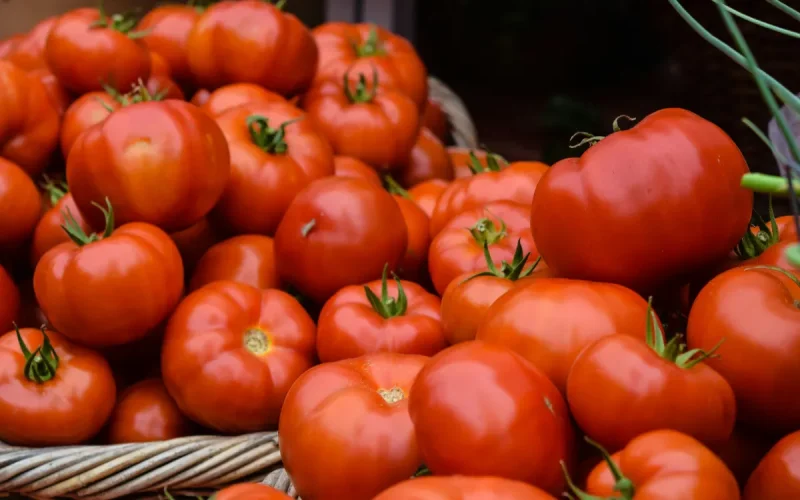
Moroccan tomato exports to the European Union could fall to zero if Brussels applied its strictest rules without producers adapting. This extreme scenario is not a forecast, but it quantifies a risk that could redirect 325 000 tonnes.
The European Commission is considering lowering the authorized residue limits for certain particularly dangerous substances already banned for European farmers to the minimum detectable threshold. The aim is to prevent these pesticides from continuing to enter the Union through imported products.
The Commission’s Joint Research Centre, or JRC, has measured the potential economic consequences of such a tightening. Its report on aligning pesticide standards identifies 18 active substances that could be affected, 235 agricultural products and 86 exporting countries.
Moroccan tomatoes appear among the most exposed trade flows. European controls detected residues corresponding to eight of the substances studied in imports from Morocco. However, the researchers have information confirming their authorization in Morocco for only two of them.
In the most severe scenario, the producers concerned would not change their practices and would lose access to the European market. Moroccan tomato exports to the Union would then fall by 325 000 tonnes, representing 100 % of the analyzed flow.
On Bladi.net : Brussels calculates what new rules could cost Moroccan tomatoes: 195,000 tonnes
This result should be read as a maximum limit, not as an announcement of a ban. The JRC specifies that its work is not a regulatory impact assessment and that its simulations encompass several possible outcomes depending on exporters’ ability to replace the products concerned.
Morocco, the world’s third-largest tomato exporter, could therefore continue selling in Europe if its producers sufficiently modify their treatments and production methods.
Tomatoes would mainly be redirected to the United Kingdom
The disappearance of Moroccan tomatoes from the European market would not mean the collapse of production in Morocco. In the three scenarios examined, the total volume produced in the kingdom would remain broadly unchanged.
The 325 000 tonnes that could no longer enter the Union would be redirected to other outlets, mainly the United Kingdom. The report therefore describes a massive shift in trade more than the destruction of Morocco’s tomato industry.
The shock would also affect European consumers. In the extreme scenario, the almost total disappearance of the imports concerned would increase European tomato production by 8 %. This increase would make it possible to replace up to 82 % of the missing volumes, but the prices paid by consumers would also rise by 8 %.
Some of the tomatoes produced in the Union and usually exported would remain on the domestic market. European exports would then decline by 26 %, or slightly more than one million tonnes.
On Bladi.net : $2.8 billion in Moroccan exports potentially targeted by new European rules
The intermediate scenario would still be burdensome for Morocco, but less radical. It assumes that producers can replace the substances concerned at an additional cost of 20 %. Moroccan sales to the Union would then decline by 195 000 tonnes, or 60 %.
Under this scenario, European production would increase by 3 % and prices would rise by the same proportion. Tomato exports from the Union would decline by 11 %, with part of the harvest being retained to supply the European market.
The third scenario envisages easier adaptation limited to farms where the substances were actually detected. Morocco’s loss would fall to around 7 000 tonnes, or just 2.2 % of the sales studied. The increase in European prices would then be contained at 0.3 %.
The gap between a total disappearance and a 2.2 % decline shows that the future of Moroccan tomatoes in Europe will depend less on the announcement of the reform than on its terms, the time granted to producers and the cost of replacement solutions. For an industry that already sells its tomatoes more cheaply than Spain and the Netherlands, adapting to future European requirements could become the condition for maintaining this advantage.
Related Articles
-

EasyJet suspends two routes to Morocco
29 August 2026
-

Her mother called for help for Jihane, and King Mohammed VI is covering everything
29 August 2026
-

Complaints against banks jump 56% in Morocco, but customers win less often
29 August 2026
-

Belgium refuses her visa because her husband might one day receive assistance: court overturns decision
29 August 2026
-

DH180 million to transform access routes to Casablanca airport in seven months
29 August 2026