
Morocco supplies 8 % of fruit and vegetable imports into the EU, but appears infrequently in pesticide alerts
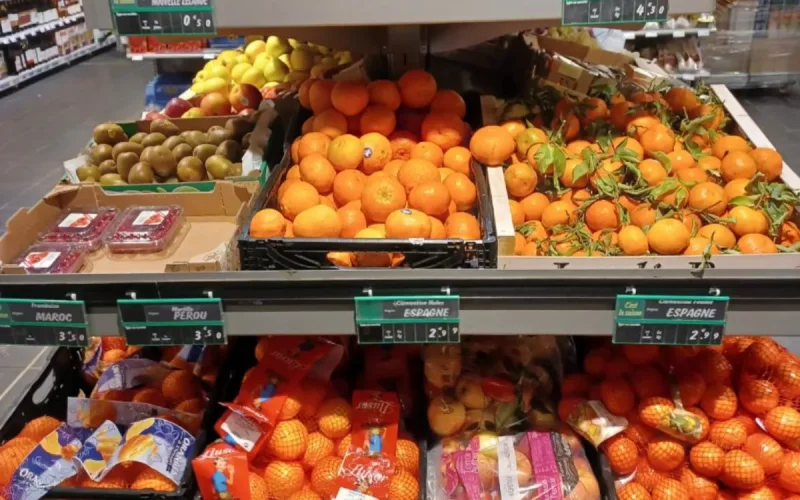
Morocco supplies 8 % of the fruit and vegetables imported by the European Union from third countries. Yet its products appear less often in alerts concerning pesticide residues than their share of trade would suggest.
This finding emerges from an analysis published by FreshPlaza, based on data from the European Rapid Alert System for Food and Feed (RASFF), Eurostat and the FAO.
In 2025, 491 RASFF notifications concerned fruit and vegetables originating from countries outside the European Union. Morocco and Colombia recorded a proportion of violations lower than their respective shares of European imports.
On Bladi.net : Morocco Dominates Spain’s Fruit and Vegetable Imports, Exports Surge 25%
The result is noteworthy for the kingdom, the fourth-largest non-EU supplier of fruit and vegetables. It accounts for 8 % of imported volumes, behind Egypt (10 %), Ecuador (9.5 %) and Costa Rica (9 %), and tied with Colombia.
Turkey and Egypt account for most alerts
The situation is very different for Turkey and Egypt. Turkish products represent 5 % of the imports studied, but 20 % of interceptions. Egypt, for its part, accounts for 16 % of alerts, while supplying 10 % of the volumes.
Conversely, the frequency of notifications concerning Moroccan products is lower than what their presence on the European market might have suggested. This data provides concrete insight into the debate over a possible tightening of European rules on pesticides, which could affect the kingdom’s exporters.
In 45 % of the recorded interceptions, analyses detected residues of substances whose use is prohibited in European agriculture. However, controls first focus on compliance with maximum residue limits, the MRLs applicable to products marketed in the European Union.
On Bladi.net : Morocco tomato exports face EU pesticide rules and market collapse
The documents accompanying the consignments are systematically checked. Identity checks and physical analyses are then carried out by sampling, according to the risks associated with each product and its country of origin. Certain combinations are subject to mandatory enhanced controls. They mainly concern products coming from Turkey, India, Egypt and Vietnam.
Related Articles
-

Six stations for 480 million dirhams: the LGV project transforms the Kénitra–Casablanca corridor
17 September 2026
-

“ We do not agree 100% with Israel”: Bourita explains why Morocco maintains its relations
17 September 2026
-

This Rabat neighborhood becomes the second coolest in the world, ahead of Los Angeles and Tokyo
17 September 2026
-
Russia, Iran, Belarus: Hapag-Lloyd imposes a new clause on all its cargo passing through Morocco
17 September 2026
-

Five days to deliver to Morocco a military cable capable of withstanding nearly 1,100 °C
17 September 2026