
Morocco Industrial Leader Africa 2025: Beyond the Automotive Boom
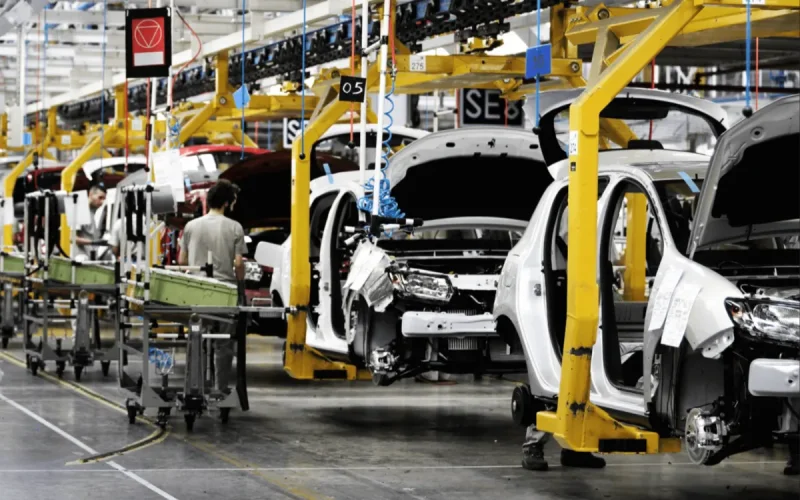
Morocco has become, for the first time, the most industrialized country in Africa ahead of South Africa. A breakthrough driven by automotive, aerospace and exports, but one that has not yet resolved the fundamental weaknesses of the economy.
Morocco has reached a symbolic milestone. In the 2026 edition of the African Development Bank’s industrialization index, which covers 2025, the kingdom ranks first on the continent, ahead of South Africa and Egypt.
On Bladi.net : Morocco Becomes Africa’s Top Industrial Economy, Surpasses South Africa
This first place confirms a trajectory undertaken for more than twenty years. Morocco has gradually built an industrial base around targeted sectors, particularly automotive and aerospace, renewable energies and logistics infrastructure.
In an analysis published by L’Opinion, several experts highlight the state’s role in this rise to power: industrial zones, attractive taxation, land, logistics, public aid and the ability to attract major international groups.
The Tanger Med port played a central role in this strategy. It enabled Morocco to strengthen its export positioning, particularly towards Europe. The establishment of Renault in Tangier, then Stellantis in Kenitra, structured an automotive ecosystem that has become the country’s leading export sector, ahead of phosphates.
An incomplete success
This performance does not mean that the entire Moroccan economic fabric benefits at the same pace. The success of a few highly visible sectors still masks the difficulties of other industrial branches, such as textiles, and the spillover effect on the rest of the economy remains debated.
Moroccan growth has evolved for several years around 3%, a level still far from that expected for a country that wants to join the group of emerging economies. The question of industrial employment remains sensitive. The Ministry of Industry highlights job creation linked to new ecosystems, while the High Commission for Planning observes a more contrasting dynamic.
Another weakness: dependence on foreign capital. The major groups established in free zones are predominantly international. Unlike South Africa or Egypt, Morocco still has few large national industrial champions in these sectors.
Moroccan investors more easily turn to commerce, banking or large-scale retail, sectors considered more accessible and more profitable in the short term than industry. Yet industrialization requires time, heavy investment and deeper integration with local SMEs.
On Bladi.net : Automobile in the lead, phosphates in decline: the mixed results of Moroccan exports
Morocco has therefore won a battle of image and positioning in Africa. It has proven that it can attract world champions and produce for international markets. The challenge is now more difficult: transforming this industrial showcase into a broader engine for employment, Moroccan businesses and the country’s growth.
Related Articles
-

MRE: this mistake when buying in Morocco can block the repatriation of your money
18 September 2026
-
One ship every five minutes between Morocco and Spain: Rabat seeks new rules for straits
18 September 2026
-

8.2 million dirhams for new vehicles tasked with monitoring Moroccan airport runways
18 September 2026
-
2030 World Cup: Fitch warns Morocco that cost overruns could increase its debt
18 September 2026
-
Six stations for 480 million dirhams: the LGV project transforms the Kénitra–Casablanca corridor
17 September 2026