
2030 World Cup: Fitch warns Morocco that cost overruns could increase its debt
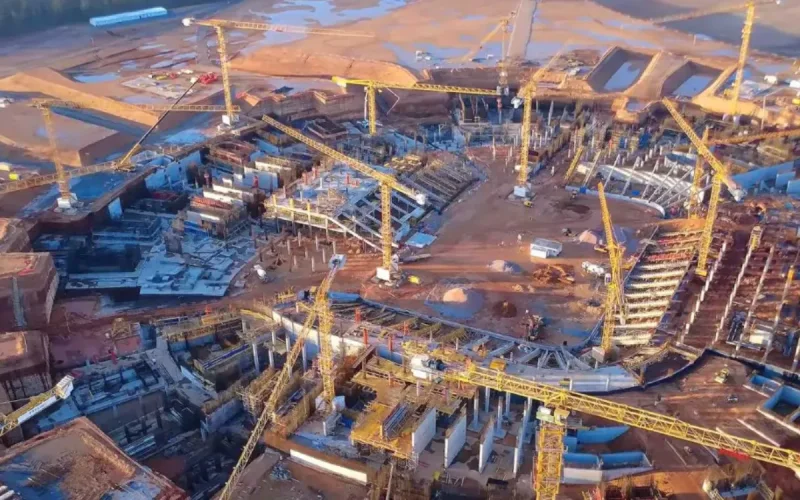
Fitch maintains Morocco’s sovereign rating at BB+, but warns that investments for the 2030 World Cup could weaken public finances if costs overrun or if the state provides increased support to the companies in charge of the projects.
The US agency confirmed on Thursday, September 17, the kingdom’s long-term rating at BB+, with a stable outlook. Morocco thus remains one notch below investment grade, which begins at BBB-.
According to Fitch Ratings, this rating reflects sound macroeconomic policies, sufficient foreign-exchange reserves and support from institutional creditors. These strengths are nevertheless offset by high public debt, weaker governance indicators and the economy’s dependence on climatic conditions.
Fitch devotes a significant part of its analysis to the investments launched ahead of the 2030 World Cup. The agency estimates that most of the infrastructure will be financed by public companies, public-private partnerships and other structures located outside the state budget.
The kingdom has launched a vast program of stadiums, railway lines and infrastructure for 2030. These contracts are also attracting the interest of foreign companies, particularly Spanish ones, which are already preparing an economic offensive to secure World Cup contracts.
On Bladi.net : Morocco Accelerates Infrastructure Overhaul Ahead of 2030 World Cup
Fitch identifies three risks: cost overruns, the need for the state to provide greater support to public operators and the accumulation of financial commitments that could ultimately appear in the kingdom’s accounts.
Investment spending directly included in the budget is already expected to average 7.5% of GDP between 2027 and 2028. However, this represents only part of the total effort, since most of the projects linked to the World Cup will be carried out by public entities or through off-budget arrangements.
A Debt Significantly Higher Than That of Comparable Countries
Fitch forecasts that central government debt will remain close to 67% of GDP in 2028, the same level as in 2025. This ratio is well above the 51% median expected for other countries rated in the BB category.
The structure of the debt nevertheless limits some of the risks. Moroccan loans generally have long maturities, are mostly contracted at fixed rates and benefit from a significant share of external financing on favorable terms.
The budget deficit is nevertheless expected to rise from 3.5% of GDP in 2025 to 4% in 2026. Fitch attributes this temporary deterioration to the consequences of the Strait of Hormuz crisis: higher energy prices, increased butane gas subsidies, support for transport operators and additional transfers to the National Office of Electricity and Drinking Water.
The agency then forecasts an average deficit of 3.4% between 2027 and 2028, provided that energy prices normalize and exceptional spending declines.
On Bladi.net : “Your house will be demolished”: the 2030 World Cup accelerates the disappearance of neighborhoods in Morocco
Moroccan growth is expected to slow in parallel from 4.9% in 2025 to 4% in 2026, before reaching an average of 4.2% in 2027 and 2028. Investments in infrastructure, industry and tourism, along with another good agricultural season, should mitigate the effects of rising energy costs and weaker European demand.
Fitch finally notes that foreign-exchange reserves reached 48 billion dollars at the end of 2025. The new 4.5-billion-dollar Flexible Credit Line granted by the IMF provides additional protection.
To hope for an improvement in its rating, Morocco will in particular have to sustainably reduce its debt burden and limit commitments linked to public companies. Conversely, a cost overrun for the 2030 World Cup or the transfer of off-budget debt to the state’s accounts could weigh on its rating.
Related Articles
-

Six stations for 480 million dirhams: the LGV project transforms the Kénitra–Casablanca corridor
17 September 2026
-

“ We do not agree 100% with Israel”: Bourita explains why Morocco maintains its relations
17 September 2026
-

This Rabat neighborhood becomes the second coolest in the world, ahead of Los Angeles and Tokyo
17 September 2026
-
Russia, Iran, Belarus: Hapag-Lloyd imposes a new clause on all its cargo passing through Morocco
17 September 2026
-

Five days to deliver to Morocco a military cable capable of withstanding nearly 1,100 °C
17 September 2026