Morocco’s Gharb Farmland Faces a Hidden Groundwater Weakness
The Gharb is among Morocco’s most naturally favored agricultural regions. Yet a scientific study published on November 24 reveals a weakness in its groundwater reserves. Chinese and Moroccan researchers analyzed eight years of satellite data to understand this contrast.
The finding concerns one of the Kingdom’s main agricultural basins. Between 2015 and 2022, a team from China’s Nanjing University and Chouaïb Doukkali University in El Jadida examined interactions between water, agricultural yields and ecosystems across five irrigated areas: Loukkos, Gharb, Doukkala, Tadla and Haouz.
The results, published in the scientific journal Sustainability, rank the Gharb among the areas with the best overall performance. The region benefits from relatively high soil moisture and favorable agricultural production indicators. Rainfall and ecological conditions give it an advantage over Morocco’s more arid central and southern regions.
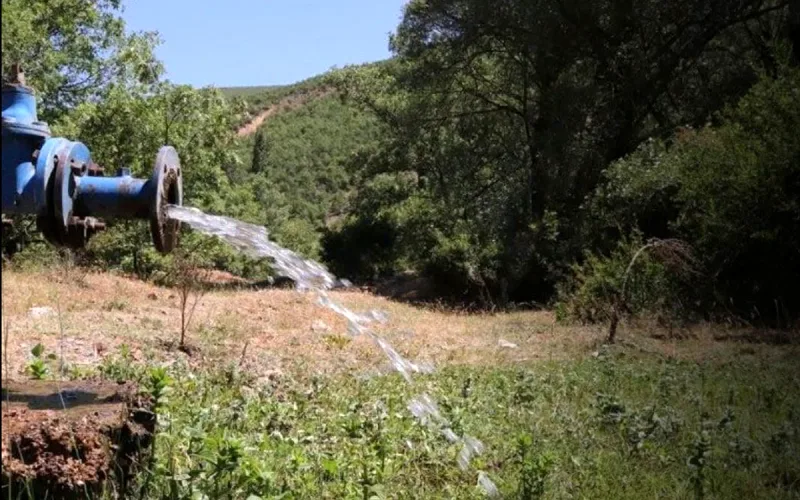
One indicator, however, has caught the researchers’ attention. Groundwater storage appears relatively low in the Gharb, despite its strong agricultural results. The scientists see this as a sign of potential long-term pressure on water resources in an area characterized by intensive farming.
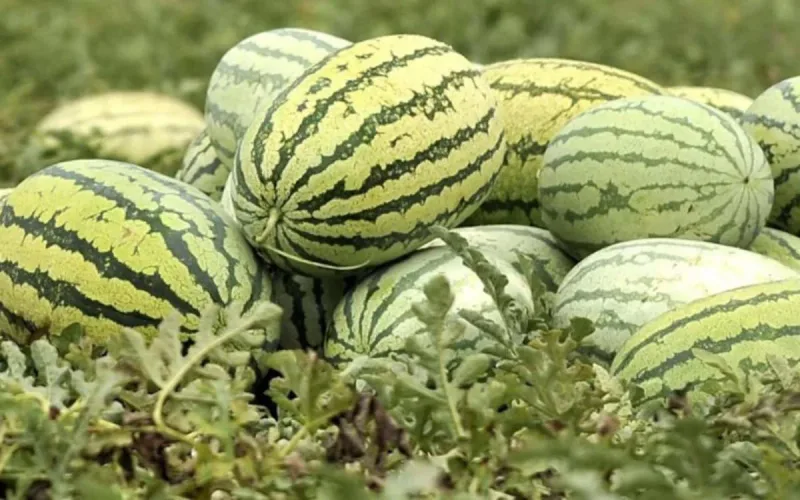
This vulnerability arises in a region where water management is already facing difficulties. In Sidi Kacem, authorities had, in particular, restricted certain crops that consume especially large amounts of water, including watermelon, to preserve available resources and limit water withdrawals.
From the Gharb to the Haouz, five very different situations
The study highlights a stark geographical contrast. In Loukkos, rainfall and vegetation contribute significantly to strong agricultural performance. The Gharb also has favorable natural conditions, but shows a relative weakness in groundwater storage.
Doukkala occupies an intermediate position. Researchers found better groundwater storage and water-use efficiency indicators there, while irregular rainfall continues to weigh on agriculture.
Farther south, in Tadla and Haouz, production depends more heavily on dams, irrigation and the management of water consumption. Haouz faces the greatest constraints, with generally lower indicators for rainfall, soil moisture and groundwater storage.
To reach these findings, the scientists combined ten environmental and agricultural indicators, including rainfall, soil moisture, crop yields and groundwater reserves. They analyzed the data using statistical models designed to identify relationships among these variables.
On Bladi.net : Why your oranges are going to become more expensive
The researchers also draw attention to the limits of water savings achieved through modern irrigation techniques. Greater efficiency can go hand in hand with the expansion of cultivated areas or more intensive production, without automatically reducing withdrawals from aquifers.
For the Gharb, their assessment is based on observations covering the 2015–2022 period. The study flags a concerning relative level of groundwater storage, but does not measure any recent decline in aquifers or establish their current condition as of November 2026.