
Morocco Frontier Markets Status MSCI Reclassification Challenges
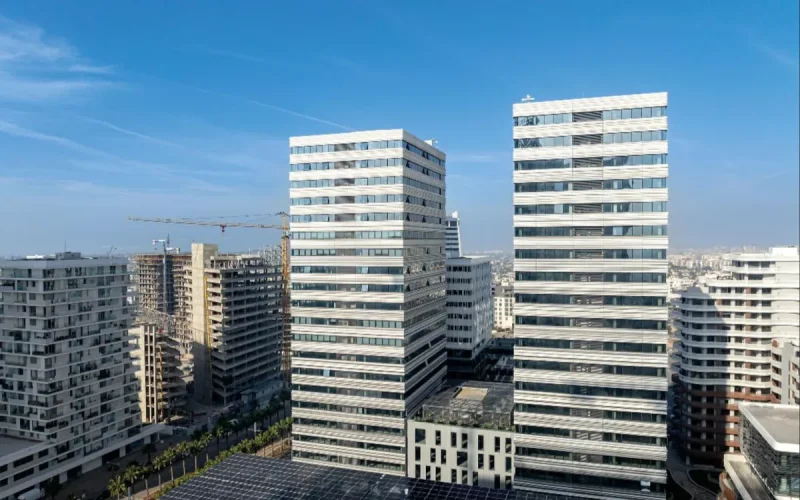
Morocco is still classified among frontier markets by MSCI. Its market is largely accessible to foreign investors, but four operational components are still deemed insufficient. However, the report does not allow these alone to constitute an exhaustive list of conditions for reclassification.
Morocco continues to appear in the frontier markets category, alongside notably Mauritius, Oman, Tunisia and the West African Economic and Monetary Union. This classification does not mean that the Casablanca Stock Exchange is closed to international capital.
On Bladi.net : Moroccan Expats and Foreign Investors Own 28% of Casablanca Stock Exchange
In its 2026 report on market accessibility, MSCI gives Morocco its highest rating for the conditions qualifying foreign investors, foreign participation caps and the share of securities remaining accessible to them. Investor registration and account opening are also considered satisfactory.
Securities custody, the central registry or depository and the availability of investment instruments do not raise any difficulties in this evaluation framework either.
Other components receive an intermediate rating. MSCI considers that they do not present major problems, but can still be improved. This concerns equal rights granted to foreign investors, capital movements, the degree of foreign exchange market liberalization, regulation, information disclosure, trading conditions and the stability of the institutional framework.
Four deficiencies in market infrastructure
Four criteria instead receive a rating indicating that improvements are necessary. The first is settlement-delivery, namely the settlement of a transaction by the transfer of securities to the buyer and the payment of funds to the seller.
Securities transferability is also deemed insufficient. This rating designates the conditions under which securities can be moved or transferred from one holder to another.
The last two weaknesses concern securities lending and short selling. These mechanisms, widely used on the most developed financial markets, allow institutional investors in particular to hedge certain risks, implement different market strategies and contribute to the liquidity of exchanges.
These four negative ratings show that MSCI’s main reservations do not concern the entry of foreign investors into Morocco, but rather the degree of completion of certain operational mechanisms.
However, they should not be presented as four official conditions whose satisfaction would automatically result in Morocco’s transition to emerging market status. The document makes no mention of an ongoing reclassification procedure, a timeline, or a complete list of requirements addressed to Morocco.
On Bladi.net : Morocco Surges to Third in EU Residency Race, Outpacing Global Rivals
The finding is more precise: in the sole dimension of accessibility studied by this report, the Casablanca Stock Exchange is open and has several well-evaluated infrastructures, but certain instruments and procedures remain behind what is expected of a more mature market.
Related Articles
-

Six stations for 480 million dirhams: the LGV project transforms the Kénitra–Casablanca corridor
17 September 2026
-

“ We do not agree 100% with Israel”: Bourita explains why Morocco maintains its relations
17 September 2026
-

This Rabat neighborhood becomes the second coolest in the world, ahead of Los Angeles and Tokyo
17 September 2026
-
Russia, Iran, Belarus: Hapag-Lloyd imposes a new clause on all its cargo passing through Morocco
17 September 2026
-

Five days to deliver to Morocco a military cable capable of withstanding nearly 1,100 °C
17 September 2026