
Morocco Algeria cooperation beyond Sahara dispute
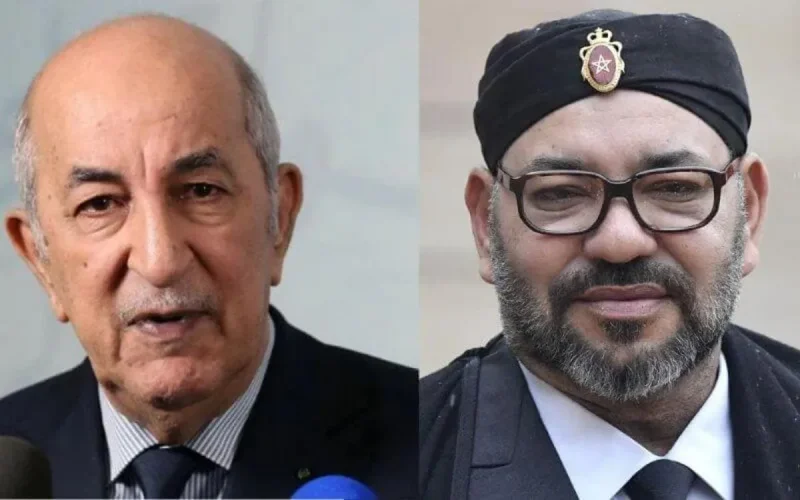
The disagreement over the Sahara could remain unresolved without condemning all cooperation between Morocco and Algeria. Researchers propose to treat water, health, climate and university exchange issues separately.
The disagreement over the Sahara should no longer automatically prevent Morocco and Algeria from working together on all other issues. This is one of the main avenues put forward by Fadoua Ammari and Rida Lyammouri in a report published in July by the Policy Center for the New South.
On Bladi.net : Morocco Algeria Conflict: Silent Danger Beyond War
The authors do not propose to minimize the place of the Sahara in the rivalry between Rabat and Algiers, nor to circumvent its diplomatic and legal treatment. Instead, they invite a halt to subordinating the entirety of bilateral relations to the prior settlement of this single issue.
For several decades, each new tension over the Sahara has had repercussions on diplomatic relations, economic exchanges, the movement of people and possibilities for regional cooperation. This logic leads to the belief that no rapprochement is possible until a definitive solution has been found.
The report judges this expectation paralyzing. The Sahara is the main focal point of the conflict, but it does not by itself sum up the history of Moroccan-Algerian rivalry, also fueled by the Sand War of 1963, regional competition and decades of political mistrust.
Cooperating Without Giving Up on the Sahara
The two countries could therefore maintain their respective positions on the Sahara while opening spaces for cooperation at low political cost. Water, climate, health, health security and natural disaster management are among the proposed sectors.
Rabat and Algiers face several comparable vulnerabilities, particularly droughts, water tensions, fires and health risks. Technical exchanges or assistance mechanisms would not require, initially, a complete normalization of diplomatic relations.
Bridges could also be rebuilt between universities, researchers, economic actors and cultural institutions of the two countries. The objective would be to make contacts more regular, whereas they have now become exceptional or non-existent.
Limited coordination could also be sought in the face of certain risks emanating from the Sahel, when these directly affect the stability of the two neighbors. The report evokes gradual, framed and verifiable cooperation, not an immediate reconciliation based on simple declarations.
This separation of issues would prevent each divergence over the Sahara from automatically blocking discussions on family, humanitarian, economic or security matters. It would preserve the fundamental nature of the disagreement while preventing it from monopolizing the entirety of the relationship.
For the authors, a resumption of cooperation would not mechanically resolve the deep causes of rivalry. It could, however, restore minimal predictability and reduce the perception that any advance by the neighbor necessarily constitutes a loss for the other.
On Bladi.net : Morocco Algeria Border Reopening Strategy Separated Families
The rapprochement would not necessarily begin with a historic agreement between Rabat and Algiers. It could emerge from limited cooperation on concrete problems, without asking either country to abandon its positions on the Sahara.
Related Articles
-
220 dirhams on construction sites, up to 400 in the fields: Morocco lacks workers
25 August 2026
-

This Israeli company equips defense giants and also has clients in Morocco
24 August 2026
-

After three days in Algeria, a sanctioned Russian ship passes near Morocco
24 August 2026
-

In Brussels, a Moroccan name and being over 50: the profile most disadvantaged in hiring
24 August 2026
-

Morocco Has a New Billionaire Forbes Has Yet to Spot
24 August 2026