
Medieval Moroccan Metallurgy: Sahara’s Hidden Industrial Complex
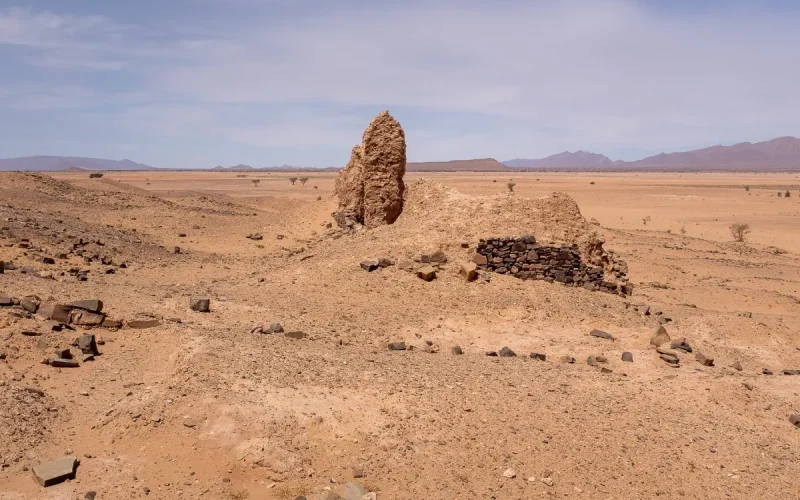
Archaeologists have discovered the remains of a major medieval metallurgical complex near Akka. At Tamdoult, craftsmen produced silver, copper and brass destined for the great commercial routes crossing the Sahara.
About ten kilometers from Akka, in the Anti-Atlas, the ruins of Tamdoult reveal industrial activity far more significant than historical texts had suggested. This ancient city transformed several metals before their commercialization across the Sahara.
On Bladi.net : Morocco’s Mining Boom: Copper, Gold and the Energy Transition
Tamdoult occupied a strategic position on the route linking Sijilmasa, in Morocco, to Audaghost, in present-day Mauritania. Coins found on site and organic matter dating place the main period of activity at the site between 1233 and 1430.
According to the study published in the journal Historical Metallurgy, archaeologists identified workshops, hearths, remains of furnaces and significant accumulations of slag associated with copper, lead and silver work.
Silver production required melting argentiferous lead ore, then separating the precious metal from lead oxides. One of the analyzed remains suggests that a single operation could produce approximately 500 grams of silver.
The refined metal was then poured into small ceramic molds. Several fragments still bear drops of silver, confirming the manufacture of coins easy to store and transport by caravans.
Brass, the great surprise
The most unexpected discovery concerns brass, an alloy of copper and zinc with a golden appearance. No ancient text had previously mentioned its manufacture at Tamdoult.
Analyses nevertheless revealed zinc in crucibles and ingot molds. Researchers conclude that craftsmen heated copper with zinc ore and charcoal to produce this alloy sought after in the medieval Islamic world.
Some ores were transported from sites located more than 20 kilometers away. Tamdoult was therefore not only a mining city, but also a center responsible for receiving, transforming and redistributing metals.
On Bladi.net : Morocco Unearths Major Copper Deposit, Boosting Energy Transition Prospects
These remains make the site today one of the best-preserved Islamic metallurgical complexes in northwestern Africa. They show that in the Middle Ages, southern Morocco already housed a sophisticated industry serving trans-Saharan trade.
Related Articles
-

8.2 million dirhams for new vehicles tasked with monitoring Moroccan airport runways
18 September 2026
-
2030 World Cup: Fitch warns Morocco that cost overruns could increase its debt
18 September 2026
-

Six stations for 480 million dirhams: the LGV project transforms the Kénitra–Casablanca corridor
17 September 2026
-

“ We do not agree 100% with Israel”: Bourita explains why Morocco maintains its relations
17 September 2026
-

This Rabat neighborhood becomes the second coolest in the world, ahead of Los Angeles and Tokyo
17 September 2026