Great Mosque Paris Moroccan Heritage Craftsmen Centenary
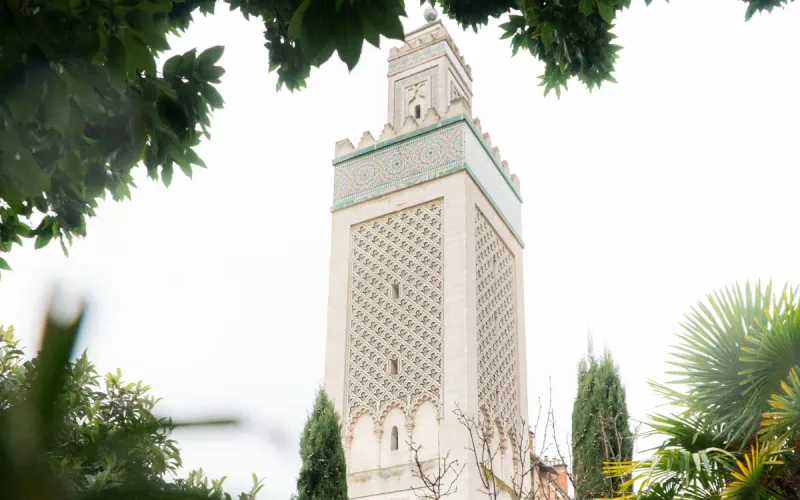
The Great Mosque of Paris celebrates its centenary, but its Moroccan history remains largely unknown. Financing, architecture, zellige, carved wood, the presence of Sultan Moulay Youssef: the monument still bears the decisive imprint of Morocco.
A century after its inauguration, the Great Mosque of Paris remains one of the most important symbols of Islam in France. But behind this monument today associated with the institutional history of French Islam, part of its memory has been progressively erased: that of the role played by Morocco.
On Bladi.net : Ramadan 2026 in France: The Great Mosque of Paris announces the date of the Night of Doubt
The building inaugurated on July 15, 1926 owes its existence not only to a French decision to recognize Muslim soldiers who died during the First World War. It also owes a large part of its visible identity to Morocco, its institutions, its craftsmen and its religious authority of the time.
An article published by Al3omk recalls that Moroccan contribution was not limited to political support. Morocco would have occupied a central place in the initial financing of the project, through subscriptions from the kingdom, but also in the aesthetic design of the monument.
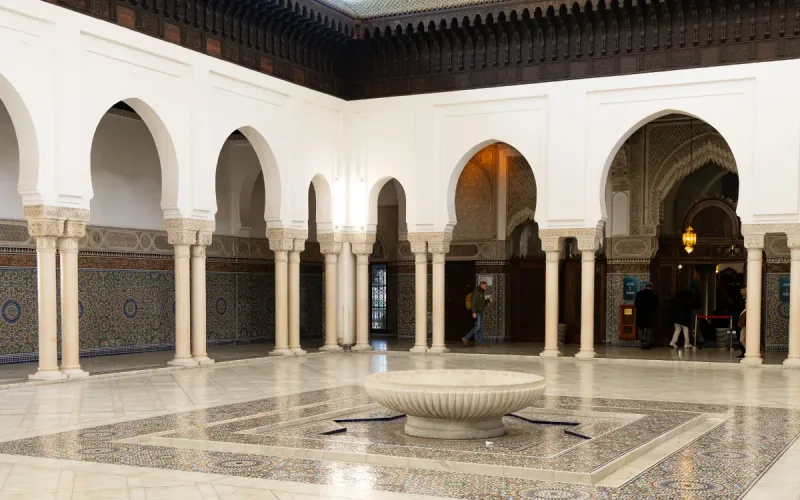
The Great Mosque of Paris draws heavily on Moroccan and Andalusian architectural codes. Its decoration refers to the traditions of Fez, to Merinid madrasas and to the universe of Al-Qarawiyyin. To give form to this identity, master Moroccan craftsmen from Fez and Meknes worked on the zellige, sculpted plaster and carved wood.
A Moroccan imprint still visible
This imprint is not merely decorative. It also speaks to the spiritual and political role that Morocco played in the early days of the mosque. The official inauguration took place in the presence of French President Gaston Doumergue and Sultan Moulay Youssef, accompanied by a Moroccan delegation.
The first Friday prayer also bore this Moroccan mark, with the presence of Sheikh Ahmed Ben El Ayachi Skirej, a religious and learned figure from the Moroccan Sufi tradition. Traces of this memory still subsist in the inscriptions and decorative elements of the building.
Over time, however, this history was relegated to the background. The management of the mosque gradually shifted to another political configuration, particularly after the Maghrebi independence movements, until it became a space closely linked to Algerian influence from the 1980s onwards.
The centenary of the Great Mosque of Paris thus brings to light a sensitive question: how could a monument whose architecture, craftsmanship and part of the financing bear a strong Moroccan signature see this memory fade from the public narrative?
On Bladi.net : French Interior Minister Boycotts Ramadan Dinner at Paris Grand Mosque
For Morocco, the issue is not merely symbolic. It is about recalling the place of its craftsmen, its religious institutions and its heritage in the construction of one of the most emblematic places of Islam in Europe. A century later, the Great Mosque of Paris remains also a monument of Moroccan memory.