France World Cup 2010 Crisis: Strikes, Brawls and Collapse
As a new major showdown against Morocco approaches, memories of 2010 resurface in discussions about the French team. That year, the Blues did more than just fail their World Cup. They experienced one of the most serious internal crises in their history.
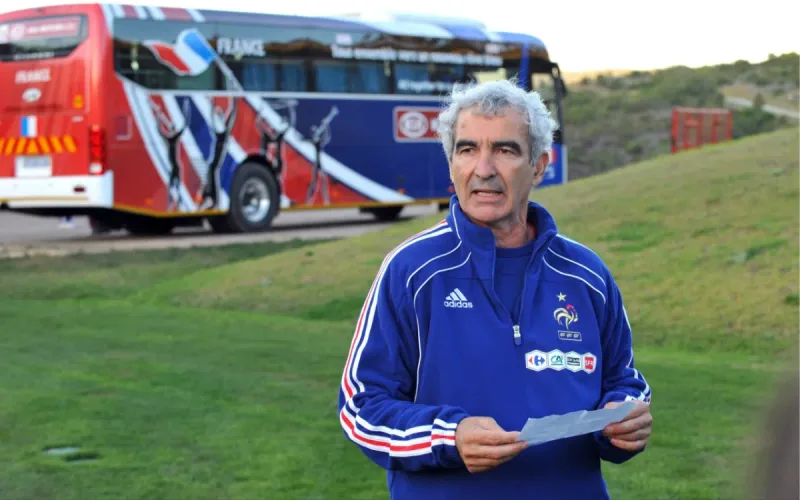
The 2010 World Cup remains an open wound in the recent history of the Blues. In South Africa, Raymond Domenech’s French team was eliminated in the first round after a draw against Uruguay, a defeat to Mexico, then a loss to South Africa. But the pitch was quickly overshadowed by an internal crisis that became a symbol of a group completely out of control.
On Bladi.net : France World Cup unease Zaïre-Emery benched Morocco quarter-final
It all started with the match lost against Mexico. At halftime, Nicolas Anelka had a heated verbal altercation with Raymond Domenech. The matter then broke in the French press. Refusing to apologize, the striker was excluded from the squad by the French Football Federation. In its own account of the 2010 World Cup, the FFF recalls that the Blues’ stay in South Africa was marked by Anelka’s dismissal and by the other players’ refusal to train in Knysna.
What follows becomes unprecedented. On June 20, 2010, French players refuse to participate in training. They board the bus, curtains drawn, in protest against Anelka’s exclusion. Raymond Domenech is forced to read a statement drafted by the players in front of journalists. The image goes around the world: the French team is on strike during a World Cup.
Knysna, the breaking point
The scene is all the more violent as it unfolds in public. Before the training boycott, Patrice Evra, then captain of the Blues, has an altercation with Robert Duverne, the fitness coach. Raymond Domenech must intervene to separate them. The Guardian, present for this episode, describes a team in full collapse, between refusal to train, disputes, resignation of deputy director Jean-Louis Valentin and total breakdown between players, staff and federation.
This is therefore not simply a bad locker room atmosphere. Knysna becomes the name of a collective collapse. The French team no longer gives the image of a united group, but that of a fractured squad, where leaders contest decisions, where the manager loses his authority and where the Federation attempts to regain control in the middle of competition.
After elimination, the FFF sanctions several players. Nicolas Anelka receives 18 match bans, Patrice Evra 5 matches, Franck Ribéry 3 matches and Jérémy Toulalan one match. Éric Abidal, also called up, is not sanctioned. These decisions come to close the sporting episode, without erasing the trauma left by this World Cup.
On Bladi.net : Morocco World Cup 2022 Lions Atlas Solidarity Gesture
Fourteen years later, Knysna remains a warning for the Blues. In 2006, the French team had also gone through tensions, but the leaders had ultimately gotten the group back on track all the way to the final. In 2010, by contrast, the crisis had swept away everything: the play, the image, the manager’s authority and public confidence.