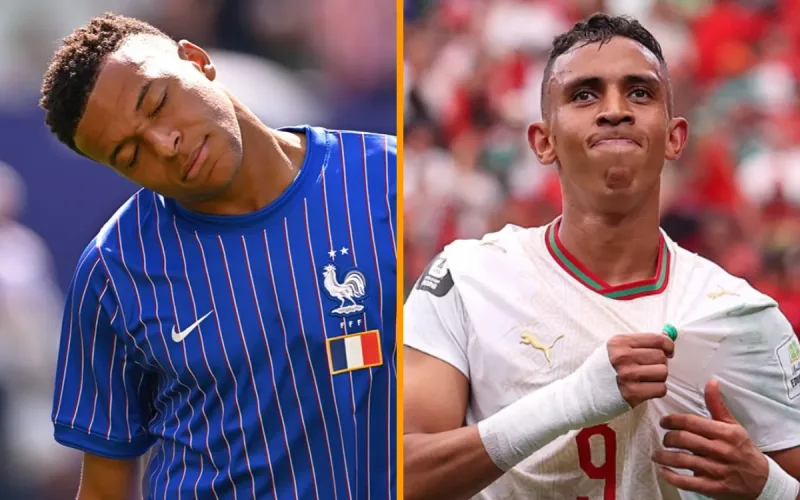
Morocco derail France quarterfinal tactics physical duels
France impresses with its goals and individual talents, but its recent matches also show a team more exposed when the opponent intensifies the duels. Against Morocco, this mental and physical dimension could become a real key to the quarterfinal.
France is not just a team of speed, transitions and offensive talents. It’s also a team that likes to set its rhythm. When the Blues take a quick advantage, the match often shifts into their favored scenario: larger spaces, opponent forced to push forward, Mbappé launched, Dembélé or Olise freer between the lines. This is what allowed France to string together large victories against Iraq, Senegal, Norway and Sweden.
On Bladi.net : Morocco vs France: Paraguay exposed Blues weakness
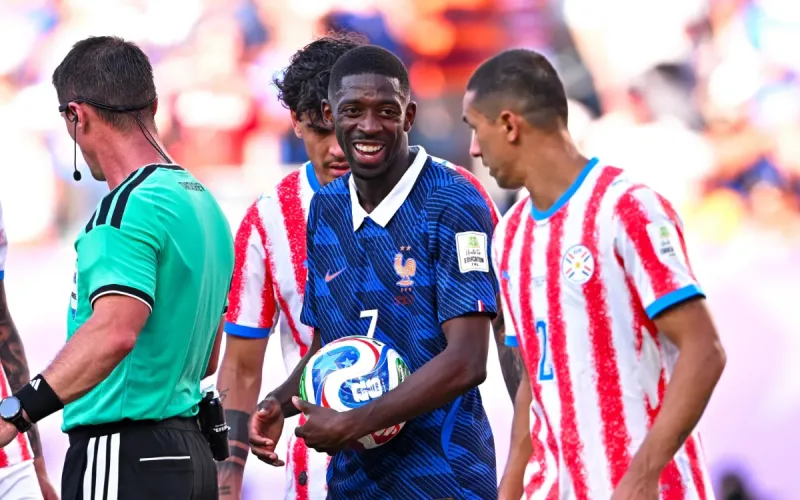
But the match against Paraguay showed another image. France won, but in a much more disjointed register. The Blues struck fifteen times, obtained twelve corners, multiplied crosses, but scored only one goal. Most importantly, they finished with three yellow cards, received by Michael Olise, Manu Koné and Bradley Barcola. For a team that dominates the ball so much, this detail is not neutral.
This is not necessarily a sign of an undisciplined team. It’s rather an indication of a team that can lose fluidity when it doesn’t quickly find the spaces it’s looking for. Against Paraguay, France conceded eleven fouls. Against Sweden, they had conceded fourteen. Against Norway, eleven as well, with a yellow card. The more the match becomes physical, the more the Blues step out of their comfort zone.
A duel match rather than a possession match
This is exactly the terrain on which Morocco can try to take France. The Lions of the Atlas have no interest in offering an open match, with long runs, ball losses down the middle and spaces behind the fullbacks. France expects this type of scenario. It has the players to punish the slightest error.
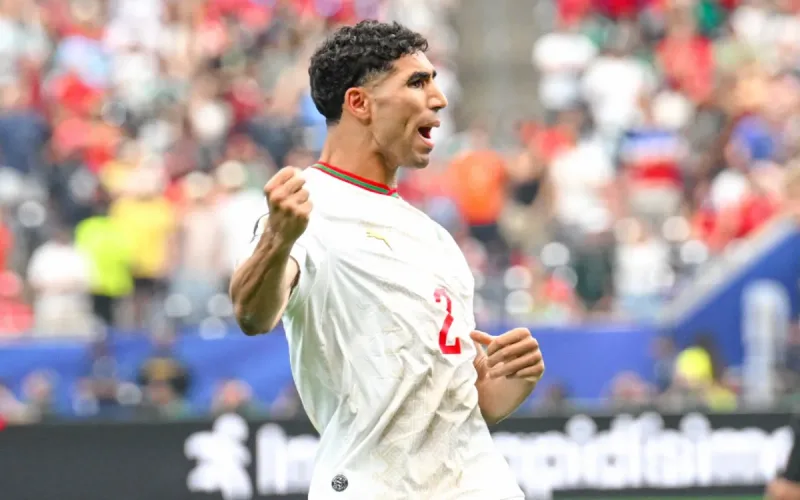
Morocco must instead slow down the match, break up French sequences, contest second balls and force the Blues to defend by dropping back. Not by multiplying unnecessary fouls, but by imposing constant pressure. The objective is simple: prevent France from playing comfortably.
This work can be done in several areas. First on the flanks, where French offensive players can be drawn into defensive duels they enjoy less. Olise, Barcola or Dembélé are dangerous when they attack with space. They are less so when they have to run toward their goal, close a passing lane or defend a contested ball near the touchline.
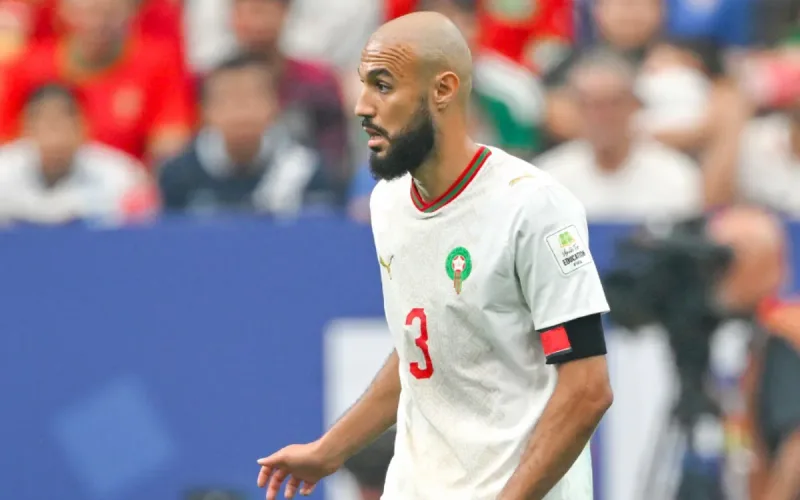
Then in midfield, where Morocco will have to contest every reception. The French midfield has volume, with players capable of running, pressing and pushing forward. But it can also be put under pressure if the first passes are blocked and if the balls come back too quickly into its zone. This is where Morocco must seek to provoke tactical fouls, delays, gestures of frustration.
Finally, there is the emotional dimension. France knows how to win big matches, but it can also become impatient when it dominates without scoring. Paraguay showed this: the more the opposing block resists, the more the Blues end up crossing, forcing, demanding, contesting. For Morocco, prolonging doubt would already be a tactical victory.
The danger, obviously, is confusing intensity with rushing. Morocco must not transform this plan into a disorderly battle. Against Mbappé, a poorly placed foul can become a chance. Against Olise, an off-center free kick can become a dangerous ball. Against Dembélé, a lost duel can open up an entire flank. Control will therefore be essential.
But Morocco has a real card to play: making the match uncomfortable. Not letting France breathe. Not allowing it to proceed smoothly. Forcing its creators to receive with their back to goal. Forcing its attackers to defend. Raising the tension without falling into the trap.
France remains favorite through its individual talent and its ability to score even in a closed match. But its recent data also says something else: when the opponent opposes physical and mental resistance, it can become irritated, commit fouls and lose clarity.
On Bladi.net : France Mbappé dependency Morocco quarter-final strategy
For Morocco, the quarterfinal will therefore not be played only on how to defend Mbappé. It will also be played on the ability to sustain the battle. The longer the match is, closed and tense, the more the Blues will have to answer a question they don’t always like: winning in a way other than through speed and talent.