
In the Drone War, Morocco Has What Spain Cannot Buy
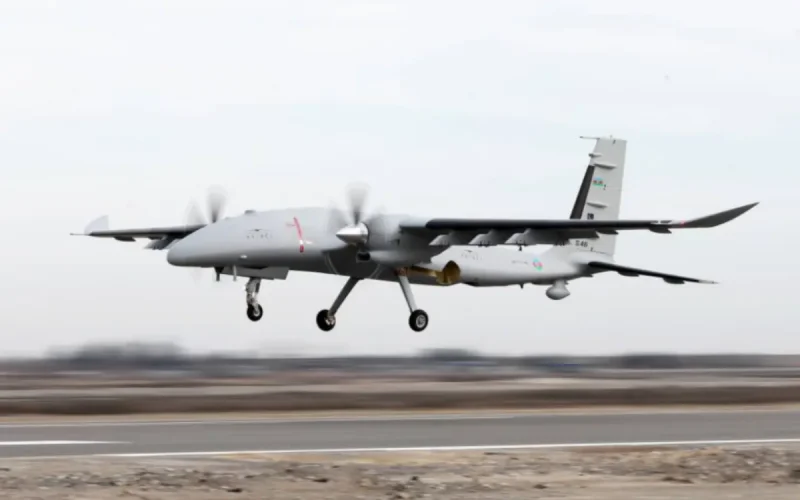
Spain will be able to arm its drones and modernize its software, but it will not be able to buy the experience Morocco has already accumulated. After nearly six years of operations, the FAR possess expertise that Madrid is only beginning to build.
The four Spanish MQ-9 Reapers based in Talavera la Real remain unarmed, even though they were delivered starting in 2019 with the equipment needed to carry missiles. Their armament has nevertheless been considered or announced several times since 2017.
Madrid took another step forward in August 2025 with an order from Lockheed Martin. But according to the analysis published Sunday, 14 September, by Escudo Digital, the first Spanish Reapers should not have an operational strike capability before 2027, or even 2028.
On Bladi.net : “On drones, Morocco beats us”: the admission of a former Spanish lieutenant-colonel
Installing missiles will not be enough. Crews will have to be certified, rules of engagement defined, and qualification firings organized. Above all, Spain will have to acquire a doctrine and experience that Morocco is already developing in the field.
An Experience That Missile Delivery Cannot Replace
Morocco has been using armed drones in its operations against the Polisario since hostilities resumed in November 2020. Strikes carried out with Chinese Wing Loong drones and their Blue Arrow 7 missiles have notably been documented and geolocated by independent analysts.
This experience is not limited to piloting the aircraft. It concerns the entire chain required for a strike: formal identification of the target, transmission of information, authorization to fire, choice of munition, and assessment of the results.
For Escudo Digital, it is precisely this operational learning that currently separates the two countries. The assessment echoes that of a former Spanish lieutenant colonel, who recently acknowledged Morocco’s lead in the field of drones.
The kingdom also chose to acquire its aircraft with their armament. The first Bayraktar TB2s ordered in 2021 were accompanied by MAM-C and MAM-L guided munitions. Rabat is simultaneously working on the local production of military drones and the development of new models.
On Bladi.net : Designed in Rabat, tested in the south: a new military drone takes shape in Morocco
The other Spanish program, SIRTAP, remains even farther from combat. Its surveillance version is due to enter service from 2027, while its armed variant still has neither a contract nor a timetable. It is estimated that it could not become operational until 2029 or 2030.
This lead does not mean that Morocco has overall military superiority over Spain. Madrid retains significant advantages in combat aviation, the navy, sensors, and its integration into NATO. But in the operational use of armed drones, the gap is now measured in years—and this experience cannot be delivered with the aircraft.
Related Articles
-

Six stations for 480 million dirhams: the LGV project transforms the Kénitra–Casablanca corridor
17 September 2026
-

“ We do not agree 100% with Israel”: Bourita explains why Morocco maintains its relations
17 September 2026
-

This Rabat neighborhood becomes the second coolest in the world, ahead of Los Angeles and Tokyo
17 September 2026
-

Russia, Iran, Belarus: Hapag-Lloyd imposes a new clause on all its cargo passing through Morocco
17 September 2026
-
Five days to deliver to Morocco a military cable capable of withstanding nearly 1,100 °C
17 September 2026