Ceuta and Melilla: Moroccan in ten years!
An opinion piece published in Spain imagines an agreement on co-sovereignty with Morocco, followed ten years later by the complete transfer of Ceuta and Melilla to the Kingdom. A scenario that remains fictional, but which brings this possibility into the Spanish debate.
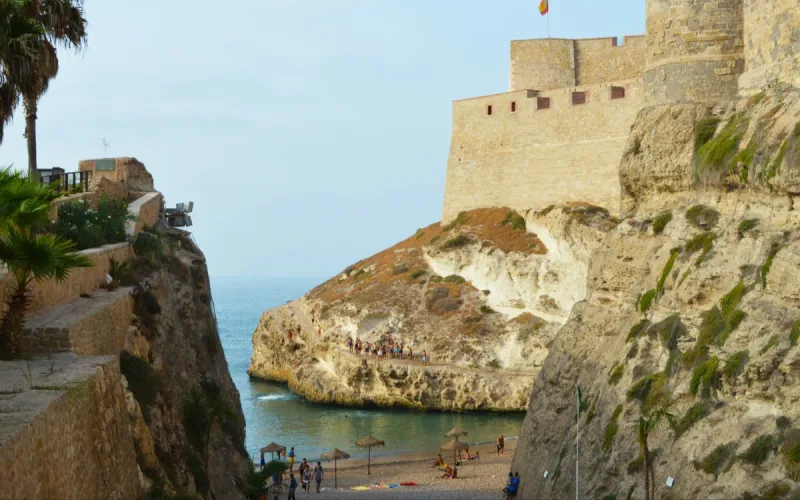
The recent crisis in Ceuta has revived in Spain a question that Madrid usually prefers to consider settled: can the future status of Ceuta and Melilla remain unchanged indefinitely?
On Bladi.net : Israel, Spain and Sebta: A New Diplomatic Clash Over Migration
In a particularly detailed political projection, columnist Luis Ventoso imagines Pedro Sánchez announcing the opening of negotiations with Morocco in order to grant the two cities a new status.
The Spanish head of government would present this initiative as a policy of appeasement aimed at avoiding new border crises and improving the lives of residents. The discussions would be held discreetly in Geneva, with the intervention of an international mediator.
The result would not immediately be a return to Morocco, but a period of co-sovereignty. Madrid and Rabat would jointly exercise their authority over Ceuta and Melilla, allowing the Spanish government to claim that it was not formally abandoning the two cities.
This hypothesis is developed in an opinion piece published by El Debate. Its interest lies not only in the political position of its author, but in the fact that such a scenario can now be described with such precision in the Spanish press.
A ten-year transition to Morocco
In this projection, co-sovereignty would constitute only one stage. After ten years of joint administration, the agreement would be revised and Ceuta and Melilla would come entirely under Moroccan sovereignty.
The author imagines that the Spanish left and the separatist parties would support the negotiations, while opposition from the People’s Party and Vox would not be enough to stop them. The Constitutional Court could also approve the agreement, considering that co-sovereignty would maintain, at least temporarily, a Spanish presence.
The protests would eventually lose their intensity. The return of the two cities would be presented as the logical conclusion of a gradual transition, but also as the end of a situation that had become costly and difficult to defend.
No official discussion of this nature has been announced. But viewed from Morocco, this political fiction is not insignificant. It shows that the return of Ceuta and Melilla is no longer solely a Moroccan demand: it is also beginning to appear, in the Spanish debate, as the possible outcome of a negotiation process.
On Bladi.net : Ceuta and Melilla: The United States Pushes Spain to Negotiate with Morocco
The co-sovereignty imagined by the author would then become a transitional formula: gradual enough to be accepted in Spain, but ultimately leading to the return of the two cities under Moroccan sovereignty.