Agadir: Hotels accused of secretly pumping water
The alert is serious for the capital of Souss-Massa. While Morocco is facing a structural water stress, a study conducted by three Moroccan researchers points to the management of water in Agadir’s hotel establishments. Between waste in the bathrooms, undeclared use of wells, and lack of economical devices, the tourism sector is called upon to urgently review its practices.

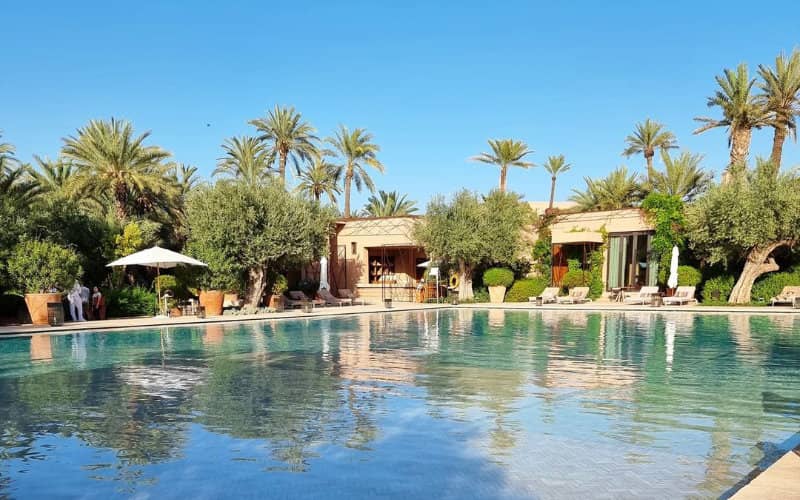
The survey published in the Revue des études juridiques, territoriales et de développement, provides a worrying assessment of the distribution of the "blue gold" in Agadir’s hotels. The figures are eloquent: bathrooms are at the top of the most energy-consuming items with 27% of total consumption, closely followed by in-house restaurants (26%). Contrary to popular belief, swimming pools (18%) and gardens (9%) are not the main culprits, although their impact remains significant, adding to the 20% absorbed by cleaning and room service.
Beyond this distribution, the study raises a fundamental problem: the majority of establishments apply no water-saving principle. Worse still, the official invoices do not reflect the reality of the withdrawals. Many hotels meet their needs by pumping directly from the water table through non-invoiced wells, thus escaping the tiered pricing system. This practice masks chronic overconsumption, while more than half of the establishments (54.4%) are already in the highest billing brackets (5th and 6th), a situation exacerbated during the tourist peaks of summer and the end-of-year holidays.
Faced with this finding, the researchers are sounding the alarm and recommending immediate measures to balance supply and demand in the urban municipality. The study recommends abandoning obsolete equipment in favor of automatic water-saving taps, systematically tracking leaks in the distribution network and, above all, increased awareness of staff. For the authors, changing the consumption habits of employees and customers is no longer an option, but an economic and ecological necessity to avoid an unsustainable financial and environmental bill.