World Bank Report: 71% of Moroccans Face High Water Stress Amid Climate Change
In total, 71% of the Moroccan population are exposed to a "high level of water stress". This is what the latest World Bank report entitled "Beyond Scarcity: Water Security in the Middle East and North Africa" indicates.
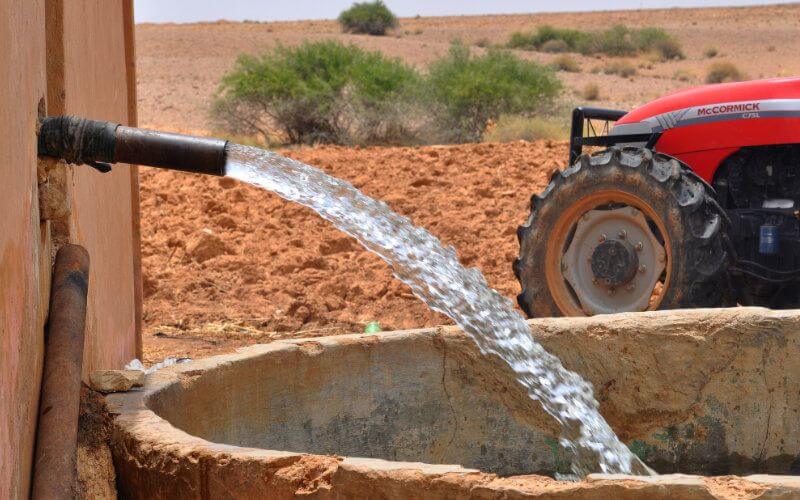
The Kingdom, along with Iraq, Lebanon, Jordan and Syria, is one of the countries that "will experience a sharp increase in their water stress", reports TelQuel. Between 2010 and 2013, the level of water stress went from a range of 3 and 4 to that of 4 and 5. As a result, 71% of the Moroccan population is exposed to a "high level of water stress". The cause of this situation is climate change.
While agriculture absorbs 82% of the water withdrawn, compared to 6% for industry and 12% for domestic use, it "produces the lowest economic returns from its use of water", the report notes.
About 22% of wastewater is treated, of which only 22% is reused, the World Bank report states. Wastewater needs to be recycled to mitigate water deficits and ensure water supply security, the authors recommend.