
No trace of pork casings in sausages sold in Morocco
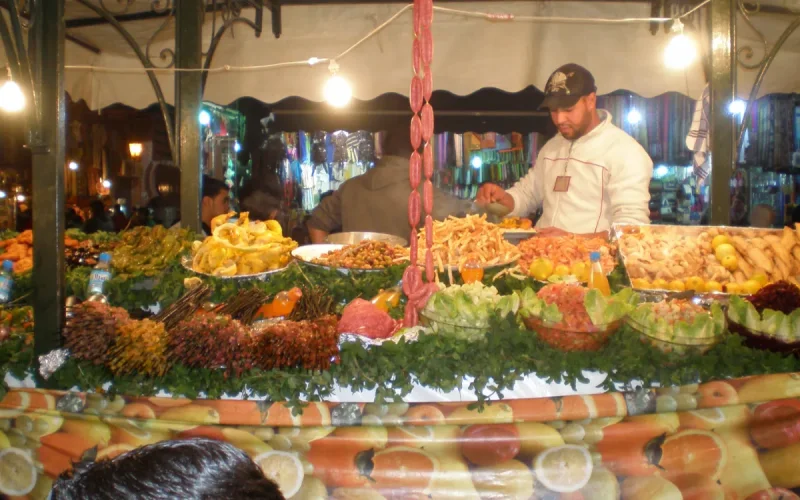
The National Association of Casing Exporters in Morocco clarifies the import of Russian pork casings, intended exclusively for processing and full re-export. No product will be marketed locally, assures the organization under the control of the ONSSA.
The announcement by the Russian veterinary services of the export of a shipment of pork casings from the Kursk region to Morocco has sparked a lively national controversy. The National Association of Casing Exporters has provided detailed clarifications to reassure the public opinion on the actual destination of these products.
On Bladi.net: Morocco: the dangerous watermelon? the ONSSA responds
The organization specifies that this operation is part of a temporary import framework for processing and re-export, a common industrial practice in Morocco for more than twenty years. The raw material is processed in local units before being fully sent back to international markets, without infiltration into the Moroccan food chain. Strict health control by the ONSSA for food safety.
To remove any ambiguity about the manufacture of local sausages, the association confirms that pork casings do not correspond either in shape or size to the needs of the domestic market. National preparations are based exclusively on sheep, goat or bovine casings from local slaughters.
The sector is under the rigorous supervision of the National Office of Food Safety (ONSSA), described as a "safety valve". A strict traceability system guarantees the monitoring of goods, from the port of entry to re-export, preventing any marketing on the domestic market.
On Bladi.net: Olives: after two years of crisis, the Moroccan industry is back to a record harvest
This activity, which started modestly in the 1920s, was structured in the 1990s with the support of the veterinary services. Today, 25 companies are approved for export to the European Union, the United States and Japan, processing about 20,000 tons of products per year.
Related Articles
-
An Accident Involving Your Car in Morocco May Prevent You from Leaving the Country
19 September 2026
-

Europe now buys €25.5 billion from Morocco, and agriculture is no longer dominant
19 September 2026
-
Royal Air Maroc gains 12 places and becomes Africa’s best regional airline again
19 September 2026
-

The dirham falls for the third consecutive week: 1,000 euros now bring in 131 more dirhams
19 September 2026
-

After Nadorcott, a new Moroccan mandarin is protected in Europe until 2056
19 September 2026