
Spain Had Lost This Species: 18 Birds Arrive from Morocco to Bring It Back
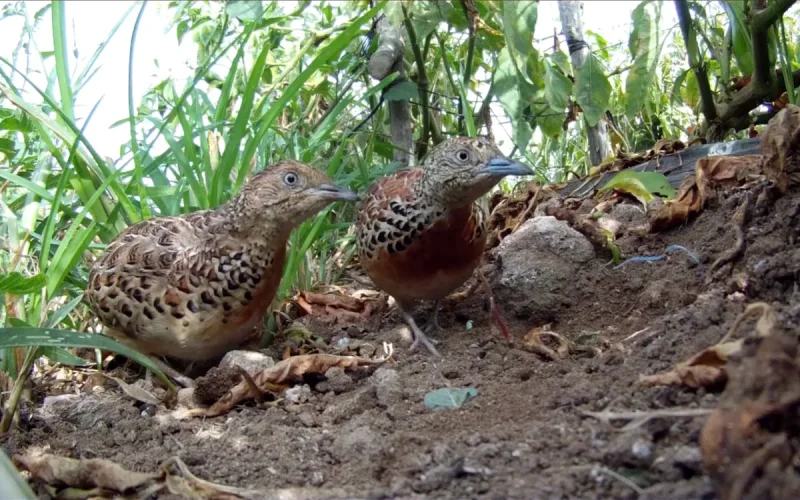
Gone from Spain, the Andalusian buttonquail could soon return to its former range. Eighteen birds bred from eggs collected in Morocco have arrived in Jerez, where their reproduction is intended to pave the way for a future reintroduction along the Andalusian coast.
The 18 birds arrived at the port of Algeciras on September 9 before being transferred to the Biodiversity Conservation Centre at the Zoobotánico of Jerez, the Government of Andalusia announced. Their transfer marks the start of the captive-breeding phase of a project prepared for around a year and a half with the Moroccan authorities.
The specimens come from eggs collected from nests located in Morocco, then placed in incubation until they hatched. The objective is now to establish a sufficiently large and diverse breeding population in Jerez to eventually provide birds for release into the species’ former habitats in Andalusia.
On Bladi.net : Endangered Bald Ibises from French Zoo to Be Released in Spain
The Andalusian buttonquail, or Turnix sylvaticus sylvaticus, is considered one of the most endangered birds in the Palearctic. Once present across much of the Mediterranean region, it has disappeared from Spain. Its only confirmed wild population now survives in an enclave on Morocco’s Atlantic coast, amid traditional farmland and orchards.
Four new campaigns planned in Morocco
This Moroccan population is believed to number only a few hundred individuals and continues to decline. Coastal urbanization and agricultural intensification are among the main causes of its gradual disappearance. It now constitutes the only reservoir making it possible to consider the species’ return to Europe.
At least four more campaigns are to be organized in Morocco over the coming years. They will serve to expand the breeding group and preserve sufficient genetic diversity. Each bird will be identified and its origin recorded in order to prevent inbreeding.
A second breeding centre is also to be established at the Aïn Sebaâ zoological park in Casablanca. The two captive populations will be managed jointly, while the genealogical register will be centralized in Jerez. The future birds will thus be able to serve both the reintroduction in Spain and the reinforcement of the population still present in Morocco.
On Bladi.net : Morocco Zoo Takes Action to Protect Animals from Intense Heat Wave
The operation recalls the reintroduction in Spain of bald ibises originating from Morocco, another species whose survival depends largely on cooperation between the two shores of the strait. For the Andalusian buttonquail, the 18 birds that arrived in Jerez represent the first concrete step towards a return to a region where the species had completely disappeared.
Related Articles
-

20,000 people in Ceuta and Melilla to make it impossible for Spain to respond militarily
17 September 2026
-

Tarifa–Tangier surges: 18.8% more cars and a rise from 4th to 2nd place
17 September 2026
-

Madrid Refuses to Abandon Morocco, 11,000 Spanish Farmers Say They Are Paying the Price
17 September 2026
-

Spain delivers its new military vessel to Morocco… but cancels the ceremony
17 September 2026
-

Moroccan diesel record in Spain: deliveries collapse when Russia turns off the tap
16 September 2026