
Spain wants to repatriate a bird from Morocco to save it
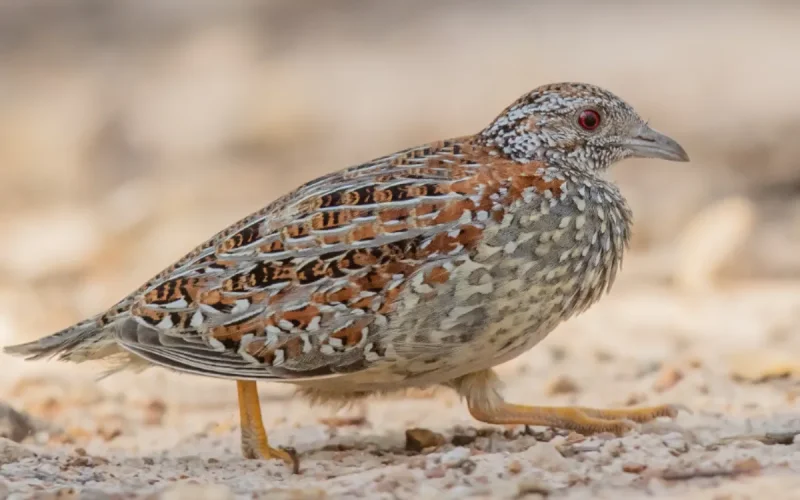
Scientists are currently urging the Spanish authorities to reintroduce the Andalusian Buttonquail. Disappeared from the Iberian Peninsula in the 1990s, this small bird is precariously surviving in Morocco, where researchers propose to capture it to launch a salvage breeding program.
Considered one of the most endangered bird species in Europe, this cryptically plumaged creature has not been sighted in Spain for several decades. Faced with the urgency, the experts cited by the Huffington Post are demanding immediate state intervention. They claim to have the necessary technological means and qualify this repatriation project as a "moral obligation".
On Bladi.net: Spain and Morocco will become one, the Strait of Gibraltar will close
For years, scientific expeditions have scoured North Africa to locate any surviving individuals. Their efforts have finally allowed them to discover an ultimate population on the Moroccan Atlantic coast. The observation of this residual nucleus has highlighted singular behaviors: the females dominate the territory, mate with multiple partners and expel the air slowly to call the males, the latter alone assuming the incubation of the eggs for about ten days.
However, this Moroccan refuge is declining alarmingly under the pressure of intensive agriculture and land use changes. While in 2010 the researchers detected the animal in half of the studied plots, this presence rate is now collapsing to only 1%. The available habitat is now limited to a very restricted area of 5,000 hectares concentrated in traditional agricultural areas.
To stop this definitive disappearance, ornithologists propose to collect several specimens in Morocco in order to initiate a breeding program. This strategic phase could be entrusted to the Jerez zoological park, which has successful experience with the Asian Buttonquail. Specialists estimate that a period of three to four years would be sufficient to establish a stable and sufficiently large captive population.
On Bladi.net: The future Grand Stadium of Casablanca, Morocco’s secret weapon to snatch the final from Spain
Once the herd is secured, controlled releases would be organized in southern Spain. The project targets the former distribution areas of the bird, whose last documented Iberian individuals had been shot by mistake by hunters in 1981. The coastal plains of Andalusia, particularly the Doñana, La Janda or Vejer areas, are among the preferred sites for this reintroduction.
Related Articles
-
220 dirhams on construction sites, up to 400 in the fields: Morocco lacks workers
25 August 2026
-
This Israeli company equips defense giants and also has clients in Morocco
24 August 2026
-

After three days in Algeria, a sanctioned Russian ship passes near Morocco
24 August 2026
-

In Brussels, a Moroccan name and being over 50: the profile most disadvantaged in hiring
24 August 2026
-

Morocco Has a New Billionaire Forbes Has Yet to Spot
24 August 2026