The Pluridens imelaki, a 9-meter giant monster discovered in Morocco
A new species of giant mosasaur, named Pluridens imelaki, has been identified in the phosphates of Morocco. This nine-meter-long predator is reshaping our understanding of the diversity of marine reptiles at the end of the dinosaur era.
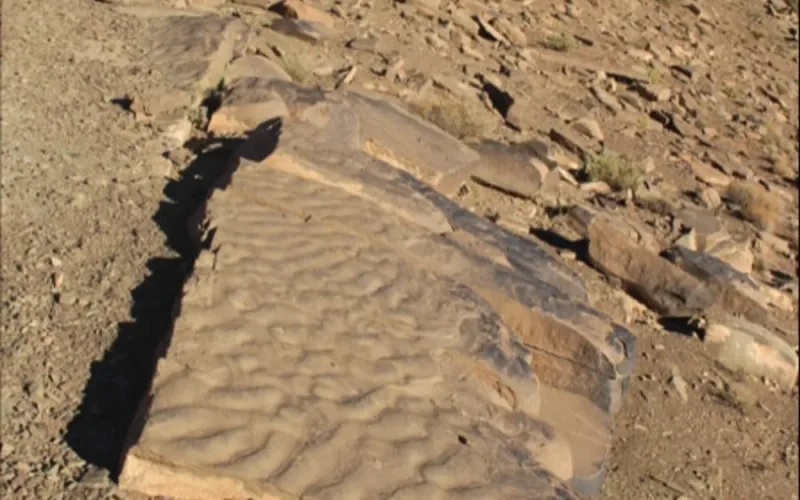
Researchers have uncovered the fossilized skull of an exceptionally large marine reptile in Sidi Chennane. According to the study published on mdpi.com, this Pluridens imelaki specimen dates back to the terminal Maastrichtian, around 66 to 67 million years ago, a period just before the major extinction event at the end of the Cretaceous.
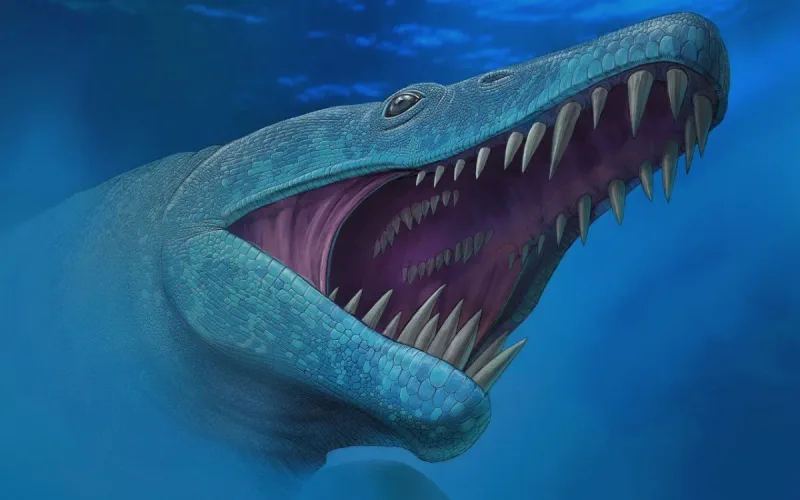
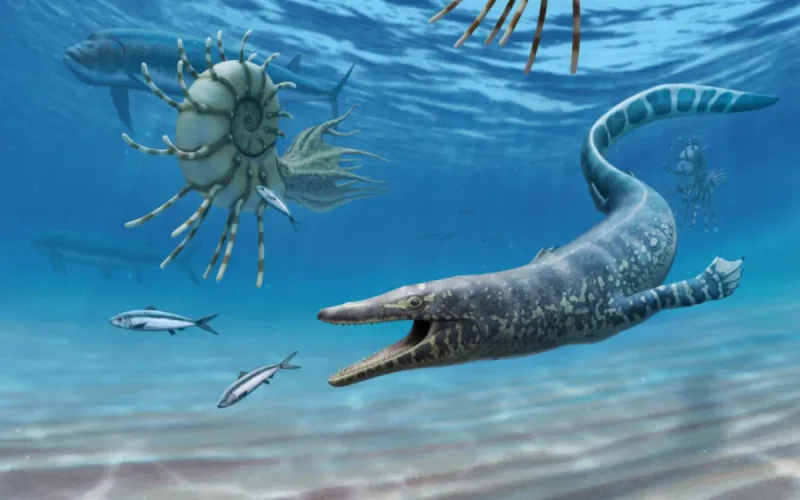
With a skull measuring 1.25 meters long, this mosasaur reached a size comparable to that of the great predators of the time, such as Thalassotitan. It was characterized by a slender, rectangular snout and an exceptionally long mandible, bearing around 25 straight, triangular teeth adapted for capturing specific prey.
This morphology suggests a distinct feeding strategy from its relatives. Unlike Pluridens serpentis, which had a broader snout and smaller eyes, P. imelaki possessed fine jaws implying a weaker bite force, likely adapted for consuming small, soft-bodied prey. A major adaptive radiation of Halisaurinae in the Late Cretaceous
The discovery proves that the Halisaurinae subfamily was much more diverse and species-rich than previously estimated. Far from being simply supplanted by other groups, these reptiles underwent a true "adaptive radiation", occupying diverse ecological niches and becoming key members of the marine ecosystems in low latitudes.
The species, however, is extremely rare, represented by a single specimen among hundreds of mosasaur remains collected over the decades in the phosphates. Scientists explain that the richness of this assemblage is driven by "rare taxa" that are only revealed through extensive and meticulous sampling.
This new giant of the seas confirms that the marine ecosystems of Morocco at the end of the Cretaceous were among the richest in the world. The existence of such diverse predators as Pluridens imelaki shows that marine reptiles continued to explore new survival strategies and diversify until the end of their reign.