Moroccan medicinal plant shows promise in lab studies, but human benefits remain unproven
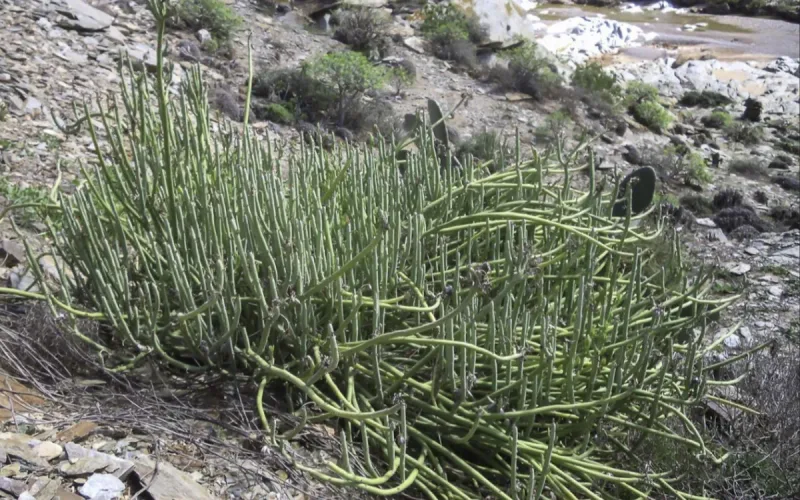
In Morocco, it is known as Shbarto, Asburto or Ashbardou. Used for generations to treat pain and injuries, Kleinia anteuphorbium is now attracting researchers’ interest for the properties of its extracts observed in the laboratory.
A review published in Plant Biosystems and reported by Bioengineer on October 3 brings together what is known about the species. Published on July 27, the study led by Aya Khouchlaa reviews its traditional uses, chemical composition and experiments conducted to date.
The practices documented include the treatment of rheumatism, wounds, injuries and back pain. The researchers searched the scientific literature for evidence that might explain the plant’s place in Moroccan traditional medicine.
They identified several substances, mainly sesquiterpenes, a family of molecules produced by plants. Tests on the plant’s extracts and compounds showed antioxidant, antifungal and anti-inflammatory activity. These findings offer clues to understanding some traditional uses, particularly for inflammation.
Findings from laboratory studies
The experiments covered in the review were conducted in vitro. They show biological activity but do not validate the effectiveness of a treatment in humans. The authors also call for toxicological assessments to determine whether the preparations are safe.
Kleinia anteuphorbium is also of botanical interest because of its origins. Kew Gardens lists Morocco as its only natural range. This succulent shrub belongs to the Asteraceae family and grows mainly in desert environments or dry shrubland.
Its former name, Senecio anteuphorbium, still appears in publications. Research into its chemistry also dates back several decades: the references compiled by the authors include studies from 1979 and 1982.
The review brings together observations long scattered across botany, traditional medicine and chemical analyses. The next step is to identify precisely which substances are responsible for the measured effects and understand how they work.