343 invasive species could cost Morocco up to $2.5 billion per year
Morocco is home to 343 invasive alien species. Their potential economic impact could reach $2.47 billion per year, according to a study that, for the first time, quantifies their cost across the Kingdom.
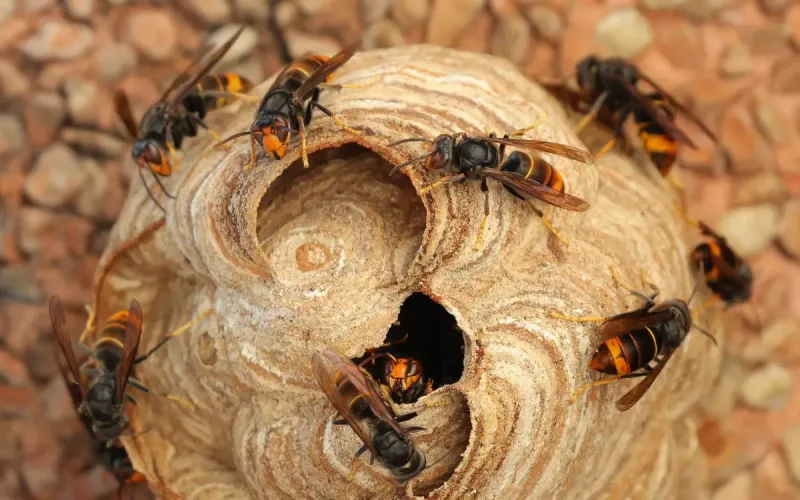
Published this year in Scientific Reports, the study initially identified 551 species reported as invasive. After verifying their origins and removing duplicates, the researchers retained 343 that had actually been introduced into Morocco.
On Bladi.net : Depression Could Cost Morocco More Than 21 Billion Dollars
The available economic data nevertheless remain incomplete. The authors were able to establish or extrapolate a cost for only 137 species. Nearly half of the species recorded still have no usable economic data.
Using the international InvaCost database, and after adjusting for Morocco’s economic and climatic characteristics, the researchers estimate the potential cost at between $1.57 and $2.47 billion per year. Damages alone would account for between $1.47 and $2.32 billion, compared with $97.6 to $149.3 million devoted to managing them.
Agriculture particularly exposed
Insects and plants account for a large share of the risk. Phenacoccus madeirensis, an insect that attacks numerous plants, could alone represent a cost of $886 million. The codling moth reaches $245 million, while the Mediterranean fruit fly approaches $90 million.
Other species affect ecosystems, fisheries or health. The brown rat is associated with a potential cost exceeding $190 million in the site-based estimate, while the common carp exceeds $100 million. The tiger mosquito, which can transmit dengue and chikungunya in particular, is also among the species studied.
Not all regions are exposed in the same way. Marrakech-Safi is well ahead with approximately $335 million in potential costs, followed by Casablanca-Settat with $192 million, Rabat-Salé-Kénitra with $122 million and Tanger-Tétouan-Al Hoceïma with $119 million. Agriculture, population density, tourism, ports and international trade would partly explain these differences.
On Bladi.net : Morocco’s sea conceals potential for $2 billion and 75,000 jobs
The researchers nevertheless urge caution. These billions do not correspond to losses already recorded each year in Morocco. In the absence of sufficient national data, they result from costs observed elsewhere and then adapted to the Moroccan context. The study therefore provides an estimate of the potential economic risk, which could still evolve as data on the species present in Morocco improve.