In Morocco, the ground reaches 50 °C, while vegetation lowers temperatures by more than 5 °C
In Errachidia, the immediate proximity of a densely vegetated area can lower surface temperatures by more than 5 °C. A new scientific study precisely measures how far this cooling effect extends in this pre-Saharan city particularly exposed to heat.
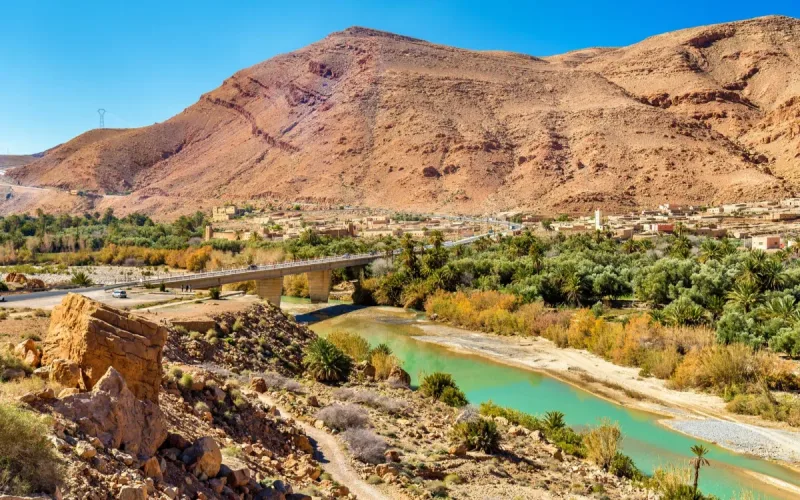
Published on August 8 in the journal Discover Cities, the study conducted by Rachid Ouachoua and Hamid Benssi draws on Landsat 8 and Sentinel-2 satellite images to map heat and vegetation in Errachidia.
On Bladi.net : Scorching Heat Wave: Moroccan Cities Join World’s Hottest as Temperatures Soar Past 45°C
On July 6, 2023, measured surface temperatures ranged from 33.8 to 50.1 °C, with an urban average of 45.3 °C. This is the temperature of the ground and surfaces, not the air temperature.
Within 25 meters of a densely vegetated area, the average surface temperature was 40.5 °C, or 5.39 °C lower than in the reference zone located between 400 and 500 meters away.
The effect quickly disappears with distance
The benefit decreases sharply with increasing distance from green spaces. The difference falls to 2.79 °C between 25 and 50 meters, then to 1.61 °C between 50 and 100 meters. Beyond 100 to 150 meters, it becomes less than 1 °C.
The study also confirms that bare soils are the most exposed: their average surface temperature reaches 47.2 °C. A large part of the urban area studied therefore falls within the high to very high thermal-risk categories defined by the researchers.
The authors specify that 5.39 °C is not a rule applicable everywhere. The effect depends in particular on vegetation density, irrigation, urban layout and weather conditions. The measurements also concern one specific summer day.
On Bladi.net : Northern Morocco Turns Green After Heavy Winter Rains
For Errachidia, the conclusion remains clear: bringing vegetated areas closer to the sectors most exposed can significantly reduce surface heat. In a context of water scarcity, the researchers recommend favoring drought-resistant species, particularly date palms, tamarisks and acacias.