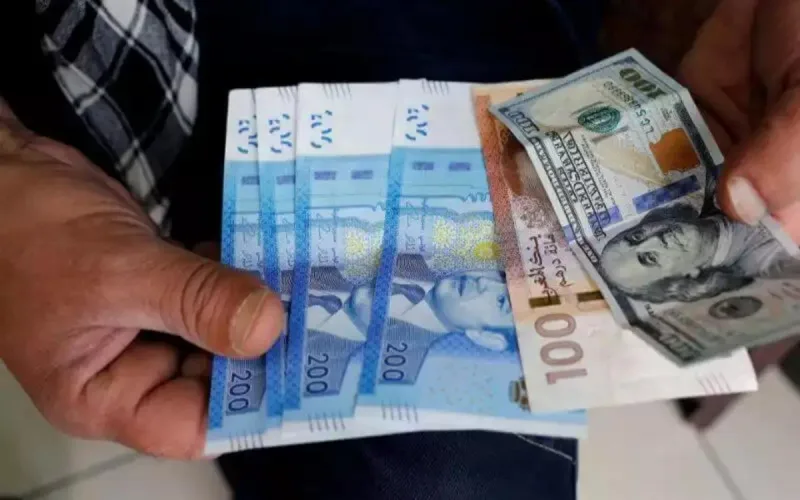
The great shift of the Moroccan dirham will have to wait
The year 2025 ends with a monetary status quo. Gathered for its last quarterly session, the Bank Al-Maghrib (BAM) Council decided to keep the key rate unchanged at 2.25%, considering this level appropriate given a controlled inflation rate of 0.8%. But beyond the figures, it is the announcement of a pilot phase in 2026 for inflation targeting, a prelude to a more extensive flexibility of the dirham, that is drawing attention.
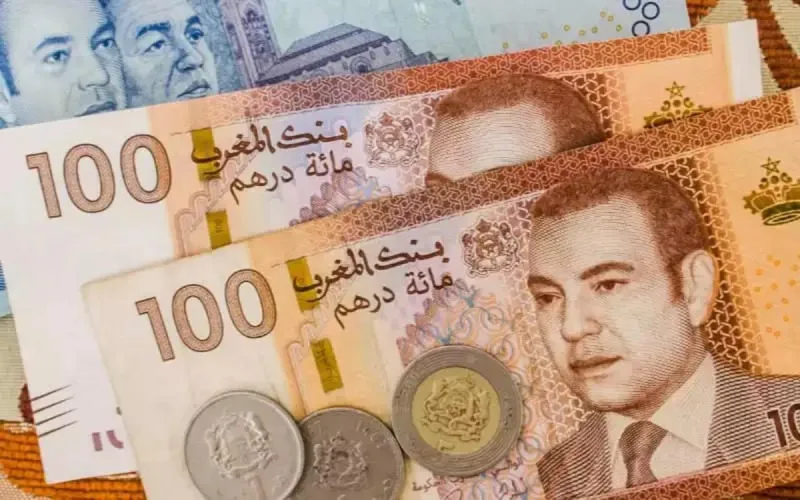
In an international context marked by uncertainty and a slowdown in global growth (expected at 3.1% in 2025), the Moroccan economy is showing strong resilience. BAM forecasts an acceleration of national growth to 5% this year, driven by the dynamism of non-agricultural activities and an assumption of a return to normal for agriculture. Inflation, a real scourge in previous years, remains under control at low levels (0.8% on average over the first ten months of 2025) and should gradually converge towards 1.9% by 2027. Faced with these solid fundamentals and well-anchored inflation expectations, Abdellatif Jouahri and his team opted for monetary stability, leaving the key rate at 2.25%, reports Challenge.
The Governor of the Central Bank took advantage of this platform to unveil the roadmap towards the liberalization of the exchange rate regime. Contrary to rumors of an imminent shift, the transition will be gradual. The year 2026 will be a "trial" year dedicated to inflation targeting, with the technical support of the IMF and the World Bank. The effective implementation of this increased flexibility will only gradually take place from 2027 onwards, to allow economic operators to adapt to this new situation. The dirham, for its part, remains aligned with the fundamentals for the time being, although a depreciation is anticipated for the next two years.
Finally, BAM is strengthening its game in favor of SMEs. Noting that more than 40% of credit applications are rejected by banks, the institution will deploy a "National Scoring" based on artificial intelligence to evaluate the files. Banks will now be required to use this tool and justify any refusal contrary to the score obtained. A strong measure, coupled with the support of players like Maroc PME, to get small businesses out of vulnerability and support private investment, the engine of future growth.