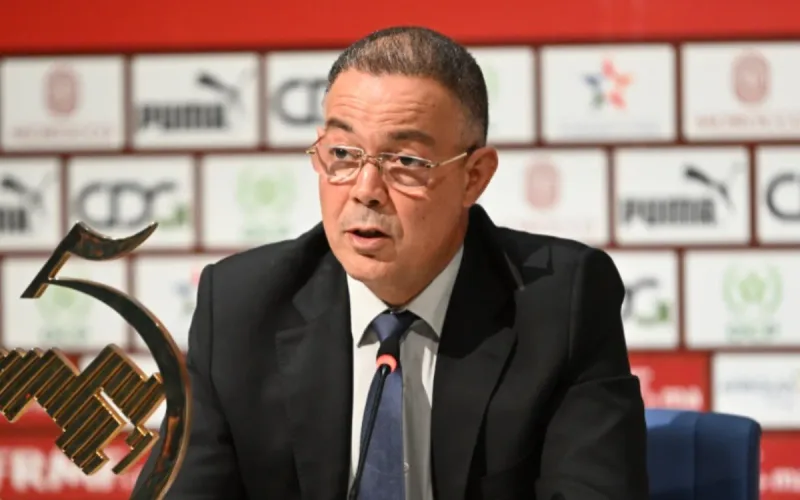
Fouzi Lekjaa Prime Minister Morocco Elections 2023
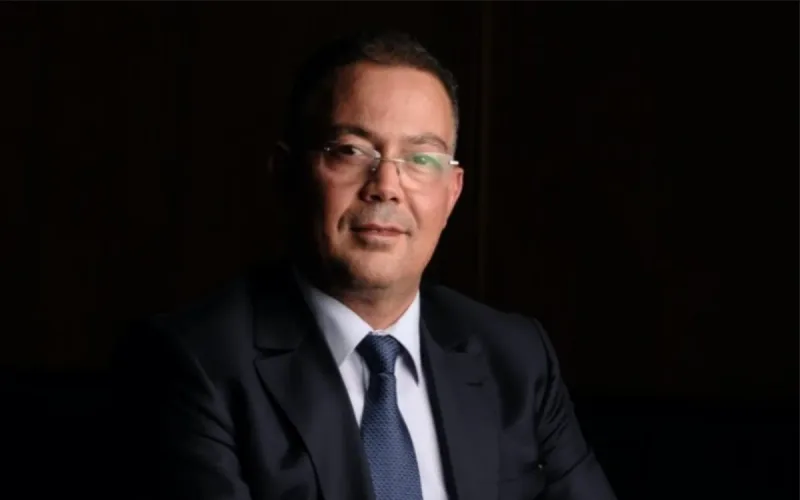
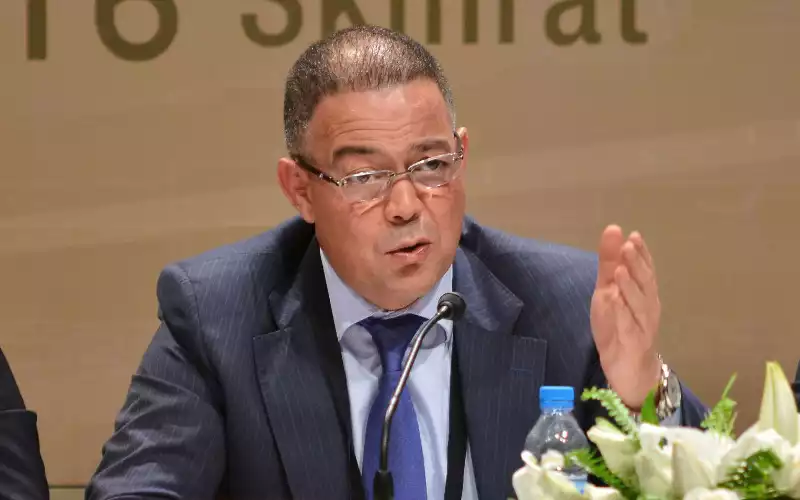
Fouzi Lekjaa has yet to announce his candidacy for head of government or any personal ambition. Yet, since his spectacular entry into the PAM, everything seems organized so that his name appears to Moroccans as an obvious choice after the elections.
In politics, major operations don’t always begin with a candidacy announcement. They sometimes begin with a habit. A face is established, responsibilities are multiplied, a reputation is built and, when the moment comes, public opinion is left to reach the desired conclusion on its own.
On Bladi.net : Fouzi Lekjaa Government Position Mystery Deepens
For several years, Fouzi Lekjaa has followed precisely this trajectory.
He was first the man of Moroccan football. The one associated with the transformation of infrastructure, the historic journey of the Atlas Lions in Qatar, the rise of youth selections and Morocco’s regained influence in African and international bodies.
He then became the man of public finances, with his appointment as Deputy Minister in charge of the Budget. The sports leader thus transformed himself into a government official, capable of discussing deficits, taxation and public spending without abandoning the field on which he had built his popularity.
Then came the 2030 World Cup. Fouzi Lekjaa found himself at the center of the largest sporting, political and economic project that Morocco will have to conduct over the coming years. An event that will far exceed the stadiums: roads, airports, hotels, transportation, investments and the Kingdom’s international image will be at stake.
At this point, only one thing was missing from his career: a political party.
The Lekjaa Scenario Takes Shape
His arrival at the Authenticity and Modernity Party, less than two months before the legislative elections of September 23, fills precisely this gap. He doesn’t join the PAM simply as an ordinary activist. He enters directly into its political bureau, to applause, with a national stature already superior to that of many historical leaders of the party.
The impression of preparation therefore doesn’t rest on secret evidence or an official statement. It comes from the almost perfect alignment of the pieces: football’s popularity, mastery of the Budget, responsibility for the 2030 World Cup and now membership in a party capable of competing for first place.
Until now, the election seemed destined to be a confrontation between Aziz Akhannouch, accountant of the government’s record, and Abdelilah Benkirane, who has become the spokesperson for the discontented. In a few hours, Lekjaa imposed a third scenario.
Aziz Akhannouch’s reaction is, in this regard, almost more revealing than the membership itself. In denouncing a political "transfer market" and parties that recruit personalities at the last moment, the head of government didn’t name Fouzi Lekjaa. He didn’t need to. Everyone understood.
Lekjaa had barely entered the PAM when he was already being treated as a potential rival.
The choice of the PAM is also not insignificant. At the RNI, Fouzi Lekjaa would have evolved in the shadow of Aziz Akhannouch and would have had to bear the record of the outgoing government. At Istiqlal, he would have had to contend with history, clans and an old activist culture. At the PAM, the space is almost entirely open.
The party has elected officials, territorial networks and a central place in the majority, but it lacked a popular personality capable of embodying national ambition. Lekjaa brings precisely what the PAM couldn’t manufacture alone: an image of competence, a results-oriented culture and a reputation that far exceeds the party’s usual voters.
However, the Moroccan Constitution doesn’t allow for freely designating any official to head the government. Article 47 provides that the King appoints the head of government from the party that comes first in the legislative elections. The PAM would therefore need to win first.
But the text doesn’t require that the person chosen be necessarily the general secretary or the official leader of the party. If the PAM came first, the designation of Fouzi Lekjaa would become constitutionally possible.
We’re not there yet. His candidacy in Berkane still needs to be officially presented, Moroccans must vote and the PAM must outpace its competitors. Nothing therefore allows us to assert that the next government will be led by Fouzi Lekjaa.
But everything seems designed to make this possibility no longer seem far-fetched.
A few months ago, Fouzi Lekjaa was a technocratic minister and the powerful president of the Royal Moroccan Football Federation. Today, he has become a politician, a probable candidate and a possible Prime Minister.
On Bladi.net : MRE Tax Data Safe: Morocco Clarifies Fiscal Exchange Bill
Perhaps he isn’t yet prepared to govern. But clearly, Morocco is already being prepared for the idea that he could.