Fitch warns of budgetary risks related to Morocco's major projects
The rating agency Fitch looks favorably on the budgetary stability displayed in the 2026 finance bill. However, it warns that the many infrastructure projects planned as part of the preparations for the 2030 World Cup could lead to overruns and weaken public finances.
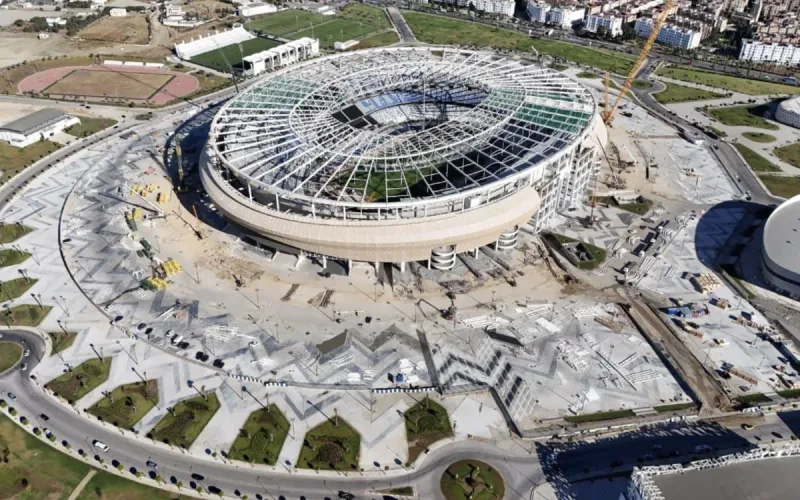
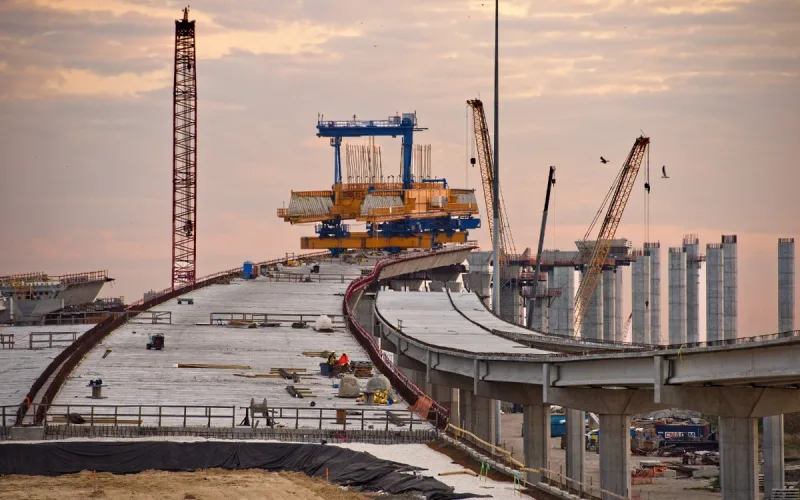
Fitch points out that "the main risk to the financial outlook remains the overrun of planned infrastructure spending", specifying that "Morocco is preparing to launch many major projects to host the 2030 World Cup, including the construction of airports, railways, as well as sports, hydraulic and energy facilities". For the agency, the cost of these projects represents about 18% of GDP, but should not weigh on the central budget, the majority of which should be financed through public-private partnerships. And to warn: "The extension of guarantees granted to public institutions or the increase in direct state expenditure for these projects could represent a risk to the public finance control trajectory envisaged by the agency in its baseline scenario".
In its report, Fitch notes that "the 2026 budget bill indicates that the authorities do not intend to sharply increase spending in response to the social unrest of September 2025", specifying that "this reduces one of the financial risks identified when confirming Morocco’s BB+ rating with a stable outlook last September". The report recalls that the youth demonstrations launched by the GenZ 212 collective at the end of last September are "the largest since those of 2011-2012", stressing that "Fitch does not consider them a major threat to political stability".
Fitch notes that the 2026 finance bill provides for a budget deficit of 3% of gross domestic product (GDP), down from the 3.6% forecast for 2025. "Total expenditure should decline to 26.8% of GDP, compared to 27.6% in the 2025 finance law", the report states, adding that capital investments remain relatively stable. This trend should keep the public debt ratio at around 66% of GDP in 2026, compared to 67% in 2025, while remaining above the BB-rated country average of around 52% in 2027.
The 2026 Finance Bill also provides for a slight decrease in total revenue to 23.8% of GDP in 2026, compared to 24% forecast for 2025. However, the government expects a moderate increase in tax revenue in 2026, driven by an increase in corporate income tax revenue of about 0.8 percentage points of GDP, "reflecting resource mobilization measures". According to the report, "this increase will be offset by a decrease of about 1 percentage point of GDP in non-tax revenue, due to the government’s reduction in the use of ’innovative financing’ mechanisms, generally based on the sale and reallocation of public assets".
These mechanisms "have made it possible to offset lower-than-expected revenue or higher-than-estimated expenditure, while giving the necessary time to implement reforms", Fitch warns, noting that "these financings are often temporary or one-off". The rating agency stresses that "the use of more sustainable revenue sources would strengthen the solidity of public finance control". It also states that "the 2026 budget trajectory is closely aligned with the authorities’ previous forecasts - for example, the three-year estimates published at the end of 2024 already projected a 3% of GDP deficit in 2026", which shows that "the demonstrations did not have a significant impact on the government’s financial plans".