Moroccan Migrant Worker's Entrepreneurial Journey Transforms Rural Economy
An International Labour Organization (ILO) program has changed the life of Fatima Laanieg. This Moroccan woman has gone from being an agricultural seasonal worker to the owner of a thriving grocery store.
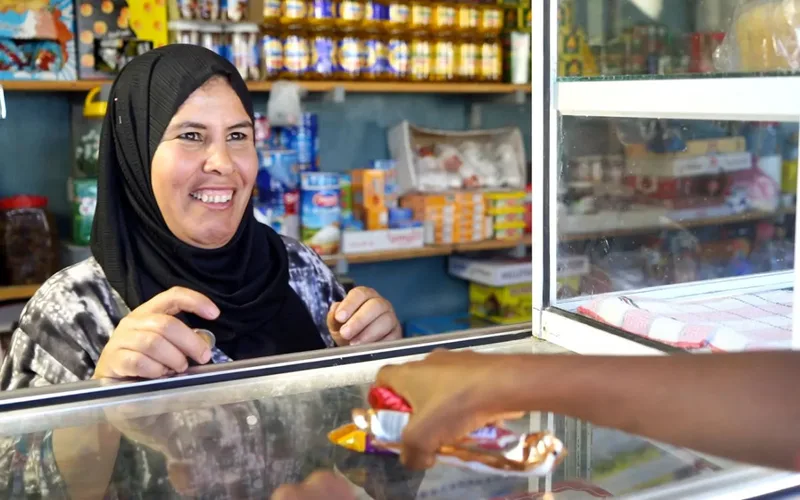
From a young age, Fatima Laanieg knew what she wanted to do in life. "I’ve always loved working. School didn’t really interest me; I was more attracted to action and manual activities. When I was younger, my main work was to take care of the house and the children. But in my head, I said to myself: I need something to do, something that will bring me a little money," she confides in an ILO publication. After her marriage, her greatest determination was to help her husband. "Cooking and cleaning are part of everyday life, we all know that. But I wanted a sustainable activity, something that would occupy me and bring me additional income to help my husband. Every woman has her ambitions."
In 2021, an opportunity presented itself to her. She went to Spain to work as an agricultural seasonal worker. "The working conditions were good and I didn’t encounter any difficulties," Fatima assures. But she clung to her lifelong dream of starting her own business. "The problem is that I didn’t have the means or the know-how." She soon found a solution. In 2022, she received a call from ANAPEC, the Moroccan National Agency for the Promotion of Employment and Skills. "They explained to me that there was a program for seasonal agricultural workers to help them start their own business. I registered, and when they asked me: ’Do you already have an idea?’ I answered: ’Yes. I would like to open a grocery store’," the mother recounts.
This is WAFIRA (Women As Financially Independent Rural Actors), a pilot project aimed at training and supporting 250 Moroccan rural women participating in the circular migration program to Spain in the launch of Income Generating Activities. Its ultimate goal is the financial empowerment of the target women and their sustainable socio-economic integration into their communities of origin. Thanks to WAFIRA, Fatima has acquired skills. She learned how to start a business, how to separate personal money from business money; how to keep accounts, manage her customers and collaborate with her suppliers. "For example, when the distributor or supplier comes to give me an invoice. If he doesn’t receive it, I ask him for it, because I need to know exactly what I have spent."
Her family has been a great support throughout the process. "My husband also supported me a lot. He told me: ’No matter the result, the important thing is the experience. At least we learn and move forward.’ His support made all the difference." Today, she is the owner of a grocery store in Morocco. However, she has not stopped working abroad. "I continue to go work four months a year in Spain and my family helps me manage the store during my absence." The entrepreneur is aiming high. "My dream is for my project to succeed. I want to build up capital. For now, it’s modest, but I’m working hard so that one day it becomes something big. Why not start with a small shop, then turn it into a supermarket, and then open others elsewhere? My project is growing, little by little," Fatima confides.
She adds: "When my son is grown up, I would also like him to get into business and learn this trade. That’s my vision and my dream."