
Eid al-Adha Border Chaos: Ceuta-Morocco Crossing Nightmare
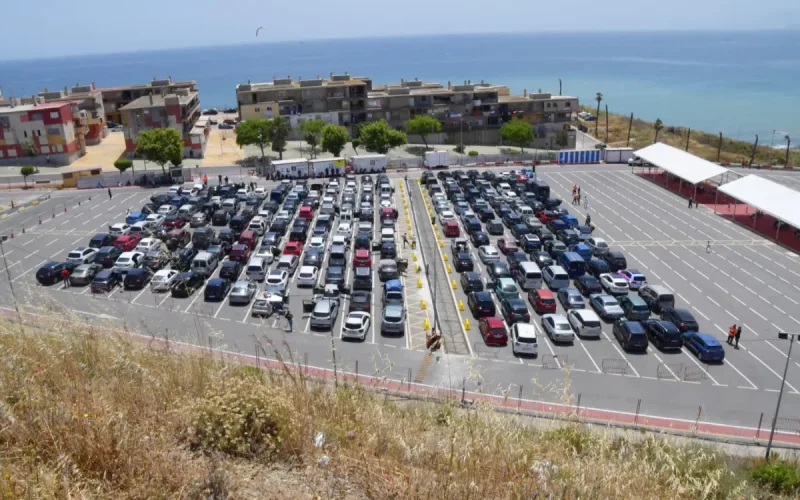
As Eid al-Adha approaches, crossing the border between Ceuta and Morocco has become a nightmare. Travelers face waiting times exceeding five hours, hampered by massive crowds and reinforced security checks.
The Loma Colmenar esplanade, which serves as a retention zone for vehicles heading toward Moroccan territory, is on the brink of saturation. Eager to celebrate the festivities with family, many travelers find themselves trapped in extremely slow traffic heading toward the Tarajal checkpoint. To make this gridlock bearable and prevent total paralysis of the national road, awnings and benches have been set up, offering users a precarious space to rest and refresh themselves under the sun.
On Bladi.net : Morocco–Ceuta Border Chaos: 8-Hour Waits and Total Gridlock
This congestion is largely explained by the deployment of the new intelligent border system, whose complexity is causing discontent. According to El Faro de Ceuta, each individual without digitized documents must undergo tedious verification in government databases, considerably slowing the passage rate. This technological filter encounters a glaring lack of personnel facing this first major wave of departures, while delays are also noted at Moroccan counters. For his part, government delegate Miguel Ángel Pérez Triano acknowledges these logistical disruptions, justifying that these security checks have already made it possible to apprehend fugitives.
On Bladi.net : Moroccan Expats Face Border Chaos: New Tech Causes Hours-Long Delays at Melilla Crossing
This paralysis is exasperating the local political class days before the Feast of Sacrifice. Fatima Hamed, leader of the MDyC party, openly criticizes the authorities’ inability to streamline this critical passage. Lamenting that residents and vacationers repeatedly suffer these endless queues, the elected official demands an urgent increase in staff assigned to electronic gates, directly pointing to the Government Delegation’s responsibility in this failed crisis management.
Related Articles
-

Tomatoes and mandarins drive Moroccan agricultural exports to 2.38 million tonnes
18 September 2026
-

A Fez riad earns a Michelin Key and joins the world’s best hotels
18 September 2026
-

MRE: this mistake when buying in Morocco can block the repatriation of your money
18 September 2026
-

One ship every five minutes between Morocco and Spain: Rabat seeks new rules for straits
18 September 2026
-

8.2 million dirhams for new vehicles tasked with monitoring Moroccan airport runways
18 September 2026