French schools in Morocco: the return of anger in the face of soaring fees
The 2026 school year is shaping up to be highly tense for the network of the Agency for French Education Abroad (AEFE) in Morocco. The decision of the Board of Directors on December 18, 2025 to massively increase fees has triggered an unprecedented wave of protests in Rabat, Kénitra and Casablanca.
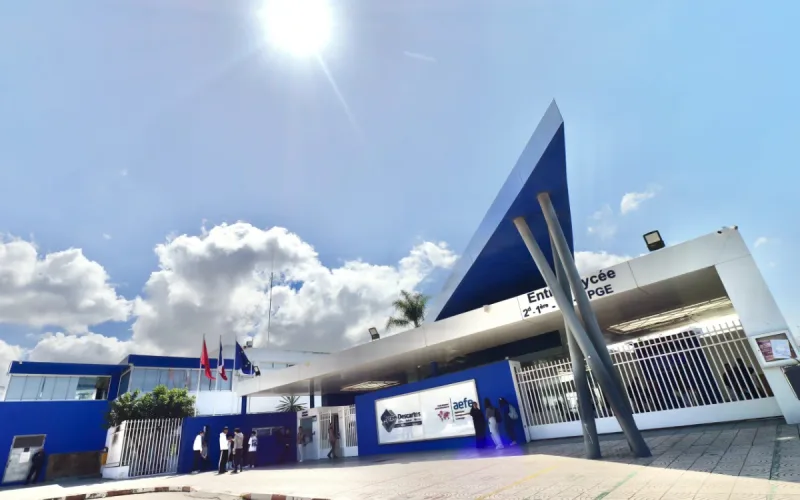
Between the French state’s financial disengagement and the local management deemed "disconnected", the relationship of trust between the institution and the families seems to be broken today.
The announced increase is not a simple revaluation linked to inflation. It responds to a structural deficit of the French state which has chosen to transfer the burden of civil pensions (expatriate pensions) directly to Moroccan families.
• As of 2026: Parents will have to cover 35% of pension costs.
• In 2027: This share will rise to 50%.
• The novelty: The introduction of a first registration fee of 30,000 DH, applicable at all levels.
"This money, entirely paid to Bercy, does not benefit the local establishments in any way: it is neither reinvested in the infrastructure, nor in the programs." - Note from the parents’ association.
Planned fee schedule for the 2026-2027 school year
Here are the details of the annual tuition fees (excluding the 30,000 DH registration fee):
• Preschool: 43,000 (French) 53,400 (Other nationalities)
• Elementary: 40,800 (French) - 50,100 (Other nationalities)
• Middle school: 44,500 (French) - 54,800 (Other nationalities)
• High school: 48,200 (French) - 60,700 (Other nationalities)
The administrative "shipwreck": the case of Saint-Exupéry
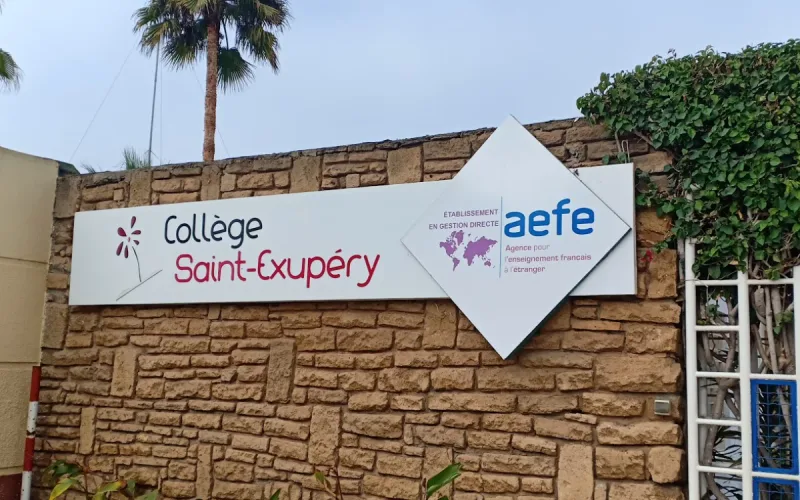
The Saint-Exupéry middle school in Rabat has become the symbol of the management errors denounced by the parents (CAPE and APEEF).
• Budget explosion: Estimated at 6 million euros ten years ago, the reconstruction of the middle school is now budgeted at 18 million euros.
• Opaque financing: Of these 18 million, 10 million already come from the fee increases accumulated in recent years, without the work having started.
• Precarious conditions: Students are currently housed in the former Malraux school group, whose infrastructure is considered unsuitable for a middle school.
The main demands of the parents
Faced with what they describe as a "strictly accounting strategy", the parent collectives (in particular the CAPE Camus Association) demand:
• An immediate freeze on increases to reopen global negotiations.
• An independent audit of financial flows between Morocco and France to identify the costs that should normally fall to the Embassy.
• A tripartite governance: A local steering committee including parents, AEFE and the Embassy to get out of the "disconnected" management from Paris.
• Qualitative counterparts: Systematic replacement of teachers, maintenance of options and improvement of the language level (especially Arabic).
The medium-term risk: A defection of the Moroccan middle classes (enrollment is already down 3% per year), which could lead to the permanent closure of some historic institutions like the Ronsard school in Rabat.